TorontoOntario · 36 tours
 Niagara FallsOntario · 25 tours
 New York CityNew York · 30 tours
 Las VegasNevada · 8 tours
 San FranciscoCalifornia · 16 tours
 VancouverBritish Columbia · 17 tours
 DubaiUAE · 54 tours
 Abu DhabiUAE · 5 tours
 Buenos AiresArgentina · 23 tours
 AthensGreece · 31 tours
 AucklandNew Zealand · 38 tours
 CancunMexico · 54 tours
No destinations match “”. Try searching all tours instead — that search understands full questions, not just place names.
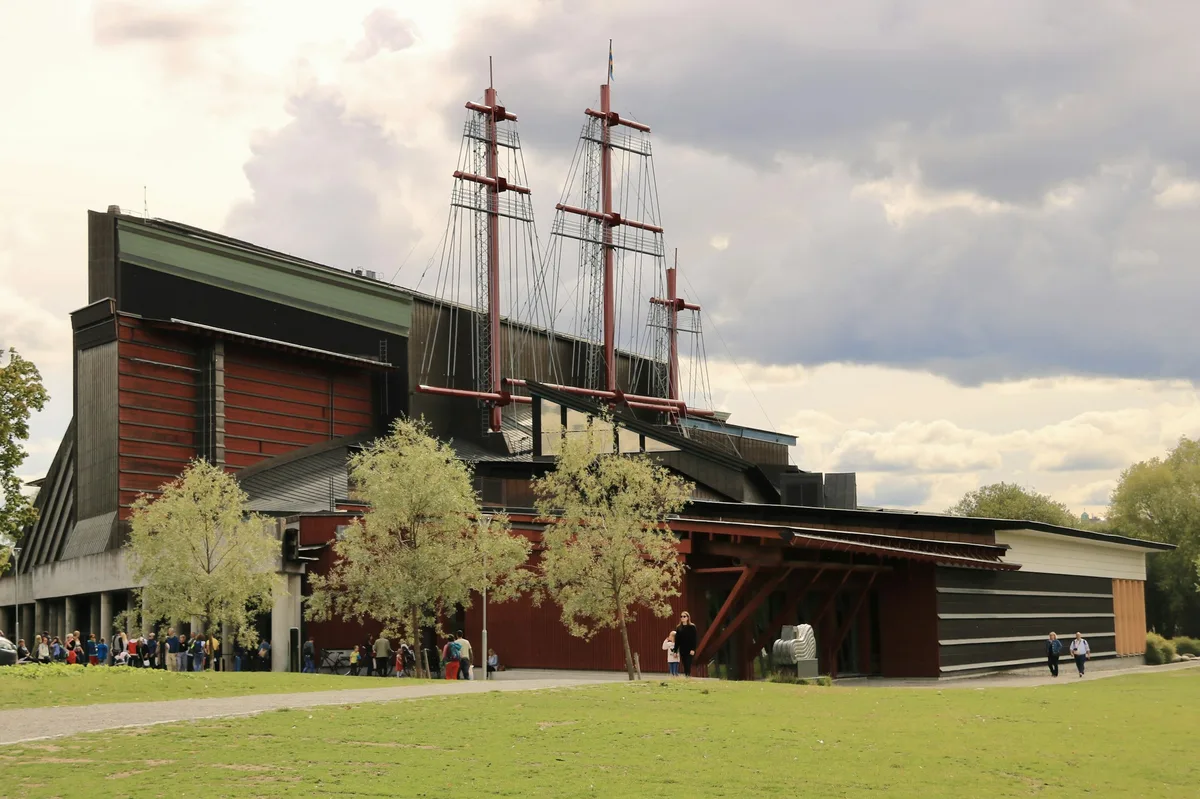
A Stockholm museum built around the Vasa, a 17th-century royal warship that sank on her maiden voyage in 1628 and was raised almost fully intact more than 300 years later.
Visitor guide
The Vasa Museum on Djurgården in Stockholm, Sweden, is built around the Vasa, a 17th-century Swedish warship that sank on her maiden voyage in 1628 and was raised in 1961 after 333 years underwater. The museum opened to the public in 1990 and displays the ship together with thousands of recovered objects.
The Vasa was built at the Skeppsgården navy yard in Stockholm between 1626 and 1628, ordered by King Gustavus Adolphus during his war with Poland-Lithuania. The initial contract was signed in January 1625 with master shipwright Henrik Hybertsson, who died around the time of the launch in March 1627. The king's orders called for 72 24-pound guns, which required a second gundeck. According to Wikipedia, the ship measured about 47.5 metres between perpendiculars with an 11.7 metre beam and displaced roughly 1,210 tonnes, and she was meant to carry 145 sailors and 300 soldiers.
She was richly decorated with several hundred sculptures (the museum counts over 700 sculptures and decorations), mostly on the stern and beakhead, including a three-metre lion figurehead carved in the workshop of Mårten Redtmer, and a portrait of the king at the top of the stern.
On 10 August 1628 the Vasa set sail and sank roughly 1,300 metres into her maiden voyage in view of a large crowd. A gust heeled her over, and water flooded in through the open lower gunports. A stability test earlier that summer had been halted after three runs because Admiral Fleming feared she would capsize. About 30 people reportedly died.
Wikipedia attributes the loss to very little initial stability from a top-heavy hull and high centre of gravity, rather than the guns alone. An inquest in September 1628 found no one guilty, and the shipwright Arendt de Groote is recorded as answering the court's question about the cause with 'Only God knows.' In 1663 to 1665, Treileben and Peckell recovered more than 50 guns using a diving bell.
Amateur archaeologist Anders Franzén located the wreck in 1956 after years of searching, using a homemade coring probe. For the 1961 recovery, divers dug six tunnels under the hull and the ship was lifted with steel slings and pontoons. She was raised on 24 April 1961 and towed to a dry dock. From 1961 to 1988 she was housed in the temporary Wasavarvet, and the present museum opened in 1990. Wikipedia reports that more than 45 million people had seen the ship by the start of 2025.
Conserving more than 600 cubic metres of waterlogged oak was an unprecedented problem. The hull was treated with polyethylene glycol, sprayed onto the ship for 17 years and followed by slow drying that was not entirely complete by 2011. The main hall is kept at 18 to 20 degrees Celsius and about 53 percent humidity. Sulfur compounds in the wood create sulfuric acid, which remains a concern, and the museum has worked with industry to develop stainless steel bolts to replace corroding originals.
Thousands of artefacts were recovered, including clothing, weapons, tools, coins, food and six of the ten sails, along with the remains of at least 15 people. The ship became a national symbol of Sweden's 17th-century Great Power period.
The museum is a compact, single-ship experience, and background on shipbuilding, politics and conservation adds a lot to what you see. A private guided visit, arranged with a vehicle and driver for the Djurgården leg of a Stockholm day, suits this kind of detailed site.
See every tour and attraction we cover in Sweden.