TorontoOntario · 36 tours
 Niagara FallsOntario · 25 tours
 New York CityNew York · 30 tours
 Las VegasNevada · 8 tours
 San FranciscoCalifornia · 16 tours
 VancouverBritish Columbia · 17 tours
 DubaiUAE · 54 tours
 Abu DhabiUAE · 5 tours
 Buenos AiresArgentina · 23 tours
 AthensGreece · 31 tours
 AucklandNew Zealand · 38 tours
 CancunMexico · 54 tours
No destinations match “”. Try searching all tours instead — that search understands full questions, not just place names.
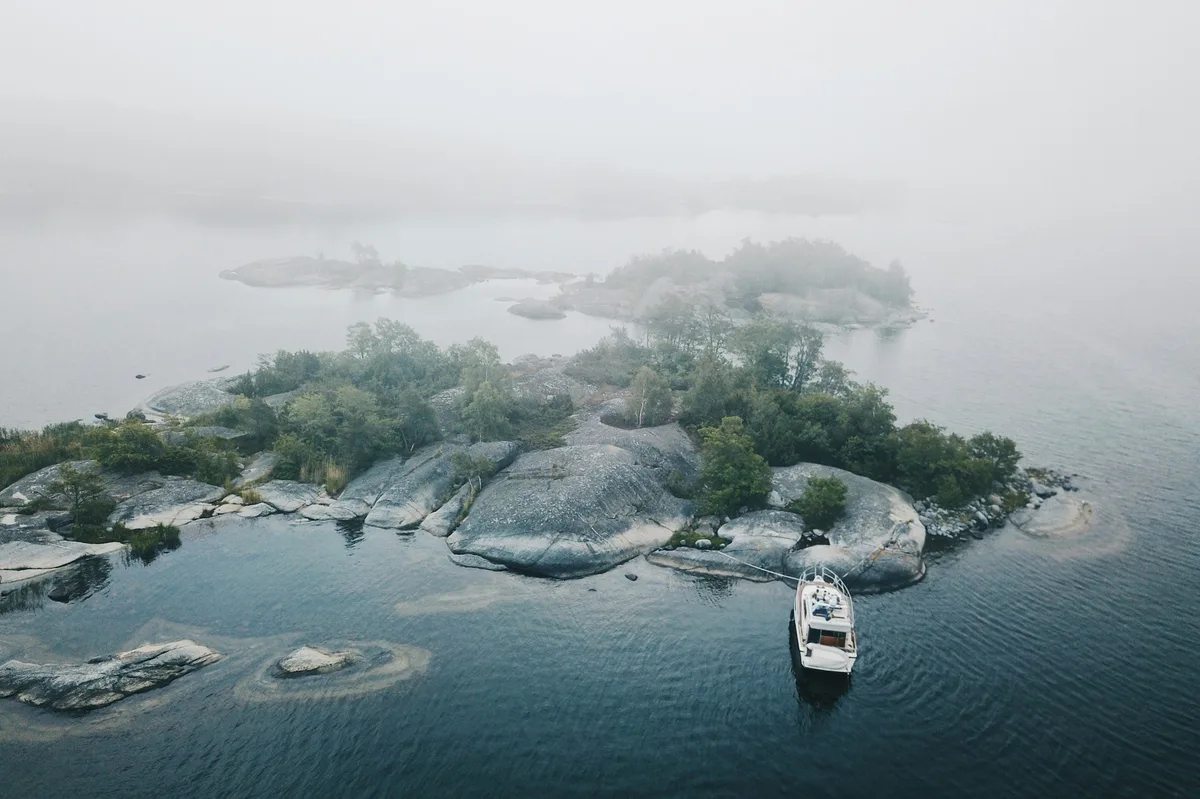
Tens of thousands of islands and skerries stretching east from Stockholm into the Baltic Sea, explored by kayak, ferry, or boat tour in the summer months.
Visitor guide
The Stockholm Archipelago is a vast scatter of islands, islets and skerries running east from Stockholm into the Baltic Sea. According to Wikipedia it is the largest archipelago in Sweden and the second-largest in the Baltic. Counts vary by definition: Wikipedia gives slightly over 24,000 islands, islets and skerries, while Visit Stockholm says more than 30,000.
The archipelago covers about 1,700 square kilometres, of which about 530 square kilometres is land. Extent depends on definition: Wikipedia gives roughly 60 kilometres east of Stockholm, while Visit Stockholm says 80 kilometres from the mainland to Svenska Högarna and 150 kilometres from Arholma to Landsort. The archipelago follows the coasts of Södermanland and Uppland from Landsort in the south to Väddö in the north, and a separate group lies farther north near Öregrund. Shipping routes from the Baltic to Stockholm pass through three entrances suitable for deep-draught vessels, near Landsort, Sandhamn and Söderarm.
The landscape is a joint valley landscape shaped by post-glacial rebound, and the islands are still rising about 3 millimetres a year. The archipelago began to take its present form in the Viking Age. Because the Baltic is brackish, salinity in the outer parts is only about 0.6 to 0.7 percent, compared with 3 percent or more in oceans, and humic substances sometimes tint the inner waters brownish. Sea ice forms in the inner parts every winter.
Named islands include Dalarö, Finnhamn, Grinda, Husarö, Ingarö, Ljusterö, Möja, Rödlöga, Tynningö, Utö, Svartsö and Värmdö. Vaxholm, Nynäshamn and Norrtälje are the largest towns outside Stockholm, and Vaxholm is linked by bridge. Ytterby, on Resarö, is noted for giving its name to four chemical elements.
Around 10,000 permanent residences and 50,000 holiday homes exist, with the cottages mainly owned by Stockholmers. In 1719 the population was about 2,900, mostly fishermen. Combined farming and fishing lasted until about 1950 to 1955, after which many younger residents moved to the mainland and most small farms closed. The Stockholm Archipelago Foundation owns about 15 percent of the total area.
Waxholmsbolaget, owned by Stockholm County, is the largest operator of regular routes, and taxi boats are also available. Passenger ships with fixed itineraries serve outer islands such as Ingmarsö, Möja, Runmarö, Nämdö, Ornö and Utö, while larger islands such as Vaxholm, Resarö and Kullö are reached by bridges and local buses. In summer private boats are common, and Sweden's right of public access, allemansrätten, allows going ashore or anchoring away from buildings.
Part of the archipelago has been a Ramsar wetland site since 1989. The islands have also inspired writers and artists, including August Strindberg and Aleister Crowley, and Wikipedia notes that ABBA's Björn Ulvaeus and Benny Andersson wrote most of their songs in a cabin there. The annual Ornö runt sailing race, held since 1973, is the archipelago's largest, and winter ice-skating excursions are popular.
With so many islands and varying ferry routes, a private guide can help choose which islands suit your interests, from historic villages to quiet nature. A private vehicle and driver can handle the mainland legs to the ferry piers.
See every tour and attraction we cover in Sweden.