TorontoOntario · 36 tours
 Niagara FallsOntario · 25 tours
 New York CityNew York · 30 tours
 Las VegasNevada · 8 tours
 San FranciscoCalifornia · 16 tours
 VancouverBritish Columbia · 17 tours
 DubaiUAE · 54 tours
 Abu DhabiUAE · 5 tours
 Buenos AiresArgentina · 23 tours
 AthensGreece · 31 tours
 AucklandNew Zealand · 38 tours
 CancunMexico · 54 tours
No destinations match “”. Try searching all tours instead — that search understands full questions, not just place names.
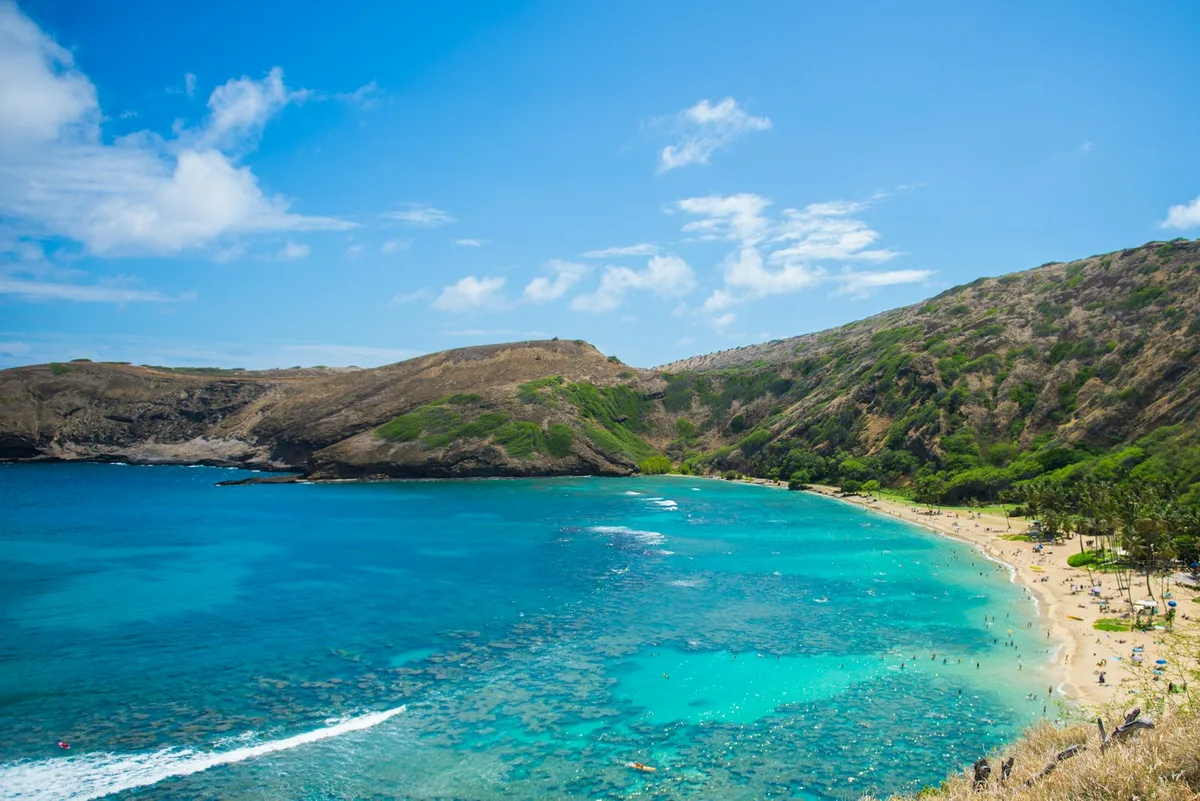
A protected, crescent-shaped bay and marine reserve on Oahu's southeast coast, popular for snorkeling.
 Private Tours
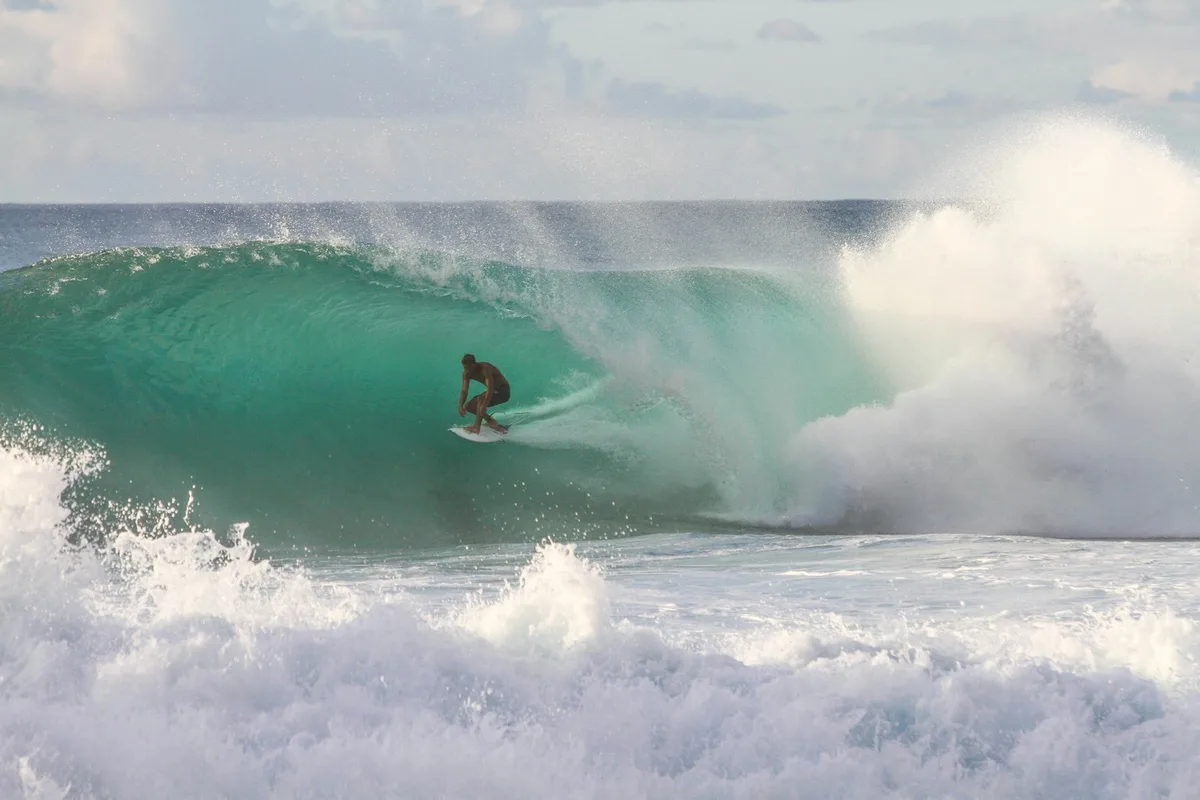
A private, fully custom full-day tour of Oahu for small groups — flexible stops from Halona Blow Hole to the North Shore, with snorkeling equipment and car seats included, offered in English and Japanese.
 Private Tours
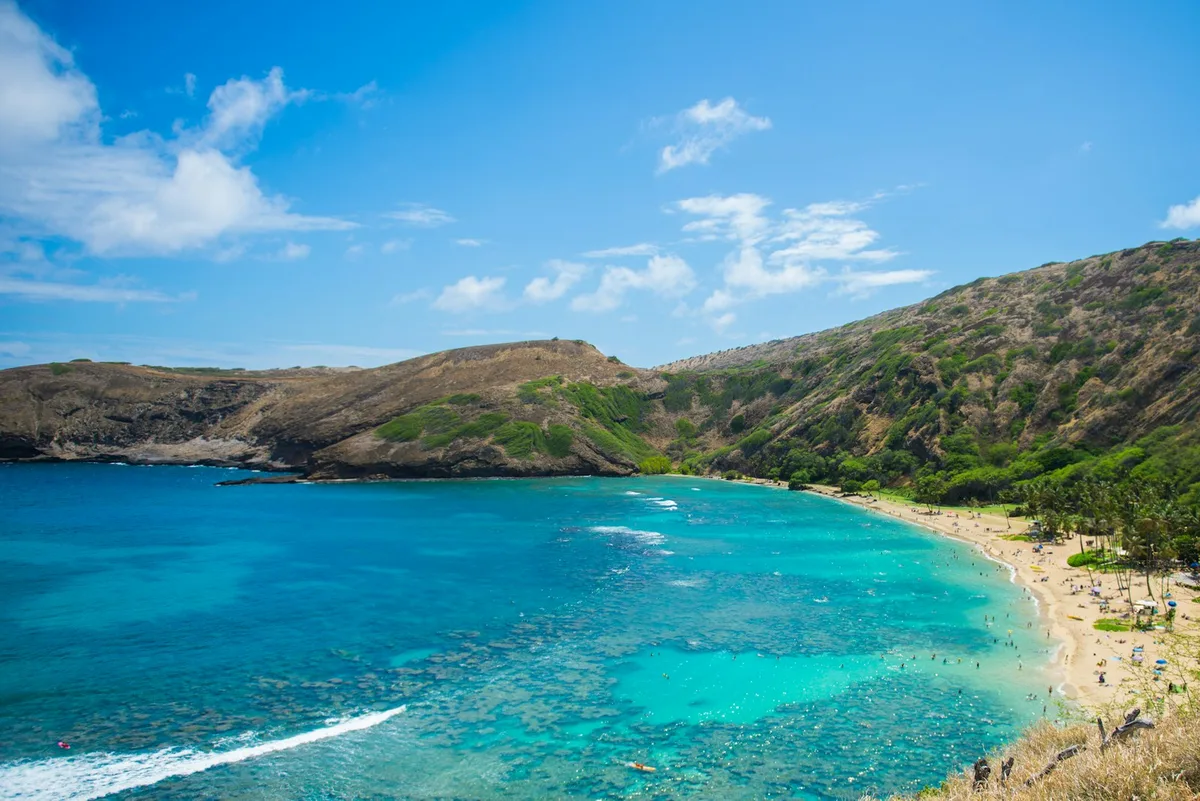
A private, full-day customizable circle-island tour of Oahu — Diamond Head, Hanauma Bay Nature Preserve, the North Shore, and the Nu'uanu Pali Lookout — in a private minivan with pickup from Waikiki, Honolulu, or your cruise ship terminal.
Visitor guide
Hanauma Bay is a curved, reef-fringed bay on Oʻahu's southeast coast, set inside the breached wall of an ancient volcanic crater. It is a city-run nature preserve and Hawaiʻi's first Marine Life Conservation District, and its management today reflects decades of lessons about how to share a fragile reef with large numbers of visitors.
The bay sits within a tuff ring. According to the City and County of Honolulu, it formed about 32,000 years ago when explosive eruptions beneath shallow water built a crater of tuff, a firm rock made of cemented volcanic ash. The last volcanic activity in the area was around 7,000 years ago. According to the City and County, the present opening to the sea is probably the result of wave erosion of the crater's low rim, creating the bay, and olivine crystals from the eruptions can still be found in the crater walls and sand. The name is generally explained as meaning a curved bay.
Hawaiian royalty valued the bay for fishing and recreation. City records note a visit by Queen Kaʻahumanu in the early 1800s, a 1848 grant of the land to Victoria Kamamalu, and King Kamehameha V's fondness for the bay as a fishing spot. The land passed to Bernice Pauahi Bishop in 1883–1884 and then to her estate. A road from Honolulu to Makapuʻu opened access in 1927, and in 1928 the Bishop Estate deeded the bay and Koko Head District Park to the city as a recreational park.
The bay has also been altered by wartime and engineering. The army set up defensive positions along the eastern shore in 1941, and in 1956 a channel was blasted through the reef for the first transpacific telephone cable.
In 1967 Hanauma became Hawaiʻi's first Marine Life Conservation District, making fishing and collecting illegal. As visitation climbed, peaking near three million visitors a year in the late 1980s, the state Department of Transportation banned private and commercial boats from entering the bay in 1988, and the University of Hawaiʻi Sea Grant program began its education program in 1990 alongside the nonprofit Friends of Hanauma Bay. A visitor center opened in 1998, a fish-feeding ban followed in 1999, and the Marine Education Center opened in 2002. Today the preserve is managed in partnership between the state Department of Land and Natural Resources, the city's parks and ocean safety departments, UH Sea Grant, and Friends of Hanauma Bay.
The bay closed for roughly eight and a half months in 2020 because of COVID-19; researchers reported clearer water, larger fish and more monk seal visits during the closure. An online reservation system was introduced in 2021. Sunscreen runoff is a recognised concern, and Hawaiʻi has banned sunscreens containing oxybenzone and octinoxate.
State surveys of fish populations have been carried out since 1969, and the city notes that the bay holds the largest reef fish biomass on Oʻahu. Wikipedia cites about 400 fish species and describes green sea turtles and parrotfish as highlights. Different sources give different species counts, so treat any single figure as approximate.
First-time visitors watch a short orientation video on reef etiquette and safety before entering the water. Reservations, closure days, entry rules and any visitor limits change, so check the City and County of Honolulu's Hanauma Bay site for current information. A private Voyzo tour makes the logistics easy, with a driver taking you door to door so you can plan around your reservation time.
See every tour and attraction we cover in Honolulu.