TorontoOntario · 36 tours
 Niagara FallsOntario · 25 tours
 New York CityNew York · 30 tours
 Las VegasNevada · 8 tours
 San FranciscoCalifornia · 16 tours
 VancouverBritish Columbia · 17 tours
 DubaiUAE · 54 tours
 Abu DhabiUAE · 5 tours
 Buenos AiresArgentina · 23 tours
 AthensGreece · 31 tours
 AucklandNew Zealand · 38 tours
 CancunMexico · 54 tours
No destinations match “”. Try searching all tours instead — that search understands full questions, not just place names.
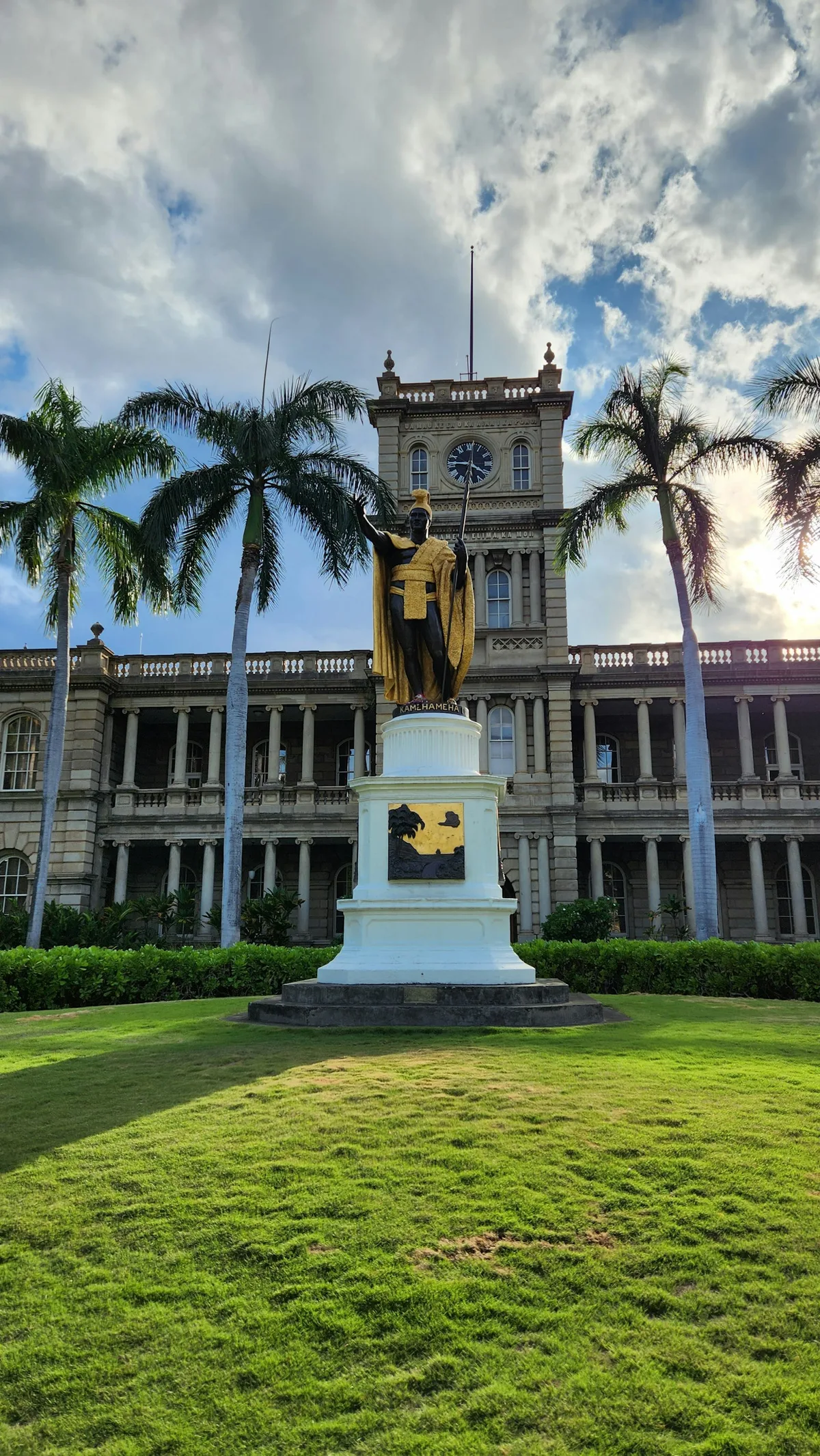
A gilded bronze statue in front of Ali'iolani Hale honoring the king who united the Hawaiian Islands.
 Private Tours
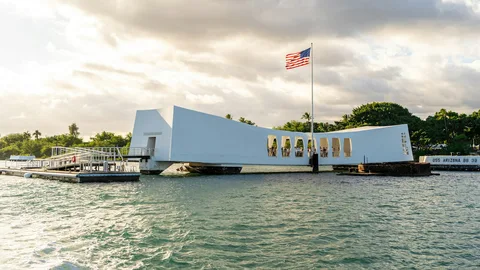
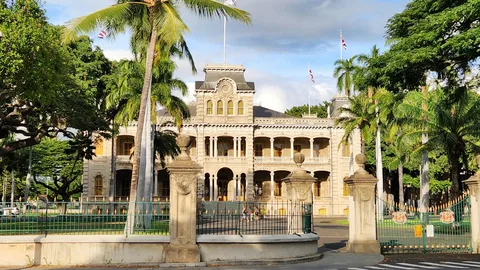
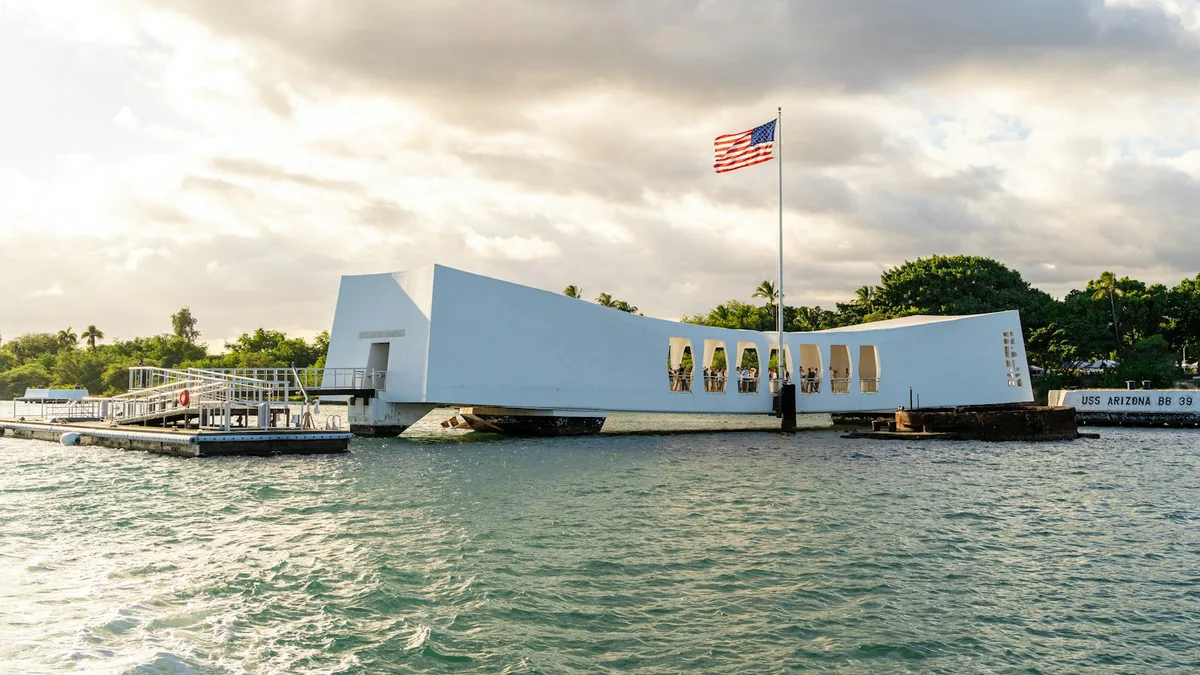
A private tour combining skip-the-line access to the USS Arizona Memorial at Pearl Harbor with downtown Honolulu's Iolani Palace, the Hawaii State Capitol, and the King Kamehameha Statue.
 Private Tours
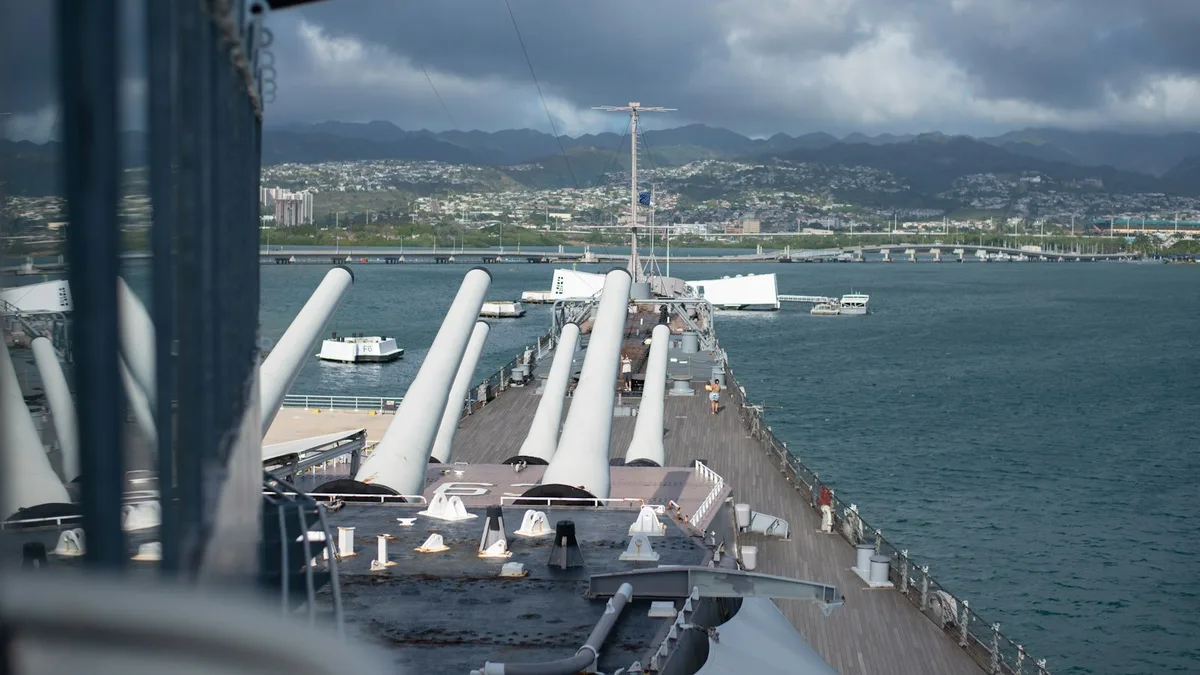
A private, in-depth Pearl Harbor tour visiting both the USS Arizona Memorial and the Battleship USS Missouri Memorial on Ford Island, plus downtown Honolulu's King Kamehameha Statue and Iolani Palace.
Visitor guide
The King Kamehameha Statue stands in front of Aliʻiōlani Hale in downtown Honolulu, honoring Kamehameha I, the chief who united the Hawaiian Islands under one rule. The Honolulu figure is not the first casting made of the sculpture: it is the replacement for one lost at sea, and its story is one of the more unusual in Hawaiʻi's public art.
The statue was proposed in 1878 by Walter M. Gibson, a member of the Hawaiian legislature, to mark the centennial of Captain James Cook's arrival in the islands. Government money paid for the project, and Gibson chaired the oversight committee. The commission went to the American sculptor Thomas Ridgeway Gould, who completed a full-size plaster model in 1880. That model was cast in Paris at the Barbedienne foundry.
The finished casting was shipped toward Hawaiʻi, but the vessel was lost near the Falkland Islands, reportedly after a fire and sinking. An insurance settlement of roughly $12,000 paid for a second casting, which reached Honolulu in January 1883. The original, meanwhile, was recovered and reached Hawaiʻi in March 1882. Because the second casting was in better condition, it was the one placed in front of Aliʻiōlani Hale, the spot first intended for the original. Its unveiling formed part of King David Kalākaua's coronation ceremonies in February 1883.
The figure is an oversized cast with a dark brown patina and gilded garments. Four partly gilded bas-relief panels on the pedestal were added after the shipwreck, funded by a further $4,000 of the insurance money. They show Kamehameha's first encounter with Cook aboard HMS Resolution off Lahaina in 1778, the chief fending off a barrage of spears, a review of a war fleet off Kohala on Hawaiʻi Island, and travelers resting beside a road, illustrating the Kānawai Māmalahoe guarantee of safe passage. Gould died in Florence in November 1881 after finishing the model for the first relief, and his son Marshall S. Gould completed the other three.
There are three well-known copies. The recovered original now stands in Kapaʻau, North Kohala, on Hawaiʻi Island. A third casting, made from molds taken of the Honolulu statue, was given by Hawaiʻi to the National Statuary Hall Collection in 1969 and dedicated in the Capitol Rotunda on April 15, 1969; it now stands in Emancipation Hall at the Capitol Visitor Center. A reproduction also stands in Hilo.
The statue is best known to many visitors for the annual Kamehameha Day ceremony, when it is draped in long lei. Local reporting traces the draping tradition to 1901, and the holiday itself to June 11, 1872. Under the protocol published by the King Kamehameha Celebration Commission, lei go over the statue's arms rather than around the neck, are closed, and are roughly 20 to 30 feet long, made only of natural, biodegradable materials. The ceremony includes the Royal Hawaiian Band and presentation of hoʻokupu, or ceremonial offerings. Check the commission for the current year's schedule.
Aliʻiōlani Hale houses the Hawaiʻi Supreme Court and the Kamehameha V Judiciary History Center, so the statue sits in a working government district. A private tour with Voyzo suits it well: your driver can collect you at your hotel and the stop works as a short, unhurried photo and history pause within a wider Honolulu day.
See every tour and attraction we cover in Honolulu.