TorontoOntario · 36 tours
 Niagara FallsOntario · 25 tours
 New York CityNew York · 30 tours
 Las VegasNevada · 8 tours
 San FranciscoCalifornia · 16 tours
 VancouverBritish Columbia · 17 tours
 DubaiUAE · 54 tours
 Abu DhabiUAE · 5 tours
 Buenos AiresArgentina · 23 tours
 AthensGreece · 31 tours
 AucklandNew Zealand · 38 tours
 CancunMexico · 54 tours
No destinations match “”. Try searching all tours instead — that search understands full questions, not just place names.
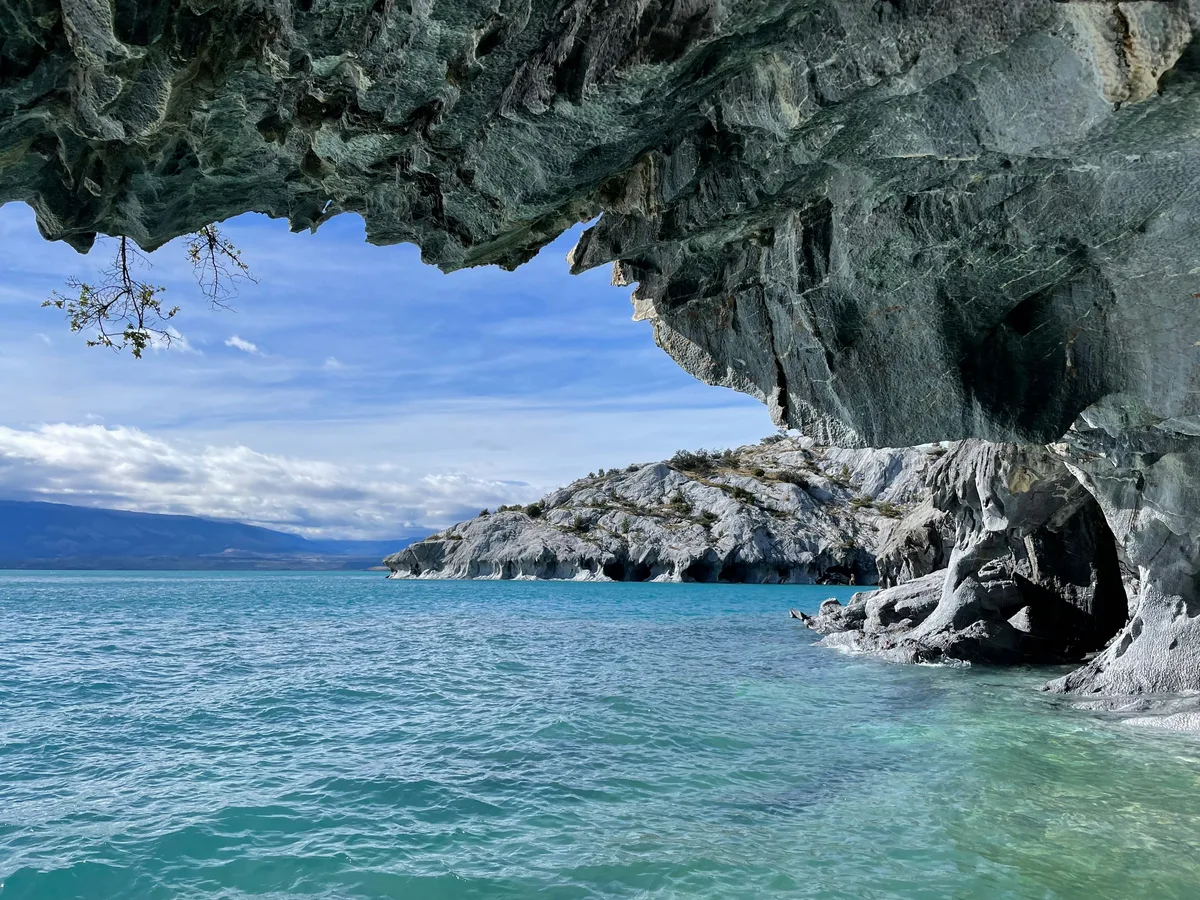
Wave-carved marble caverns and swirling blue-and-white rock formations on the shore of General Carrera Lake, reached by small boat along Chile's remote Carretera Austral.
Visitor guide
The Marble Caves, known in Spanish as Capillas de Marmol or Cuevas de Marmol, are caverns, columns and tunnels of marble on the shore of General Carrera Lake in Chilean Patagonia. Wikipedia lists them with the Marble Chapel and Marble Cathedral as unusual geological formations midway along the lake's length.
Wikipedia says the caves were formed by wave action over the last 6,200 years. A geologist interviewed by Explorersweb explains that the marble began as limestone that was metamorphosed deep underground and that calcium carbonate makes the rock highly soluble, so erosion likely occurred quickly after the glaciers retreated. Estimates of the timescale vary between sources, so the 6,000-year figure is best treated as approximate.
Layering in the rock reflects differences in mineral content, and the blue colour is attributed to the reflection of the lake's azure water. The tint of the water changes with the season and water level, so the appearance varies from visit to visit.
The caves are reached by boat from nearby villages, since the formations sit on a marble peninsula at the water's edge. Tours depart from near Puerto Rio Tranquilo and from Chile Chico. Weather and lake conditions can affect departures, as the area is known for wind and rapidly changing weather.
The formations are known by several names. Wikipedia lists the Marble Caves, the Marble Chapel and the Marble Cathedral, and Explorersweb warns that these names may refer to specific features within the same group. Together they are described as caverns, columns and tunnels formed in monoliths of marble on the shoreline midway along the lake.
Preservation of younger rock units within the lake's graben, a block dropped between faults, has produced a reversed stratigraphy that geologists study, and the lake bed lies as much as 350 metres below mean sea level according to Wikipedia. This glacial and tectonic history helps explain the lake's depth.
The region has valuable lead and zinc deposits that were exploited intermittently between 1931 and 1996 at Puerto Cristal, and the lake is known as a trout and salmon fishing destination. The 1971 and 1991 eruptions of the Hudson volcano hurt the local sheep-farming economy.
A private guided visit with a dedicated vehicle and driver is useful in this remote area, where distances are long and boat departures are arranged locally.
See every tour and attraction we cover in Chile.