TorontoOntario · 36 tours
 Niagara FallsOntario · 25 tours
 New York CityNew York · 30 tours
 Las VegasNevada · 8 tours
 San FranciscoCalifornia · 16 tours
 VancouverBritish Columbia · 17 tours
 DubaiUAE · 54 tours
 Abu DhabiUAE · 5 tours
 Buenos AiresArgentina · 23 tours
 AthensGreece · 31 tours
 AucklandNew Zealand · 38 tours
 CancunMexico · 54 tours
No destinations match “”. Try searching all tours instead — that search understands full questions, not just place names.
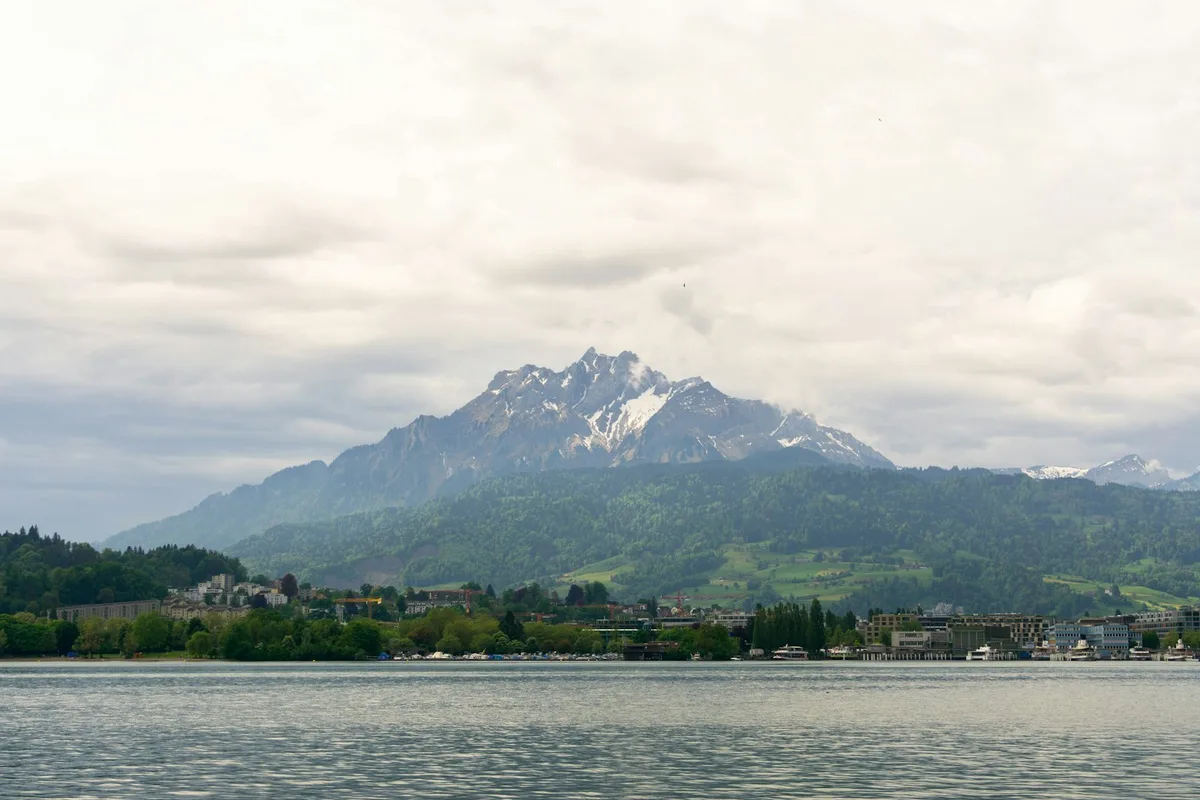
A jagged peak above Lucerne reached by the world's steepest cogwheel railway, with cable cars and a boat across Lake Lucerne completing the "Golden Round Trip."
Visitor guide
Mount Pilatus is a mountain massif overlooking Lucerne in Central Switzerland. Its highest peak, the Tomlishorn, stands at about 2,128.5 metres, and the mountain is reached from the lake and city side by a cogwheel railway, cable cars and gondolas.
The name Pilatus is explained in several ways. One local legend says it comes from Pontius Pilate being buried there, and a similar legend is told about Monte Vettore in Italy. Other explanations are that the mountain looks like a reclining man named Pilate, or that the name derives from the Latin pileatus, meaning cloud-topped. These are folk explanations rather than settled history, so the origin remains uncertain.
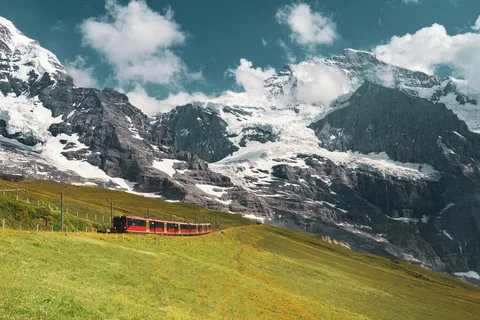
The Pilatus Railway opened in 1889 and runs from Alpnachstad to the top. Wikipedia calls it the world's steepest cogwheel railway. The line climbs from the shore of Lake Alpnach up steep terrain to the summit area, offering views over Lake Lucerne and the surrounding peaks.
On the Lucerne side, the base at Kriens is the start of aerial cableways and panorama gondolas. The newest aerial cable car is called the Dragon Ride. Together these lifts give a second way up and down the mountain.
The Golden Round Trip is a summer route built around these connections. Visitors travel by boat across Lake Lucerne to Alpnachstad, ride the cog railway up, descend by aerial cableway and gondola, and return to Lucerne by trolleybus. The loop lets people see the lake, the mountain and the city edge in one outing.
Wikipedia mentions alpine ibex seen in a family group near the summit. The massif's jagged profile above Lucerne makes it a landmark visible from much of the city and lake. Weather changes quickly at altitude, and cloud on the summit can affect views.
The Pilatus Railway opened on 4 June 1889 as a steam line and was electrified in 1937. Wikipedia says it has a maximum gradient of 48 percent and an average of 38 percent according to the operator, and calls it the steepest rack railway in the world. The engineer Eduard Locher proposed the design that raised the maximum grade to 48 percent and halved the distance. His system uses a horizontal double rack between the rails, with two flanged cogwheels on vertical shafts that engage it, which keeps the cogwheels from climbing out of the rack and the car from toppling in crosswinds.
The line is 4.6 kilometres long with a vertical climb of about 1,635 metres, running from Alpnachstad on Lake Alpnach to Pilatus Kulm at 2,073 metres, near the Esel summit. Construction began in March 1886, took about 400 working days over three years and employed about 600 labourers, mostly Italians. Cars run at up to about 9 kilometres an hour downhill on the steepest sections and up to about 15 uphill, according to the operator. Alpnachstad connects with steamers on Lake Lucerne and with trains on the Brünig line.
The Pilatus loop involves several transport changes. A private guide can handle the sequence and timing, and a private vehicle and driver can handle the segments around Lucerne, Alpnachstad and Kriens so you can focus on the views.
See every tour and attraction we cover in Switzerland.