TorontoOntario · 36 tours
 Niagara FallsOntario · 25 tours
 New York CityNew York · 30 tours
 Las VegasNevada · 8 tours
 San FranciscoCalifornia · 16 tours
 VancouverBritish Columbia · 17 tours
 DubaiUAE · 54 tours
 Abu DhabiUAE · 5 tours
 Buenos AiresArgentina · 23 tours
 AthensGreece · 31 tours
 AucklandNew Zealand · 38 tours
 CancunMexico · 54 tours
No destinations match “”. Try searching all tours instead — that search understands full questions, not just place names.
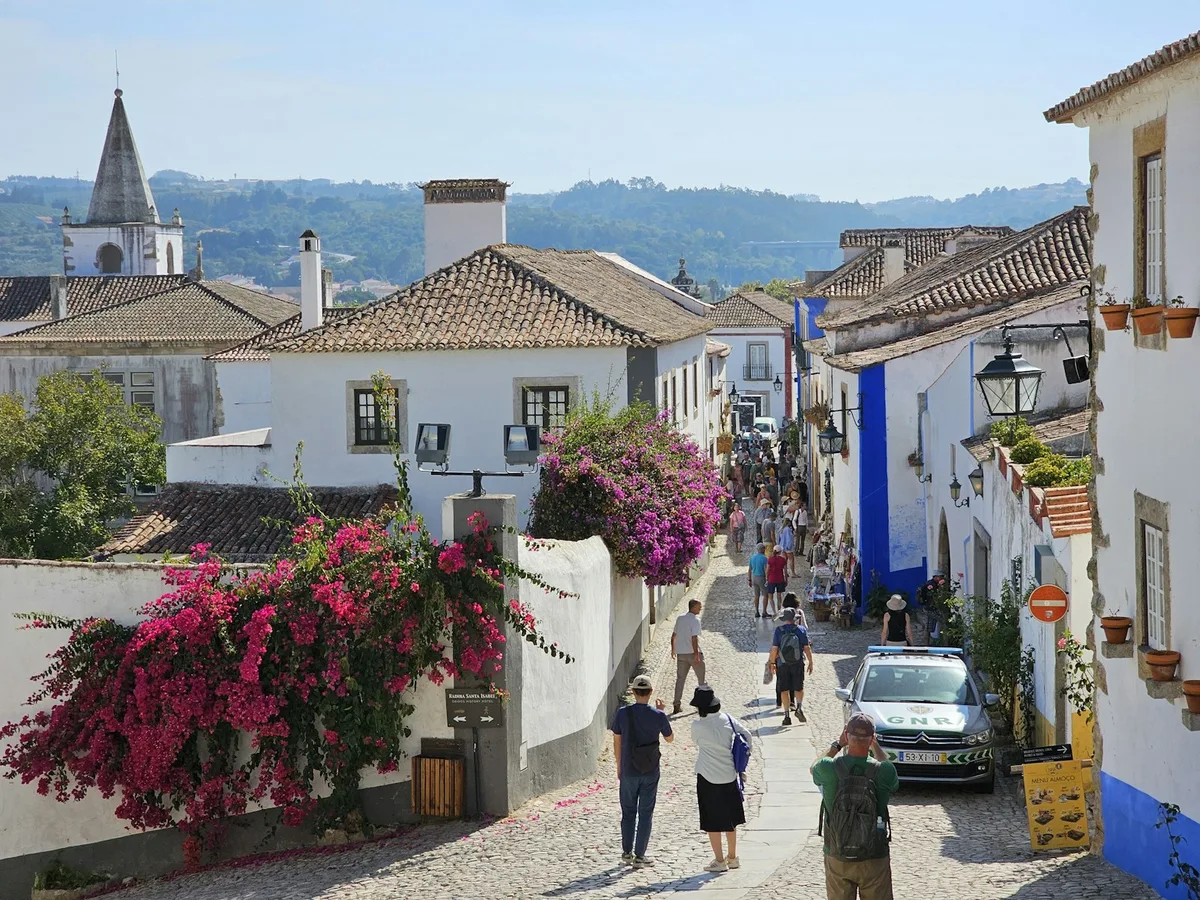
A walled medieval hilltop town north of Lisbon, its whitewashed, bougainvillea-draped houses ringed by a 14th-century castle wall walkable end to end.
Visitor guide
Óbidos is a walled medieval town in the Oeste region of Portugal, on a hill in Leiria district north of Lisbon. Its well-preserved castle, walls and whitewashed houses make it one of the country's best-known examples of medieval architecture, and it is also a UNESCO City of Literature.
Wikipedia traces the name to the Latinised form of the older Celtic Eburobricio. Celtic settlers came first, Phoenicians later traded there, and a Roman town stood near the foothills, where excavations have found a forum and baths. In the 5th century the settlement moved to the more defensible hilltop, which the Moors fortified after about 713.
Afonso Henriques took the town from the Moors in 1148, and tradition credits the knight Gonçalo Mendes da Maia with storming the castle. King Sancho I granted the first charter in 1195, and in 1210 Afonso II gave the town's title to Queen Urraca. Because queens often patronised the town, it became known as the Vila das Rainhas, the Town of the Queens, and royal consorts continued to make donations until the 16th century.
King Dinis I remodelled the castle and walls, which are built of limestone and marble, and the keep dates from the 14th century under King Fernando. The settlement grew beyond the castle gates during this period. Today the castle houses a pousada, a state-run hotel, and the walls, streets and squares are popular with visitors.
The Church of Santa Maria hosted a royal wedding in 1441, when Afonso V married his cousin Isabella of Coimbra; Wikipedia notes that both were children at the time. King Manuel I issued a formal charter in 1513 and redeveloped the urban area. The 1755 earthquake damaged the walls, several churches and many buildings, destroying much of the Arab and medieval architecture.
UNESCO named Óbidos a City of Literature in 2015, and the town has 14 bookstores, one of which occupies a church while another also sells fish. The Fólio literary festival has been held every October since 2015. Other events include the Óbidos Medieval Market, which runs for about two weeks each July with the castle and town recreating medieval Europe, and the International Chocolate Festival in early March.
During the 1974 Carnation Revolution the village served as a centre of government and a meeting place for those involved in the armed forces movement. The town proper has about 3,100 inhabitants, while the municipality covers 141.55 square kilometres on the Atlantic coast and is divided into seven civil parishes. Notable people include the painter Josefa de Óbidos, who lived from 1630 to 1684.
The town is compact and its cobbled lanes are steep in places. A private tour with a local driver and guide suits a day trip from Lisbon, giving time to walk the village inside the walls.
See every tour and attraction we cover in Portugal.