TorontoOntario · 36 tours
 Niagara FallsOntario · 25 tours
 New York CityNew York · 30 tours
 Las VegasNevada · 8 tours
 San FranciscoCalifornia · 16 tours
 VancouverBritish Columbia · 17 tours
 DubaiUAE · 54 tours
 Abu DhabiUAE · 5 tours
 Buenos AiresArgentina · 23 tours
 AthensGreece · 31 tours
 AucklandNew Zealand · 38 tours
 CancunMexico · 54 tours
No destinations match “”. Try searching all tours instead — that search understands full questions, not just place names.
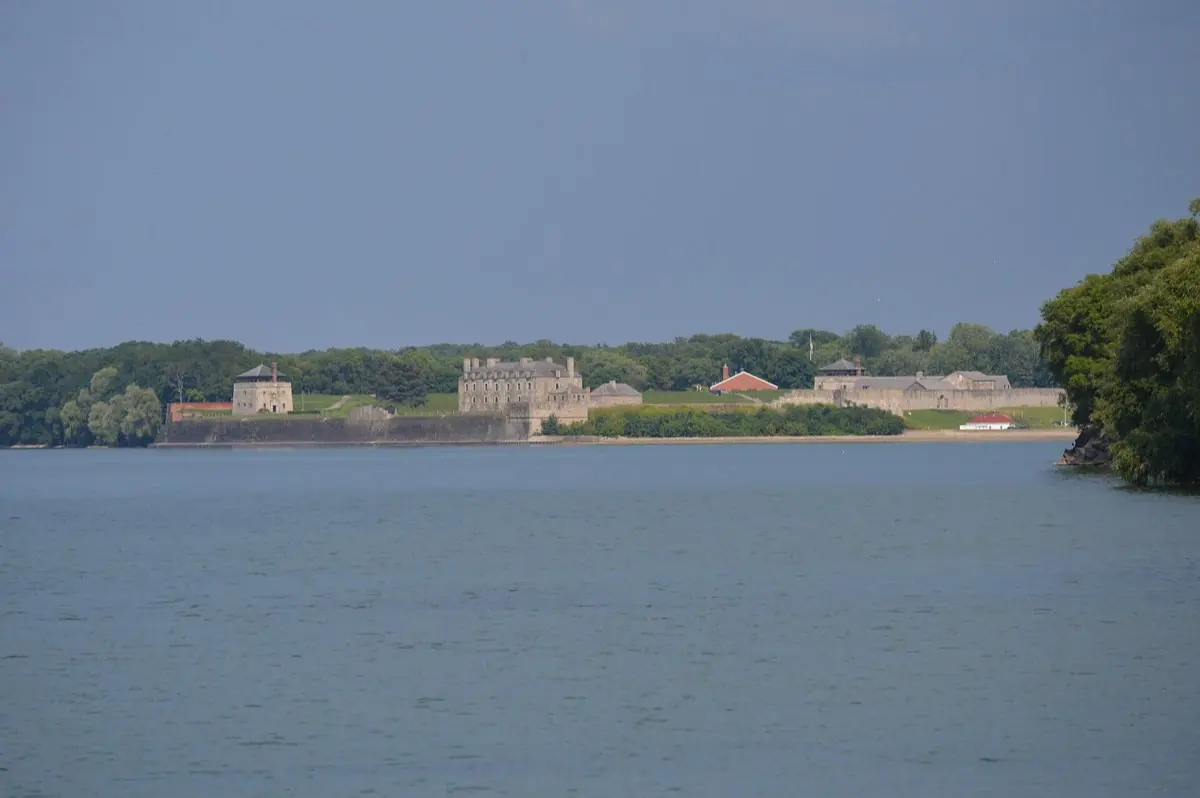
A centuries-old fort at the mouth of the Niagara River, dating back to French colonial times.
Visitor guide
Old Fort Niagara stands where the Niagara River meets Lake Ontario, near Youngstown, New York, and it is one of the few places in North America where French, British and American flags all flew over the same walls. Its centrepiece is the stone "French Castle" of 1726, and it has been a National Historic Landmark since 1960.
The mouth of the Niagara was a strategic spot long before the castle. The fort's own timeline records that in 1679 La Salle built Fort Conti here, and in 1687 the Marquis de Denonville replaced it with Fort Denonville, whose garrison of about 100 men suffered terribly through a hard winter and disease; the post was abandoned in 1688. In 1720 Louis-Thomas Chabert de Joncaire won Seneca permission to build a trading post, the Magasin Royal, also called the Maison de la Paix.
In 1726 the engineer Gaspard-Joseph Chaussegros de Lery built a two-story stone house, the Maison a Machicoulis, to replace the older post. It was presented as a trading house, which helped win agreement from the Iroquois, but it was also a defensible fort. The name "French Castle" only came into use in the 19th century. The building is widely described as the oldest in the Great Lakes region, though that claim comes from historical markers and a state resolution rather than an independent survey, so treat it as a commonly repeated description. The French expanded the fort to roughly its present size in 1755 as the Seven Years' War began, and the main gate was renamed the Porte des Cinq Nations the following year.
In July 1759 a British force besieged the fort for 19 days. The French relief column was ambushed at La Belle-Famille, and the French commander, Pierre Pouchot, surrendered to Sir William Johnson, who had taken over after General John Prideaux was killed. During the American Revolution the fort served as a base for Loyalists including Butler's Rangers. The 1783 Treaty of Paris awarded it to the United States, but British troops did not leave until 1796 following the Jay Treaty. On December 19, 1813, during the War of 1812, British forces captured the fort in retaliation for the burning of Newark, and the British returned it after the Treaty of Ghent; it has been in U.S. hands since.
The U.S. Army kept using the site long after the Revolution. After the Civil War a camp-style "New Fort Niagara" was built outside the old walls, and the post later trained troops for the Spanish-American War and opened an officer training school in 1917. In World War II it served as an induction center and then held about 1,200 German prisoners of war, and in the late 1950s it housed anti-aircraft and Nike missile units. The Army deactivated the post in 1963.
The Old Fort Niagara Association, a nonprofit founded in 1927, operates the historic site under a licence first established with the War Department in 1931, and it states that it exists to preserve and restore the fort and teach its history. The site runs musket demonstrations, guided tours, reenactments and special events, and it is also designated an Old Fort Niagara State Historic Site within Fort Niagara State Park. The Colonial Niagara Historic District was added to the National Register of Historic Places in 1966. Check the Association for current programs, hours and admission.
The fort is a short drive from the falls, at the northern end of the Niagara Frontier. On a Voyzo private tour your driver can bring you door to door and leave you free to spend as long as you like among the buildings.
See every tour and attraction we cover in Niagara Falls.