TorontoOntario · 36 tours
 Niagara FallsOntario · 25 tours
 New York CityNew York · 30 tours
 Las VegasNevada · 8 tours
 San FranciscoCalifornia · 16 tours
 VancouverBritish Columbia · 17 tours
 DubaiUAE · 54 tours
 Abu DhabiUAE · 5 tours
 Buenos AiresArgentina · 23 tours
 AthensGreece · 31 tours
 AucklandNew Zealand · 38 tours
 CancunMexico · 54 tours
No destinations match “”. Try searching all tours instead — that search understands full questions, not just place names.
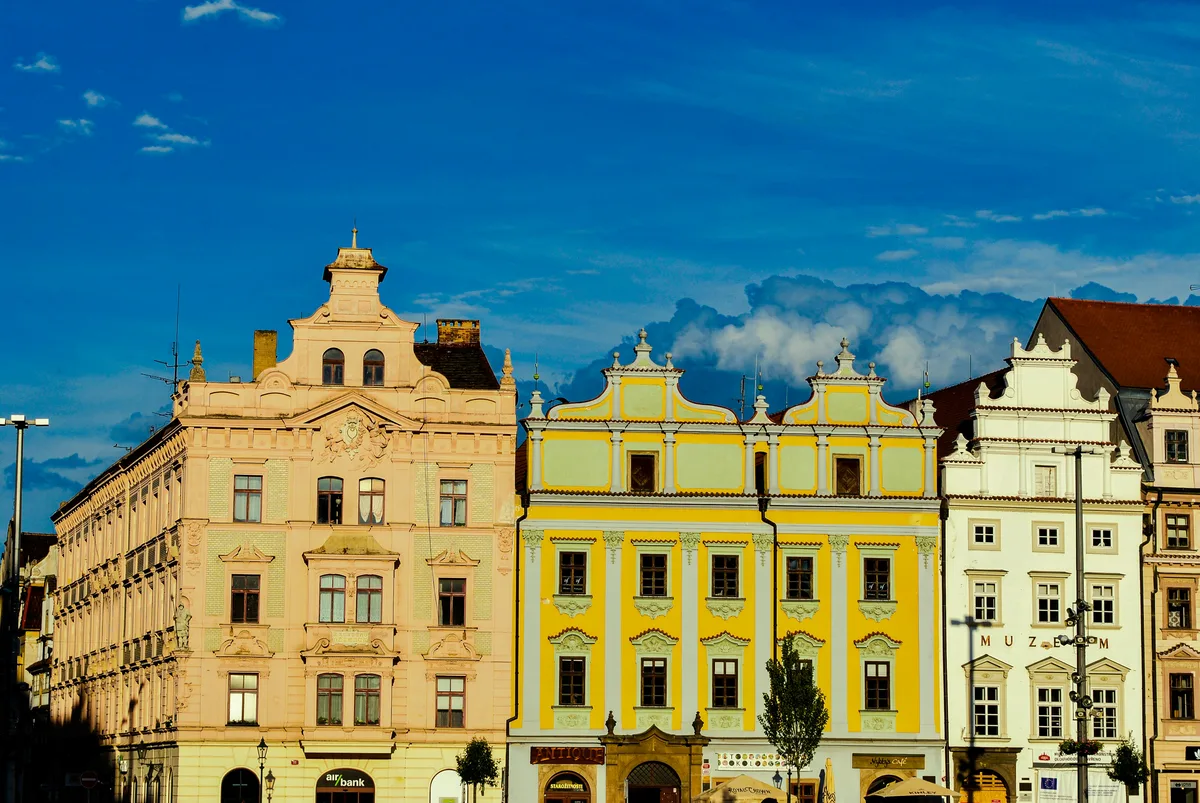
The city that gave the world Pilsner-style lager in 1842, with a Gothic cathedral, a network of medieval underground passages beneath the old town, and the Pilsner Urquell brewery on its edge.
Visitor guide
Plzeň (Pilsen in English and German) is the fourth most populous city in the Czech Republic, about 78 kilometres west of Prague at the confluence of four rivers: the Mže, Úhlava, Úslava and Radbuza, which together form the Berounka. Its historic centre around Náměstí Republiky square has been protected as an urban monument reservation since 1989 and is known for Baroque architecture and for the Gothic Cathedral of St. Bartholomew.
New Plzeň was founded nearby in 1295 by King Wenceslaus II, and it soon prospered on trade routes from Bohemia to Nuremberg and Regensburg. By the 14th century it was the third-largest city in Bohemia after Prague and Kutná Hora. Plzeň was a centre of Catholic resistance during the Hussite Wars, when Prokop the Great unsuccessfully besieged it three times. In the 1470s and 1480s it had the first printing press in Bohemia, and the oldest book printed in Bohemia, the Statuta of Arnošt of Pardubice, was printed here in 1476. Emperor Rudolf II made Plzeň his seat from 1599 to 1600.
The Cathedral of St. Bartholomew, built in Gothic style in the late 13th century, is the city's most prominent landmark. Its tower, at 102.6 metres, is described by Wikipedia as the highest in the Czech Republic. Its interior holds hundreds of works of art, the most valuable being the statue known as the Plzeň Madonna, one of the most important Gothic monuments in the country.
The Renaissance City Hall was built between 1554 and 1559 by the Italian architect Giovanni de Statia and reconstructed in Neo-Renaissance style with sgraffiti between 1907 and 1912. The plague column on the square, dating from 1681, is the work of local sculptor Kristian Widman. The Franciscan Monastery, a 14th-century Gothic complex, houses the Museum of Ecclesiastical Art, and the West Bohemian Museum, founded in 1878, is next door.
Fragments of the Gothic city fortifications from the second quarter of the 14th century still survive, often incorporated into newer townhouses. Beneath the centre lies a labyrinth of tunnels and cellars about 20 kilometres in total length, the third largest in the country, with corridors built gradually from the 13th century. Almost 800 metres are open to the public, with an entrance from the Brewing Museum.
The city is famous as the home of Pilsner beer. Wikipedia records that the first written mention of brewing in Plzeň dates from 1307, and that city officials founded a city-owned brewery in 1839. They recruited the Bavarian brewer Josef Groll, who produced the first batch of modern Pilsner on 5 October 1842. The combination of pale malt, soft local water, Saaz hops and Bavarian-style lagering produced a clear golden beer regarded as a sensation. The Pilsner Urquell trademark was created in 1898.
The Plzeňský Prazdroj brewery tour includes historic cellars and a water tower from 1905 to 1907. The Great Synagogue, built in 1892 to 1893, is described by Wikipedia as the second largest in Europe after Budapest's Dohány Street Synagogue, though a 2022 Czech News Agency report calls it the third largest in Europe. Plzeň was European Capital of Culture in 2015.
A private guided visit works well for a half day in the centre, with the brewery as a natural complement.
See every tour and attraction we cover in Czechia.