TorontoOntario · 36 tours
 Niagara FallsOntario · 25 tours
 New York CityNew York · 30 tours
 Las VegasNevada · 8 tours
 San FranciscoCalifornia · 16 tours
 VancouverBritish Columbia · 17 tours
 DubaiUAE · 54 tours
 Abu DhabiUAE · 5 tours
 Buenos AiresArgentina · 23 tours
 AthensGreece · 31 tours
 AucklandNew Zealand · 38 tours
 CancunMexico · 54 tours
No destinations match “”. Try searching all tours instead — that search understands full questions, not just place names.
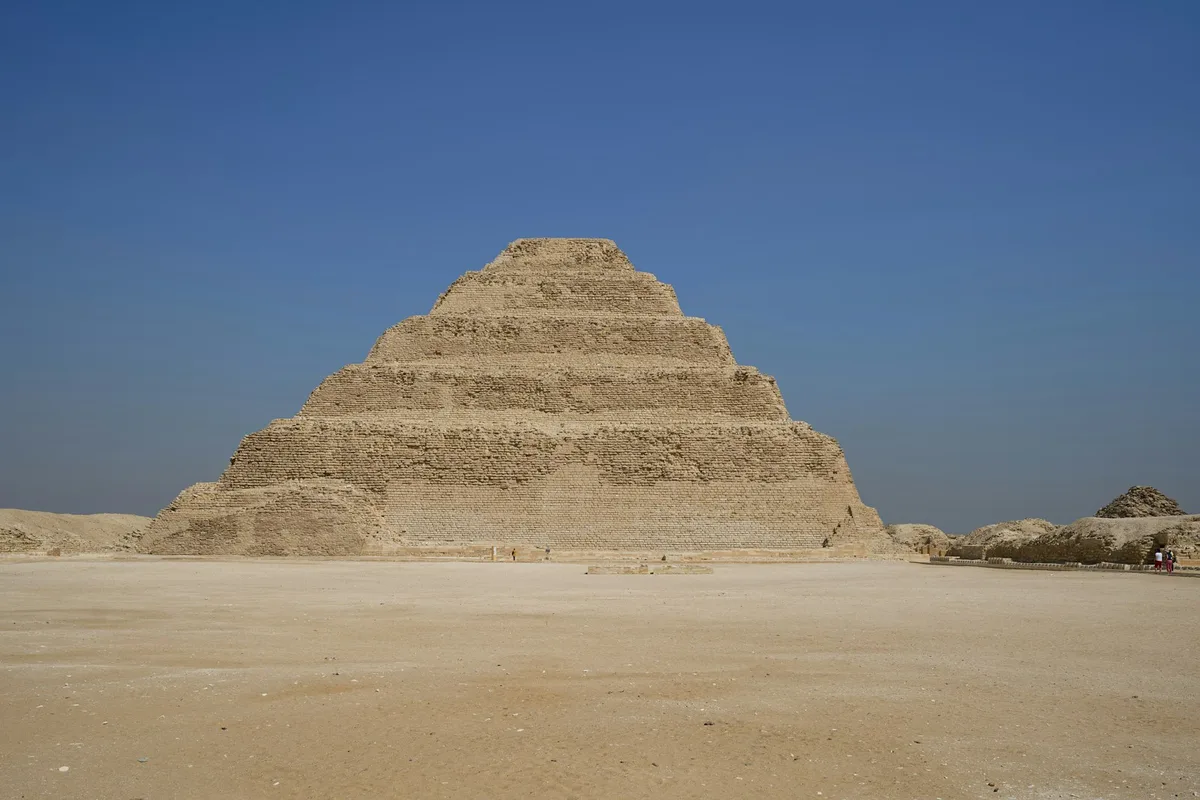
The Step Pyramid of Djoser at Saqqara, built around 2670 BC as Egypt's earliest large stone monument and the predecessor to the smooth-sided pyramids of Giza.
Visitor guide
The Pyramid of Djoser, also called the Step Pyramid, is an archaeological site in the Saqqara necropolis in Egypt, northwest of the ruins of Memphis. Built around 2667 to 2648 BC during the Third Dynasty as the burial place of the pharaoh Djoser, it is described by Wikipedia as the first Egyptian pyramid and the earliest colossal stone building in Egypt.
Djoser is known in his tomb by the Horus name Netjerikhet; the name Djoser was given by New Kingdom visitors more than a thousand years later. Most Egyptologists credit his vizier Imhotep with designing the complex, based partly on a statue and Imhotep's title overseer of sculptors and painters. The Greeks later deified Imhotep as Asclepios.
The monument was revised several times. It began as a flat-roofed mastaba tomb of about 63 m square, was enlarged in stages, and was then converted into a pyramid, finally reaching six steps. The finished pyramid stood about 60 to 62.5 m tall, depending on the source on a base of roughly 109 m by 121 m and was clad in polished white limestone. The complex marked the first large-scale use of limestone in place of mudbrick, and scholars disagree about why the mastaba became a pyramid.
Beneath the pyramid lies a labyrinth of tunnels and chambers totalling nearly 6 km, connected to a central shaft about 7 m square and 28 m deep. Some walls are inlaid with blue faience tiles imitating woven reed matting, and low-relief panels show the king taking part in the Heb-sed festival. Storerooms held over 40,000 stone vessels, many inscribed with the names of earlier kings. The granite burial chamber was heavily robbed and no body was recovered.
The complex covers about 15 hectares. A rock-cut trench about 750 m long surrounds it, and an enclosure wall about 10.5 m high and over 1.6 km long has 1,680 hand-carved niches on its outer face, with fourteen false doors and one real entrance. An entrance colonnade of about 40 columns carved to look like bundled reeds leads to the south court. In the north temple, a small enclosed serdab housed a statue of the king's ka, with two eye-holes in its north wall. The Heb-sed court was built for the king to perform the jubilee ritual in the afterlife.
The complex introduced the pyramidal royal tomb and mass use of stone, and it set the precedent for the Fourth, Fifth and Sixth Dynasty pyramids, including those at Giza. It is part of the Memphis and its Necropolis UNESCO site, inscribed in 1979. Wikipedia notes that the site reopened to visitors in March 2020 after a 14-year restoration.
Saqqara is a spread-out desert site, and a private guided visit with a driver suits the distances between monuments.
See every tour and attraction we cover in Egypt.