TorontoOntario · 36 tours
 Niagara FallsOntario · 25 tours
 New York CityNew York · 30 tours
 Las VegasNevada · 8 tours
 San FranciscoCalifornia · 16 tours
 VancouverBritish Columbia · 17 tours
 DubaiUAE · 54 tours
 Abu DhabiUAE · 5 tours
 Buenos AiresArgentina · 23 tours
 AthensGreece · 31 tours
 AucklandNew Zealand · 38 tours
 CancunMexico · 54 tours
No destinations match “”. Try searching all tours instead — that search understands full questions, not just place names.
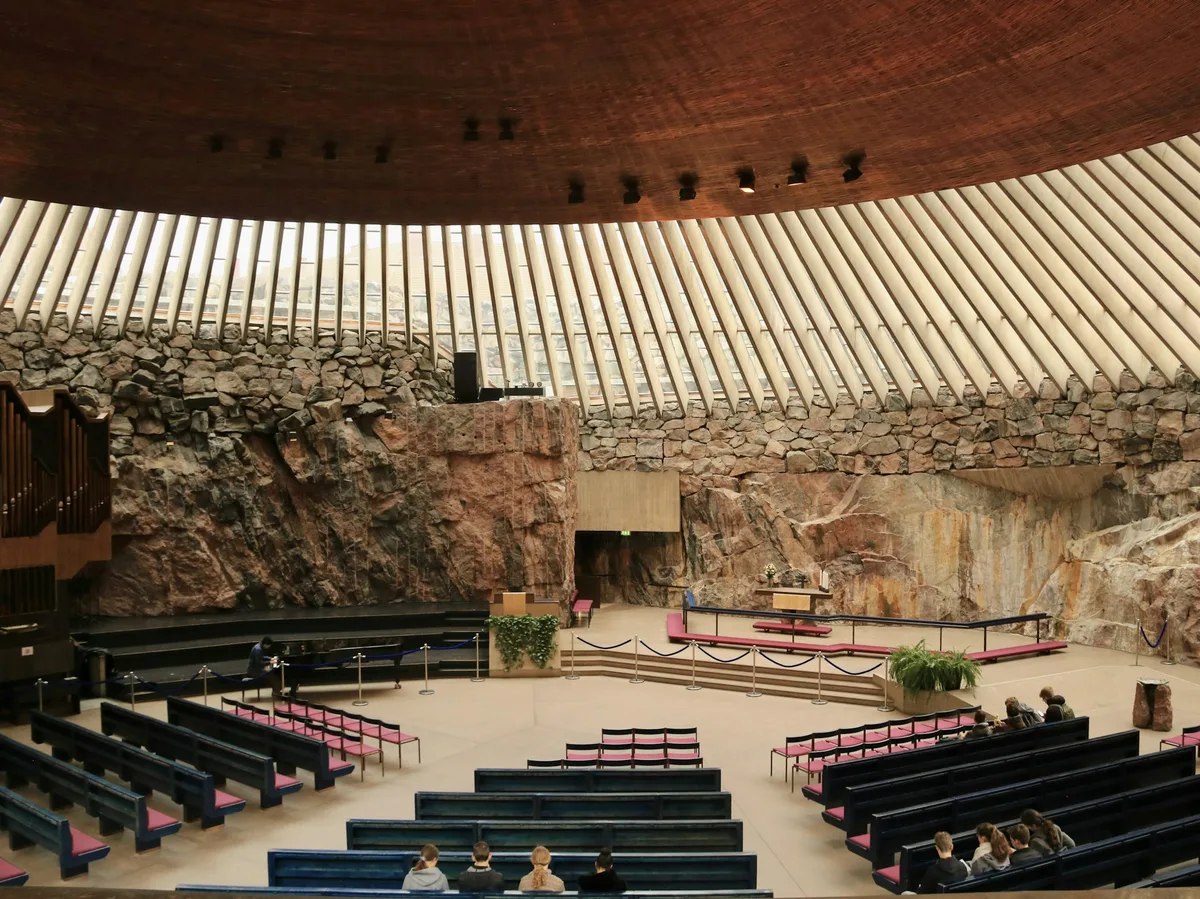
A Lutheran church carved directly into solid granite bedrock in the 1960s, lit by a ring of skylights beneath a copper dome, and famous for its natural acoustics.
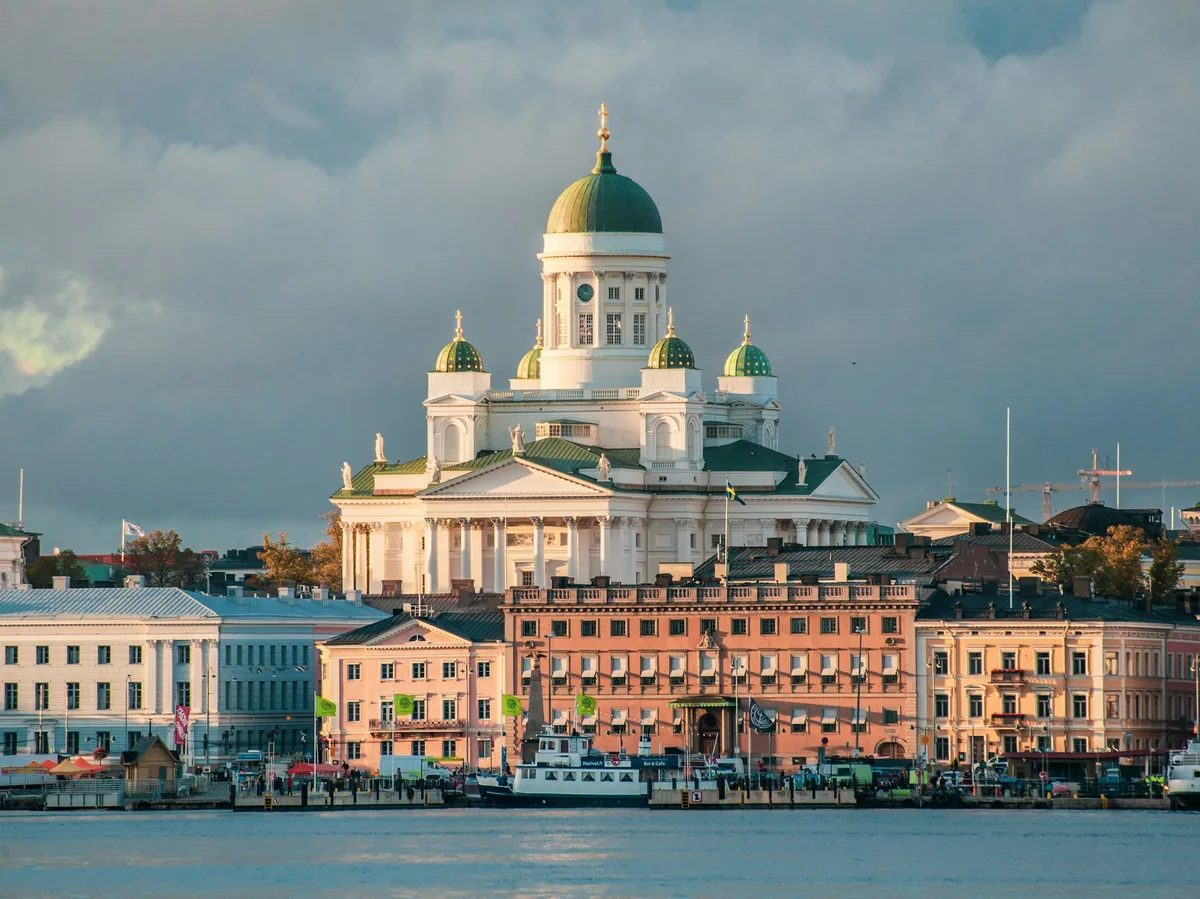 Multi-Day Tours
A 10-day private circuit through all three Baltic capitals that finishes in Finland — Vilnius and Trakai Castle, Riga's Art Nouveau streets, Tallinn's medieval Old Town and Lahemaa National Park, ending with a ferry crossing to Helsinki.
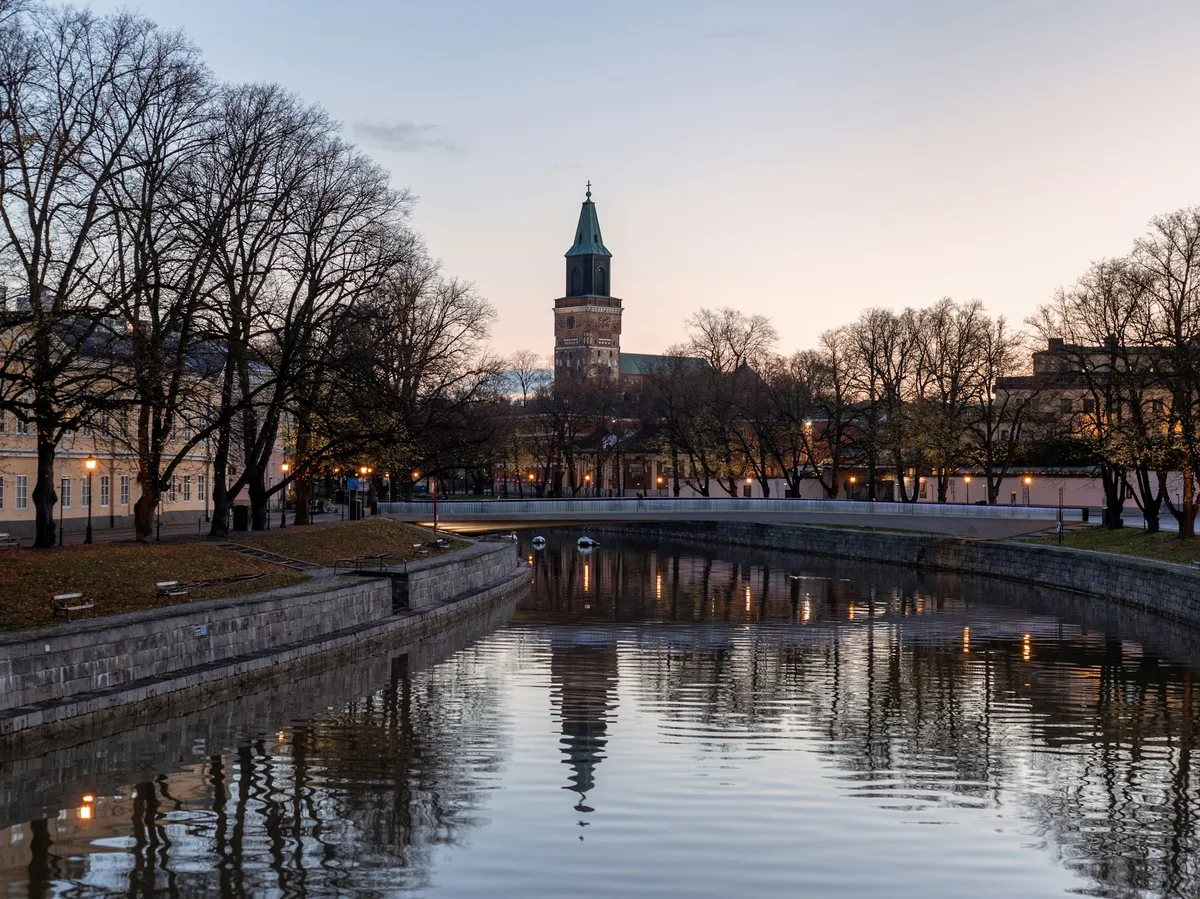 Multi-Day Tours
A comprehensive 18-day journey across four countries — Lithuania's Vilnius and Klaipėda, Latvia's Kuldīga and Riga, Estonia's Tartu and Tallinn, and southern Finland's Helsinki and Turku — for travelers who want to see the whole region in depth.
Visitor guide
Temppeliaukio Church, also called the Church of the Rock, is an Evangelical Lutheran church in the Toolo district of Helsinki, Finland. Its main hall is excavated directly into granite bedrock and capped by a copper-lined dome, making it one of the capital's most distinctive pieces of modern architecture.
Plans for a church in this part of Helsinki stretch back to the early 1930s, but competitions held then and in 1936 produced no workable design. Architect J. S. Siren was later assigned a more monumental church, but construction stopped when the Winter War began in November 1939 and was never resumed.
The present church comes from a 1961 competition won by the brothers Timo and Tuomo Suomalainen with an entry titled Kivikirkko, meaning Stone Church. Work began in February 1968 and the church was consecrated in September 1969, at first as Taivallahti Church. It was renamed Temppeliaukio Church in 1971.
The natural rock forms the walls of the interior, with the uneven faces left visible. A ring of roughly 180 windows between the rock and the dome lets daylight into the hall, and the dome itself is lined with copper. The church seats about 750 people.
The architects had originally planned to cover the rock with concrete. According to Wikipedia, conductor Paavo Berglund and acoustician Mauri Parjo argued for keeping the rough surfaces, which improved the sound. The result is a hall known for its acoustics, and the church is used for concerts as well as worship. The organ, built by Veikko Virtanen in 1975, has 43 stops and four manuals. Bells are not rung; a recording of bells by Taneli Kuusisto is played through exterior loudspeakers.
The project was not universally welcomed. Critics objected to its cost, given as roughly four million Finnish marks, and in July 1968 students painted the word BIAFRA on the unfinished building to protest spending on a church while famine relief was needed.
Over time the church became one of Helsinki's most visited attractions. It was protected in 2004 and is included in the DOCOMOMO Finland list of important modernist sites. It remains an active parish church, and sightseeing is paused during services.
The church sits in a residential part of Helsinki, where an outcrop of bedrock rises among apartment buildings. From the street it looks like a low copper roof set into the stone, and the contrast between the plain exterior and the glowing interior is part of its appeal. Visitors can expect a quiet, contemplative space where the rock surfaces, rather than ornament, set the character.
Because the interior is small and sound carries well, many travellers find a short, unhurried visit works best. A private tour can fit it alongside other Helsinki landmarks such as the cathedral and the Sibelius Monument.
See every tour and attraction we cover in Finland.