TorontoOntario · 36 tours
 Niagara FallsOntario · 25 tours
 New York CityNew York · 30 tours
 Las VegasNevada · 8 tours
 San FranciscoCalifornia · 16 tours
 VancouverBritish Columbia · 17 tours
 DubaiUAE · 54 tours
 Abu DhabiUAE · 5 tours
 Buenos AiresArgentina · 23 tours
 AthensGreece · 31 tours
 AucklandNew Zealand · 38 tours
 CancunMexico · 54 tours
No destinations match “”. Try searching all tours instead — that search understands full questions, not just place names.
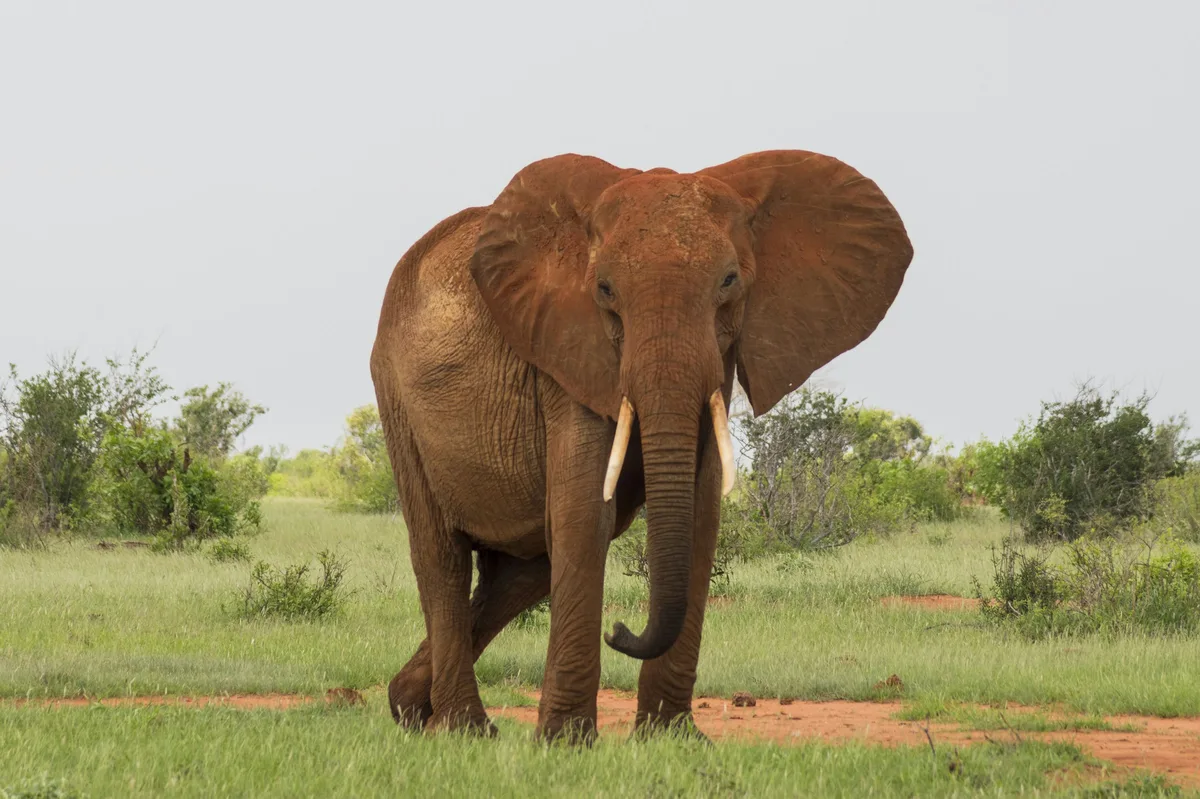
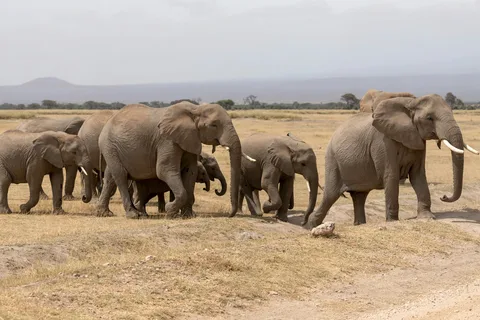
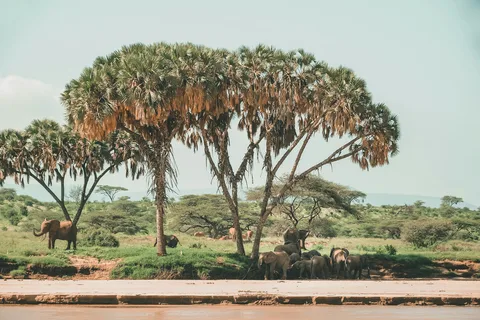
Kenya's largest protected area, split into Tsavo East and West, known for red-dust elephants, Mzima Springs, and dramatic landscapes including Lugard's Falls.
 Multi-Day Tours
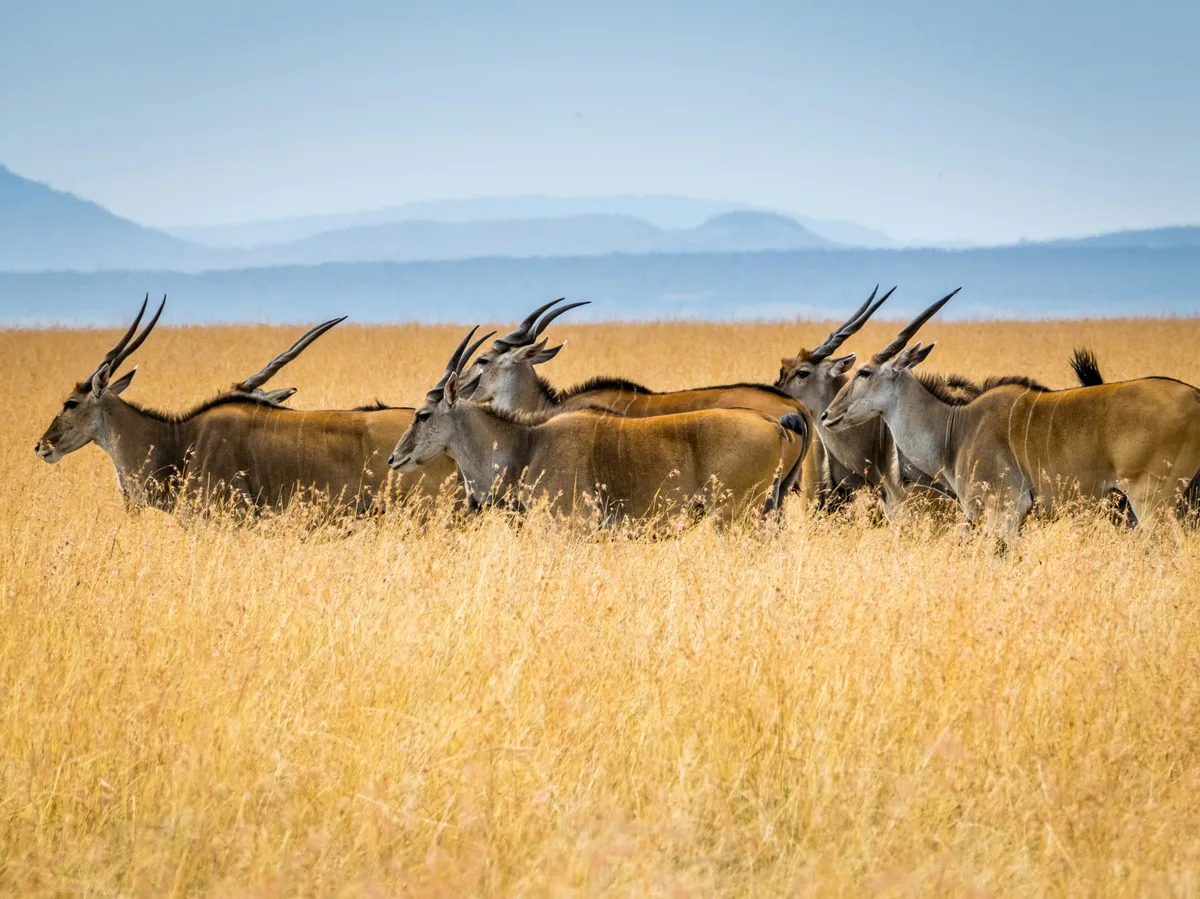
A 10-day circuit through four of Kenya's best-known reserves — the Masai Mara, Lake Nakuru's rhino sanctuary, Amboseli under Kilimanjaro, and the red-earth plains of Tsavo West and East.
 Multi-Day Tours
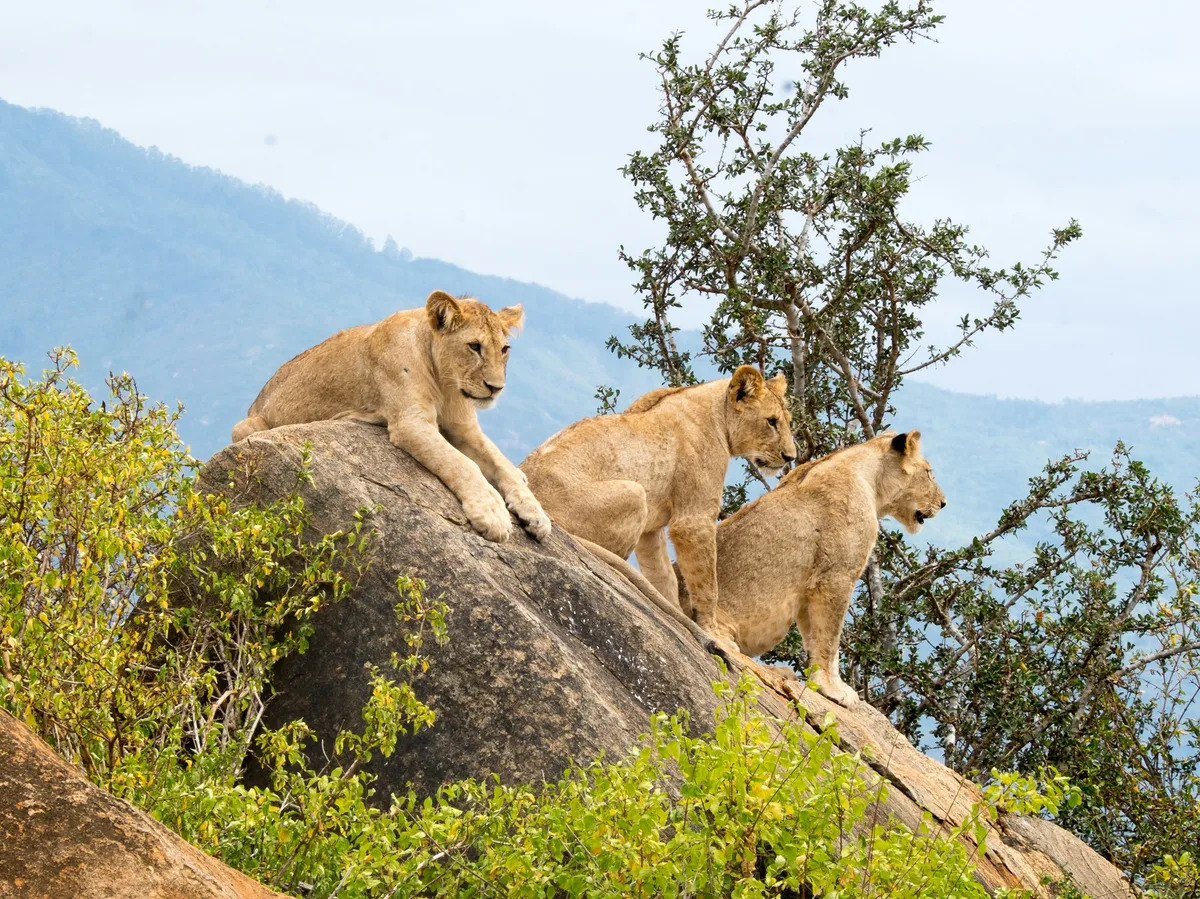
A 9-day safari through Tsavo's open grasslands, the Laikipia Plateau's endangered species, and Naboisho Conservancy on the edge of the Masai Mara — with an optional hot air balloon safari over the plains.
Visitor guide
Tsavo East and Tsavo West National Parks together form one of Africa's largest protected areas, in Taita-Taveta County, southeastern Kenya. According to Wikipedia, the two parks cover about 22,000 square kilometres, and the Tsavo Conservation Area also includes nearby ranches and protected lands.
Tsavo East, established in April 1948, covers 13,747 square kilometres of mostly flat, dry plains on land formerly known as the Taru Desert. Tsavo West covers 9,065 square kilometres and is more mountainous and wetter, with swamps, Lake Jipe and Mzima Springs, and a rhino sanctuary. The Nairobi to Mombasa road and a railway separate the two parks. Both are classed as IUCN Category II national parks and are run by the Kenya Wildlife Service.
In Tsavo East, the Tsavo and Athi rivers converge to form the Athi-Galana-Sabaki River. The Yatta Plateau, described by Wikipedia as the world's longest lava flow, runs about 290 kilometres along the park's western edge. Mudanda Rock is a stratified inselberg that collects water into a natural dam below, giving a vantage point over elephants and other animals that come to drink in the dry season. Lugard Falls is a series of white-water rapids on the river, and the Aruba Dam, built across the Voi River in 1952, draws animals and water birds. In Tsavo West, Mzima Springs is a set of natural springs and pools known for hippos and crocodiles.
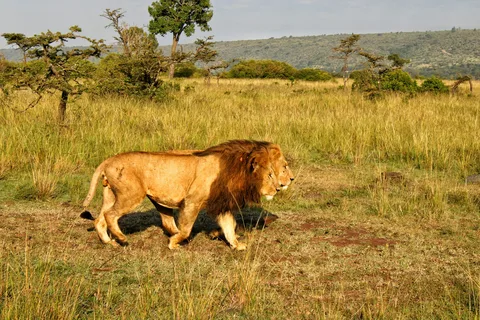
Tsavo East is especially known for its lions, whose adult males often lack manes, and is home to elephants, giraffes, buffalo, zebra, eland and leopards. More than 500 bird species have been recorded. Tsavo West lists eastern black rhinoceros, hippopotamus, elephant, leopard and lesser kudu among its animals.
Late Stone Age sites dating to between roughly 6,000 and 1,300 years ago are numerous near the Galana River, and Swahili traders exchanged goods such as ivory with local people possibly as early as 700 CE. A railway through Tsavo was built in 1898, and two lions, known as the Man-Eaters of Tsavo, attacked the work crews until John Henry Patterson shot them. Accounts of the number of victims vary widely, from at least 28 to 135. The Orma, Maasai and Waata lived in the area until the park was gazetted in 1948, when they were relocated, and hunting was banned after independence in 1963.
Mzima Springs is a series of four natural springs in Tsavo West, about 48 kilometres from Mtito Andei. The water comes from a natural reservoir under the Chyulu Hills, where rain percolates through porous volcanic rock and may spend around 25 years underground before emerging about 50 kilometres away. Wikipedia reports that the resident hippos depend on the springs because other water sources are too distant, and their dung fertilises the pools, feeding invertebrates that fish eat. Date palms, raffia palms, waterberries and figs grow along the water, and their fruit feeds vervet monkeys and birds. The spring system also supplies water to Voi, Mariakani and the South Coast.
Tsavo West is also noted for rock climbing, since the Mountain Club of Kenya was invited to explore its cliffs in 1978. Routes include the Great Tsavo Chimney on the 300 metre east face of Kichwa Tembo and the Ivory Tower on Elephant Rocks. Guided walks along the Tsavo River are another activity described by Wikipedia.
Tsavo's size means distances between sights are long, so a private guided safari with a vehicle and driver lets a guide plan the route and explain the geology and the history of the railway and the man-eaters.
See every tour and attraction we cover in Kenya.