TorontoOntario · 36 tours
 Niagara FallsOntario · 25 tours
 New York CityNew York · 30 tours
 Las VegasNevada · 8 tours
 San FranciscoCalifornia · 16 tours
 VancouverBritish Columbia · 17 tours
 DubaiUAE · 54 tours
 Abu DhabiUAE · 5 tours
 Buenos AiresArgentina · 23 tours
 AthensGreece · 31 tours
 AucklandNew Zealand · 38 tours
 CancunMexico · 54 tours
No destinations match “”. Try searching all tours instead — that search understands full questions, not just place names.
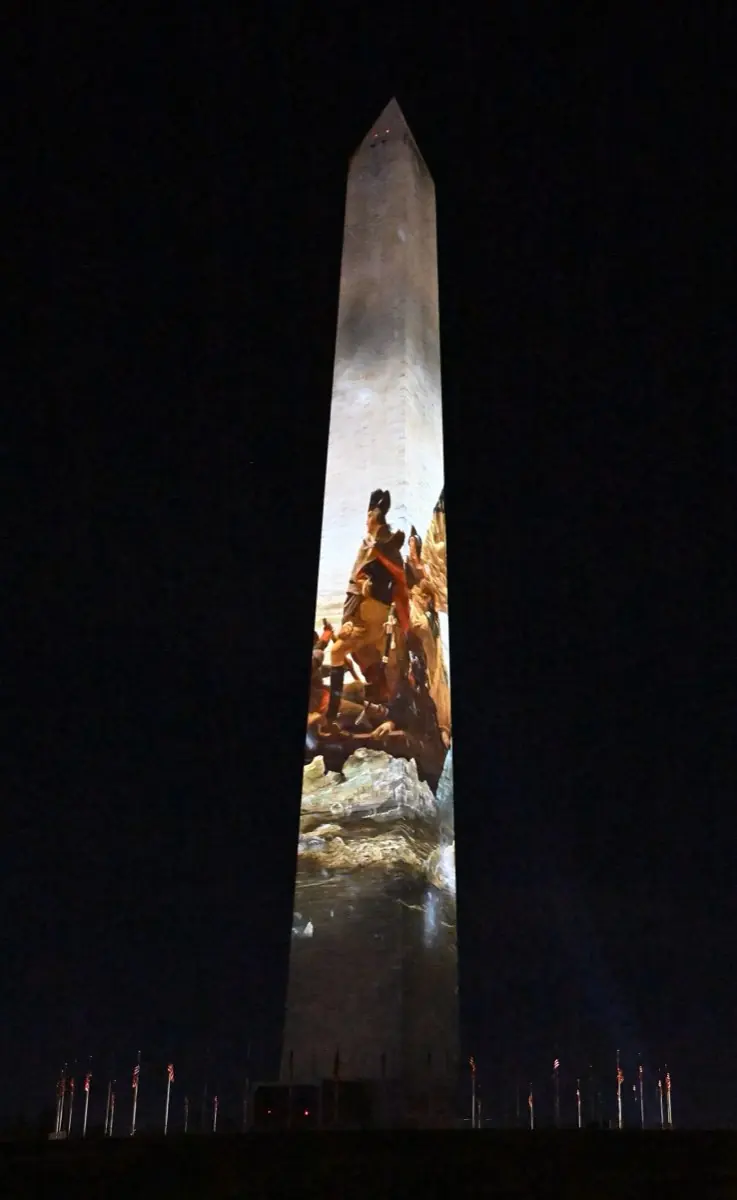
The 555-foot obelisk honoring George Washington, visible across the city skyline.
Visitor guide
The Washington Monument is a hollow stone obelisk on the National Mall honoring George Washington. It stands 555 feet (169 m) tall. Its story is one of an ambitious design, a stalled build and a rescue by the federal government.
The private Washington National Monument Society began organizing in 1833, and in 1845 chose a design by the architect Robert Mills. Mills envisioned an obelisk ringed by a colonnaded base, but funds ran short and the plain shaft was built alone. The cornerstone was laid on July 4, 1848, before a large crowd, and the shaft climbed to roughly 150 feet by 1854 (sources give slightly different figures, between about 152 and 156 feet) before donations ran out. The Society's later control by the Know-Nothing Party and then the Civil War left the stump standing unfinished for more than two decades.
Congress took over funding and construction on July 5, 1876. Army Corps of Engineers officer Thomas Lincoln Casey strengthened the foundation, shortened the planned height from 600 feet to 555 feet, and resumed the shaft in 1879. Because the marble came from different quarries and batches, a slight change in tone is visible where the early and later stonework meet. The aluminum capstone was set on December 6, 1884, when the monument became the tallest structure in the world, surpassing Cologne Cathedral. It was dedicated on February 21, 1885, and opened to the public in stages: sources give 1886 for first visits and October 9, 1888 for the public elevator opening. The National Park Service took over jurisdiction in 1933.
A circle of 50 flagpoles, one for each state, surrounds the base. Inside, iron stairs spiral up the walls and an elevator rises through the center; around 190 commemorative stones given by states, cities, countries and societies are set into the interior walls (sources give 193 or 194). The monument reopened on May 12, 2014 after repairs following the August 2011 Virginia earthquake, which produced more than 150 cracks according to reported figures, and was closed again from 2016 to 2019 for elevator modernization. A 1998-2001 restoration preceded those.
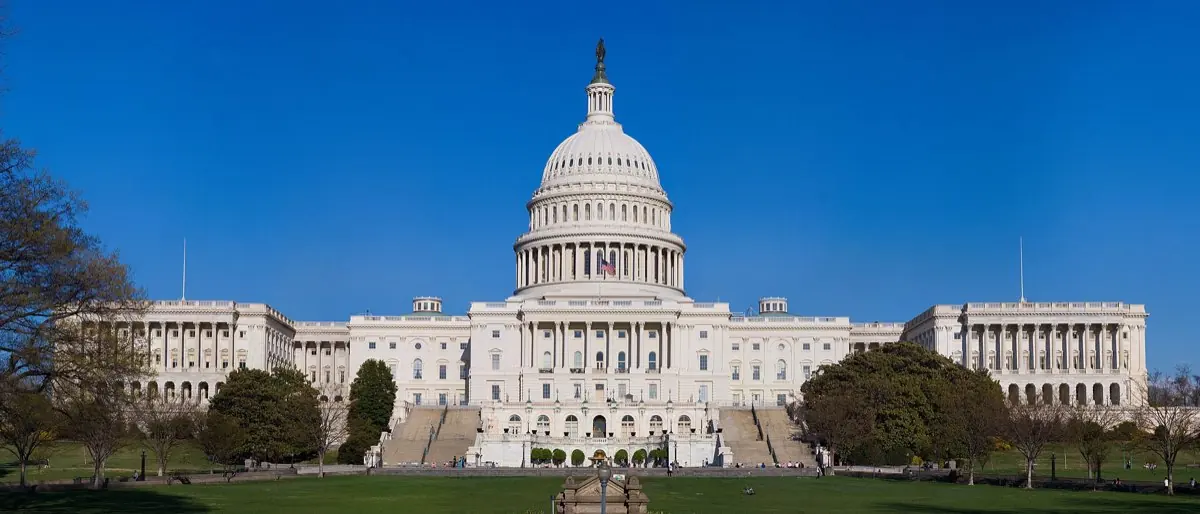
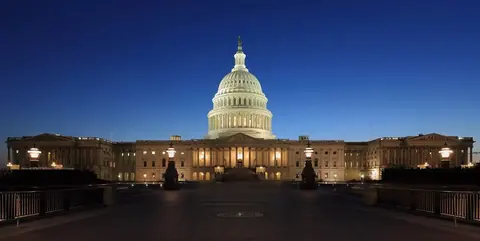
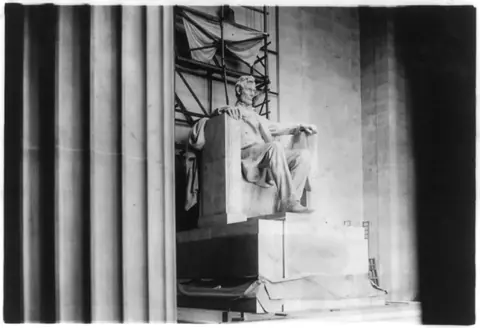
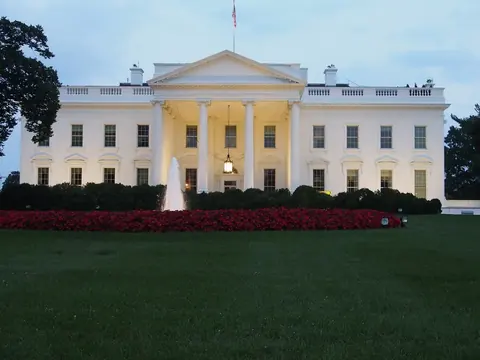
The grounds are as much of the attraction as the shaft: the monument sits on a rise from which you can see the Capitol, the Lincoln Memorial and the White House in a single sweep, and the surrounding slopes are popular for photography.
Access to the interior and the observation level has varied over time and generally runs on timed tickets, so check the National Park Service for current entry arrangements, hours and closures. Because Voyzo runs private tours with a private vehicle and driver and door-to-door pickup, you can be dropped near the base, and then collected away from the crowds, which helps because the walk on to the Lincoln Memorial is across open lawn.
The World War II Memorial, the Lincoln Memorial, the Tidal Basin and the Jefferson Memorial are all within about a mile, and the National Museum of African American History and Culture is just to the northeast.
See every tour and attraction we cover in Washington DC.