TorontoOntario · 36 tours
 Niagara FallsOntario · 25 tours
 New York CityNew York · 30 tours
 Las VegasNevada · 8 tours
 San FranciscoCalifornia · 16 tours
 VancouverBritish Columbia · 17 tours
 DubaiUAE · 54 tours
 Abu DhabiUAE · 5 tours
 Buenos AiresArgentina · 23 tours
 AthensGreece · 31 tours
 AucklandNew Zealand · 38 tours
 CancunMexico · 54 tours
No destinations match “”. Try searching all tours instead — that search understands full questions, not just place names.
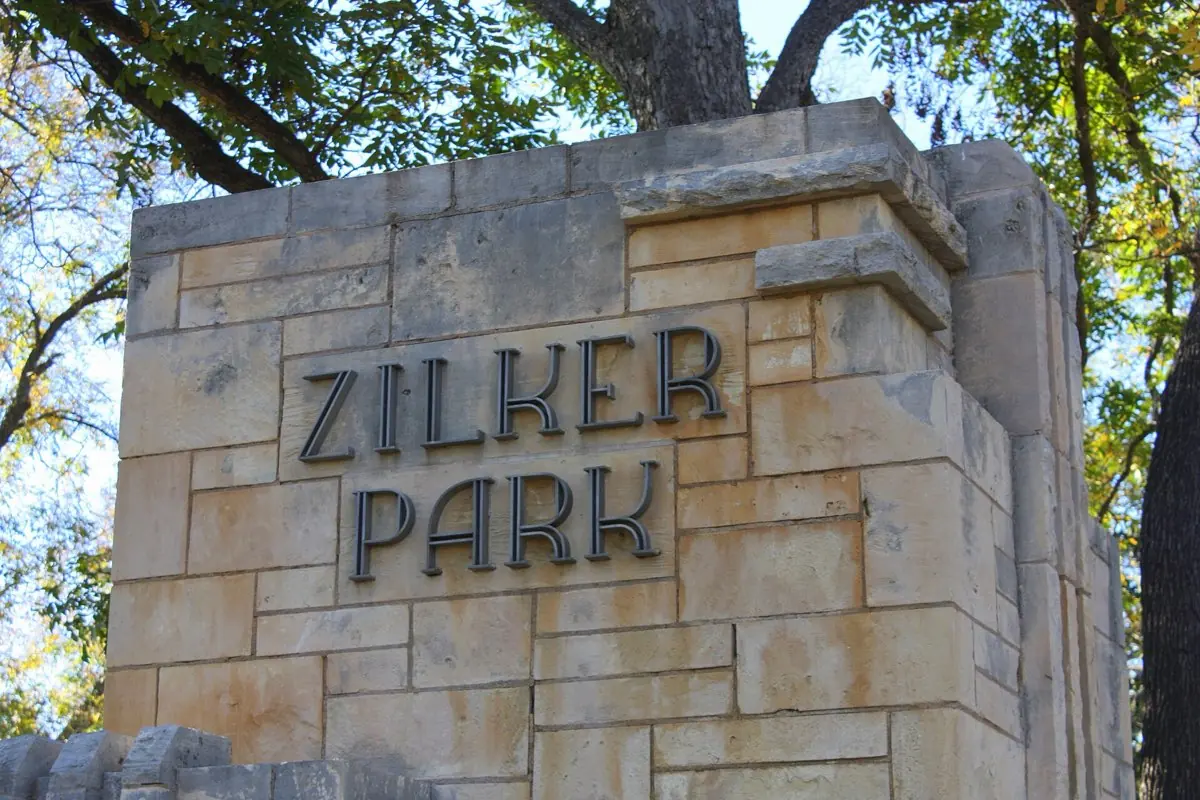
Austin's oldest metropolitan park, home to Barton Springs Pool and the Zilker Botanical Garden.
Visitor guide
Zilker Metropolitan Park is Austin's oldest metropolitan park, covering more than 350 acres where Barton Creek meets Lady Bird Lake just south of downtown. The City of Austin calls it the crown jewel of its park system. It holds Barton Springs Pool, botanical gardens, a nature center, a hillside theater and the lawns that host the city's biggest outdoor events.
Barton Springs was claimed in the 1830s by William Barton, and the Rabb family ran mills on Barton Creek from the 1860s. Andrew Jackson Zilker came to Austin in 1876 as a businessman and banker, ran one of the city's first ice factories, served as an alderman and used the spring water in his ice-making business; The Cultural Landscape Foundation says he bought the springs land in 1901 and built an amphitheater there in 1903. By 1921 an automobile tourist camp operated at the springs. The city began receiving parcels from Zilker in 1917 or 1918 (sources differ), and they also differ on whether these were donations or sales: Wikipedia describes land sales in 1917, 1923 and 1931 with proceeds put into a trust for Austin's public schools, while the city says he donated parcels in 1918, 1923 and 1931 and made a final gift in 1934. The park was named Zilker Park in 1934.
In the 1930s, New Deal programs including the Civil Works Administration and the Civilian Conservation Corps drove much of the park's development. The Cultural Landscape Foundation records that architect Charles Page prepared a master plan in 1933 that added a bandstand, an entrance road and the Zilker Ponds rock garden, with the Civilian Conservation Corps carrying out most of the work. In 1938 architect Delmar Groos designed the Sunken Garden, a set of terraced landscaped steps facing a flagstone stage that overlooks the springs, and in 1947 Dan Driscoll designed the Streamline Moderne bathhouse at the pool. The park was listed on the National Register of Historic Places as the Zilker Park Historic District on May 23, 1997, a listing that absorbed the earlier Barton Springs district.
According to the City of Austin, the park includes Barton Springs Pool, Zilker Botanical Garden (with the Taniguchi Oriental Garden), the Austin Nature and Science Center, the Beverly S. Sheffield Zilker Hillside Theater, the Umlauf Sculpture Garden and Museum, and the McBeth Recreation Center.
The botanical garden grew from a 1946 effort by the Violet Crown Garden Club, which set aside a small sum to begin a garden-center building; the stone Austin Area Garden Center was completed and dedicated in 1964. The Isamu Taniguchi Japanese Garden opened in 1969, after Taniguchi, then about 70, worked without salary or contract for 18 months to turn three acres of rugged caliche hillside into a garden; its ponds are shaped to spell AUSTIN, as the garden was a gift to the city. The Umlauf Sculpture Garden grew from the property above Barton Springs that sculptor Charles Umlauf, a University of Texas art professor, bought in 1944; he and his wife Angeline donated their home, studio and 168 sculptures to the city in 1985, and a museum was built in 1991.
The park is Austin's main outdoor event ground. The city lists the Austin City Limits Music Festival, Trail of Lights, the ABC Kite Festival, Blues on the Green and the Zilker Holiday Tree among its events. The kite competition dates to 1929, began at Lamar Park and moved to Zilker in 1936. The Trail of Lights began in 1965 as a city holiday event, though sources differ on how editions are counted.
The Zilker Holiday Tree is a 155-foot display built around one of Austin's moonlight towers, using 39 streamers with 81 bulbs each, 3,309 lights in all, on a base of 19 utility poles. The first tree was lit on December 10, 1967, by Mayor Pro Tem Emma Long, and the moontower itself dates to 1894, when Austin bought the 165-foot lighting towers from Detroit. Of the 17 original towers, 15 remain, according to the city, and they joined the National Register in 1976. Events change from year to year and can affect access and parking, so check the City of Austin before planning around one.
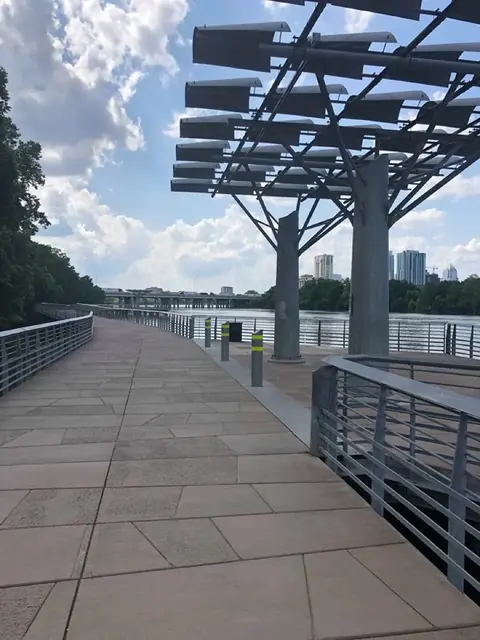
The Ann and Roy Butler Hike-and-Bike Trail and the Barton Creek Trail pass through the park, and Wikipedia notes the Violet Crown Trail runs south from Barton Springs Pool to the Lady Bird Johnson Wildflower Center. Parking rules and fees are set by the city and apply on weekends and holidays, so check the Austin Parks and Recreation Department for current details. A Voyzo private driver removes the parking question and can pick you up at a different gate than the one you entered.
See every tour and attraction we cover in Austin.