TorontoOntario · 36 tours
 Niagara FallsOntario · 25 tours
 New York CityNew York · 30 tours
 Las VegasNevada · 8 tours
 San FranciscoCalifornia · 16 tours
 VancouverBritish Columbia · 17 tours
 DubaiUAE · 54 tours
 Abu DhabiUAE · 5 tours
 Buenos AiresArgentina · 23 tours
 AthensGreece · 31 tours
 AucklandNew Zealand · 38 tours
 CancunMexico · 54 tours
No destinations match “”. Try searching all tours instead — that search understands full questions, not just place names.
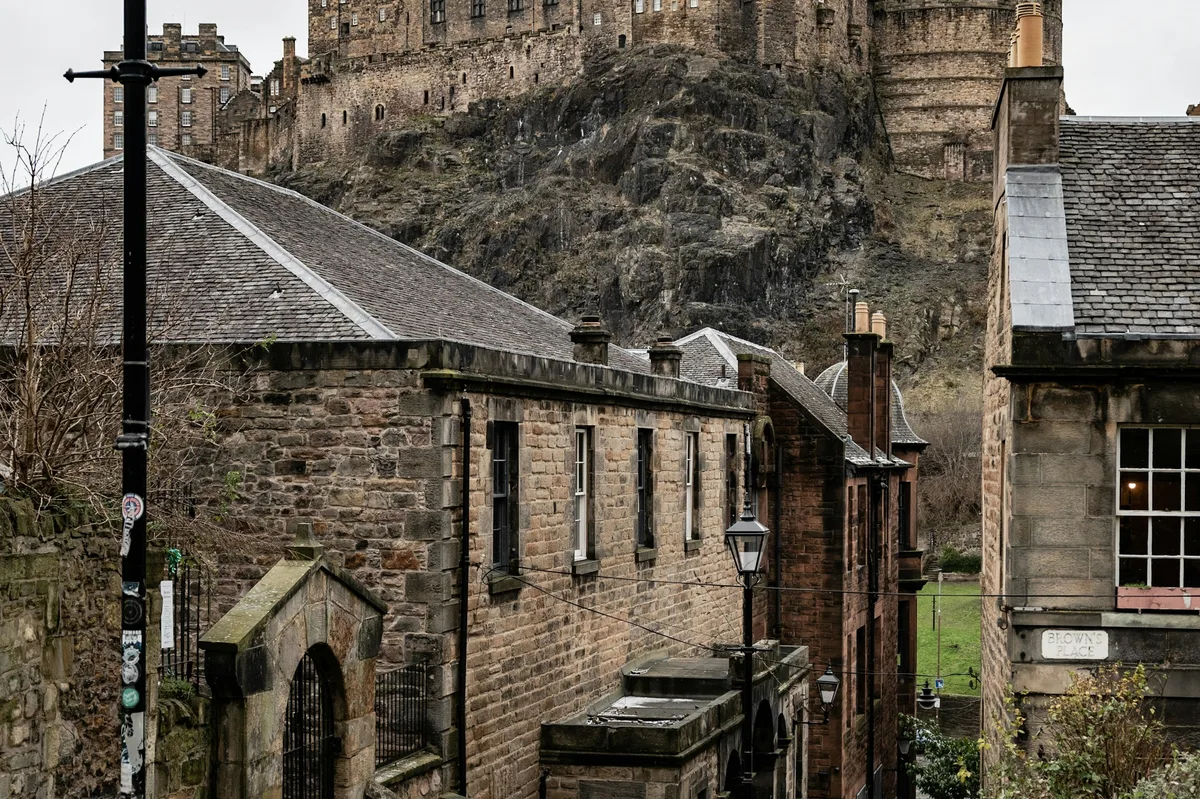
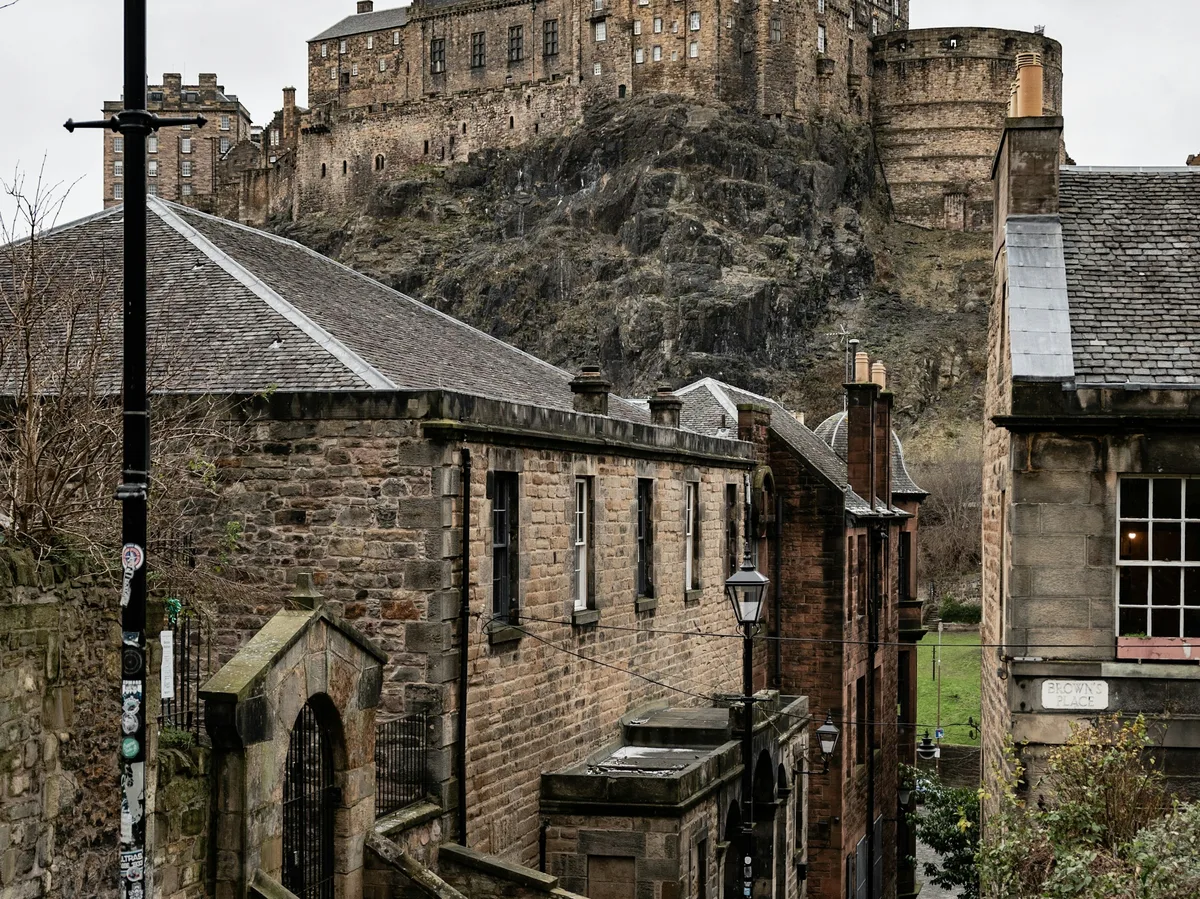
A fortress perched on an extinct volcanic crag above Scotland's capital, home to the Scottish Crown Jewels and centuries of Scottish royal history.
Visitor guide
Edinburgh Castle is a historic fortress in Edinburgh, Scotland, built on top of an extinct volcanic crag that dominates the city skyline. It served for centuries as a royal residence, military stronghold and garrison, and today it is managed by Historic Environment Scotland as one of the country's best-known heritage sites.
The castle stands on Castle Rock, the plug of a volcano that formed around 350 million years ago in the Carboniferous period. The summit rises roughly 130 metres above sea level, and cliffs on the south, west and north sides left the east as the only easy approach. That natural defence is the reason the rock has been occupied for so long. Archaeology suggests settlement here in the late Bronze Age or early Iron Age, and the Welsh poem Y Gododdin mentions a stronghold called Din Eidyn that is generally identified with the rock.
The hard dolerite of the rock is impermeable, which made water a persistent problem. A well about 34 metres deep was sunk, but according to Wikipedia it often ran dry in droughts and during sieges.
The first documentary reference to a castle on the site dates to 1093, around the death of King Malcolm III, when his widow Margaret is said to have been present. Under David I in the twelfth century Edinburgh developed as a royal centre. St Margaret's Chapel, dating from the early twelfth century, is regarded as the oldest surviving building in Edinburgh.
The castle changed hands repeatedly during the Wars of Scottish Independence. Edward I of England took it in 1296 after a three-day bombardment. In 1314 Thomas Randolph recaptured it in a night attack, and Robert the Bruce then ordered it slighted so that it could not be held against him. In 1341 a Scottish force regained it by posing as merchants and driving a cart into the gateway. Later centuries brought the Black Dinner of 1440, the arrival of the great bombard Mons Meg in 1457, and the Lang Siege of 1571 to 1573, when defenders loyal to Mary, Queen of Scots held out until a bombardment brought down part of the defences.
Visitors approach across the Esplanade and enter through the gatehouse, which was built in 1888 and later given statues of Robert the Bruce and William Wallace. Inside, the buildings reflect many periods. The Half Moon Battery and the Royal Palace face the city, Crown Square was laid out over vaults in the 1430s, and the Great Hall was completed under James IV in the early sixteenth century. Mills Mount Battery is the home of the One O'Clock Gun, and the Scottish National War Memorial and the National War Museum record the military history of the garrison.
The Honours of Scotland, the Scottish regalia, are kept in the castle. Wikipedia records that they were rediscovered in 1818 by Sir Walter Scott after years out of sight. Mons Meg was returned from the Tower of London in 1829, and St Margaret's Chapel was recognised again in 1845 after serving as a store.
The castle was a royal residence until 1633, when Charles I stayed there; it was the last time a reigning monarch lodged in it. A garrison was maintained from 1660 until 1923, and prisoners of war were held in the vaults until 1814. It is a Scheduled Monument, its buildings carry multiple listings including Category A, and it forms part of the Old and New Towns of Edinburgh World Heritage Site, inscribed in 1995. It remains the regimental headquarters of the Royal Regiment of Scotland and is the dramatic backdrop to the Royal Edinburgh Military Tattoo each August.
Because the castle sits at the top of the Royal Mile with a steep climb from the city below, a private guided visit with a driver who can drop you near the Esplanade suits the site well, leaving your time for the buildings and the views over the city and the Firth of Forth.
See every tour and attraction we cover in United Kingdom.