TorontoOntario · 36 tours
 Niagara FallsOntario · 25 tours
 New York CityNew York · 30 tours
 Las VegasNevada · 8 tours
 San FranciscoCalifornia · 16 tours
 VancouverBritish Columbia · 17 tours
 DubaiUAE · 54 tours
 Abu DhabiUAE · 5 tours
 Buenos AiresArgentina · 23 tours
 AthensGreece · 31 tours
 AucklandNew Zealand · 38 tours
 CancunMexico · 54 tours
No destinations match “”. Try searching all tours instead — that search understands full questions, not just place names.
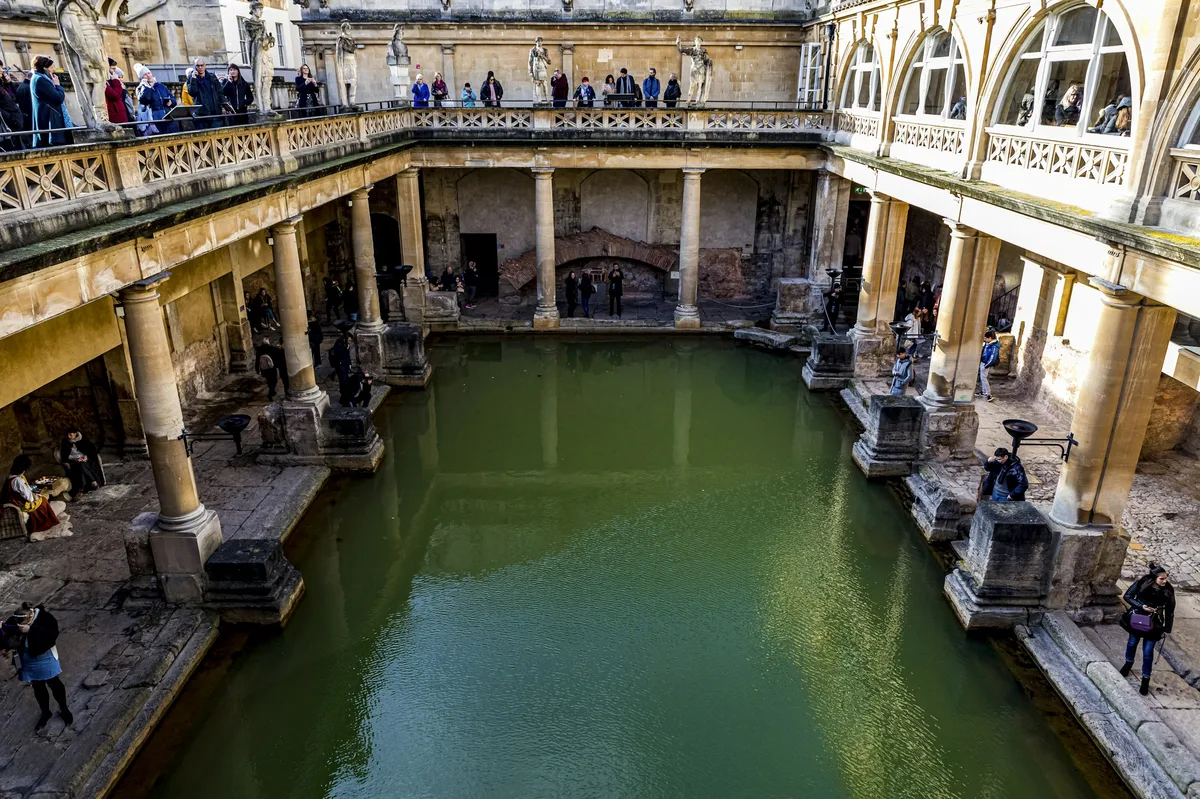
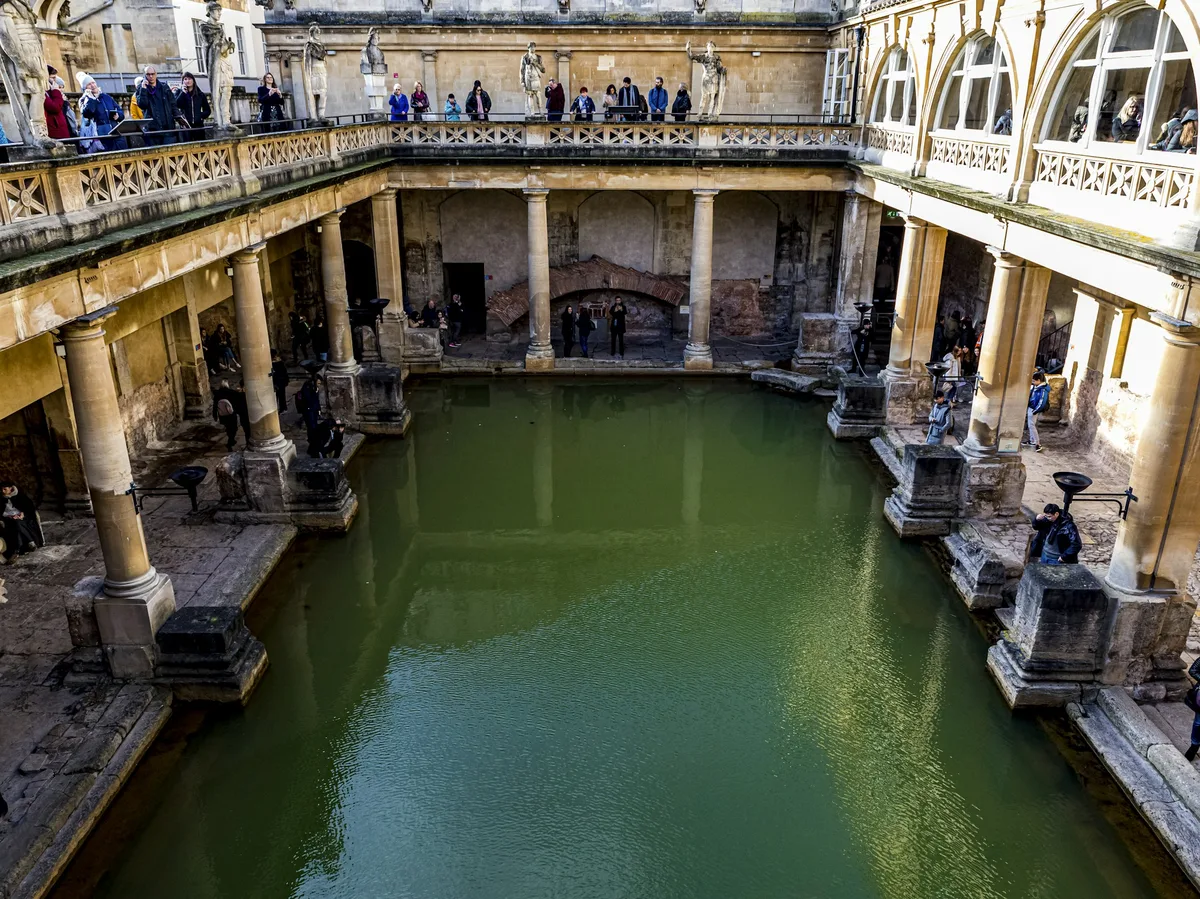
A well-preserved Roman bathing complex built around a natural hot spring in the English city of Bath, still flowing nearly 2,000 years after it was built.
Visitor guide
The Roman Baths in Bath, Somerset, are a remarkably preserved ancient bathing and temple complex built around England's only major natural hot spring. Founded in the first century, the site was known to the Romans as Aquae Sulis, the waters of the goddess Sulis, and today it is one of the best-known Roman sites in Britain.
Rain falling on the Mendip Hills seeps deep into limestone aquifers, is heated by natural geothermal energy and is forced back up through faults to emerge at Bath. Wikipedia gives the temperature of the water at the baths as around 46 degrees Celsius, rising at roughly 1,170,000 litres a day. The water is rich in sodium, calcium, chloride and sulphate ions. Visitors tour the baths but cannot enter the water, and modern bathing takes place at separate spas fed by newer boreholes.
The Romans took over a place that may already have been a Celtic site of worship. The goddess Sulis was identified locally with Minerva, and the settlement became Aquae Sulis. The temple was built around 60 to 70 AD, and the bathing complex grew over roughly 300 years. Engineers drove oak piles into the mud for stable foundations and enclosed the spring in a lead-lined stone chamber.
The temple stood on a podium more than two metres high and had four fluted Corinthian columns. Its pediment carried a large Gorgon-like head with snakes in its beard, a carving whose meaning scholars still debate; many see a blend of Minerva imagery with a local water deity. Parts of the pediment are displayed in the museum.
The Great Bath is lined with lead from the Mendip Hills. Only the lower part of the structure, below the level of the pillar bases, is Roman, and the terrace of statues above dates from the late nineteenth century. Hot, warm and cold rooms, with underfloor heating known as hypocausts, reflect a typical Roman bathing sequence.
The sacred spring has yielded many offerings. More than 12,000 Roman coins were recovered, which Wikipedia describes as the largest votive deposit known from Britain. A gilt bronze head of Sulis Minerva was found nearby in 1727. Around 130 inscribed sheets of lead and tin, the Bath curse tablets, were discovered in the spring in 1979 and 1980, and many concern the theft of clothing from bathers.
After the Roman withdrawal in the early fifth century the baths silted up and flooded, although sources differ on exactly when. Medieval builders later constructed the King's Bath and Queen's Bath over parts of the spring, and the Grand Pump Room, begun in 1789 and completed in 1799, still stands above the complex. Victorian architects extended the buildings in a neoclassical style, and the concert hall of 1897 now forms the visitor entrance.
A legend, largely fictional, credits the pre-Roman British king Bladud with discovering the spring, and it was promoted in the eighteenth century to advertise the waters' healing power. Bath's historic centre is part of a World Heritage Site, and the baths and Pump Room together draw over a million visitors a year according to Wikipedia. A private guided visit suits Bath's compact, walkable centre.
See every tour and attraction we cover in United Kingdom.