TorontoOntario · 36 tours
 Niagara FallsOntario · 25 tours
 New York CityNew York · 30 tours
 Las VegasNevada · 8 tours
 San FranciscoCalifornia · 16 tours
 VancouverBritish Columbia · 17 tours
 DubaiUAE · 54 tours
 Abu DhabiUAE · 5 tours
 Buenos AiresArgentina · 23 tours
 AthensGreece · 31 tours
 AucklandNew Zealand · 38 tours
 CancunMexico · 54 tours
No destinations match “”. Try searching all tours instead — that search understands full questions, not just place names.
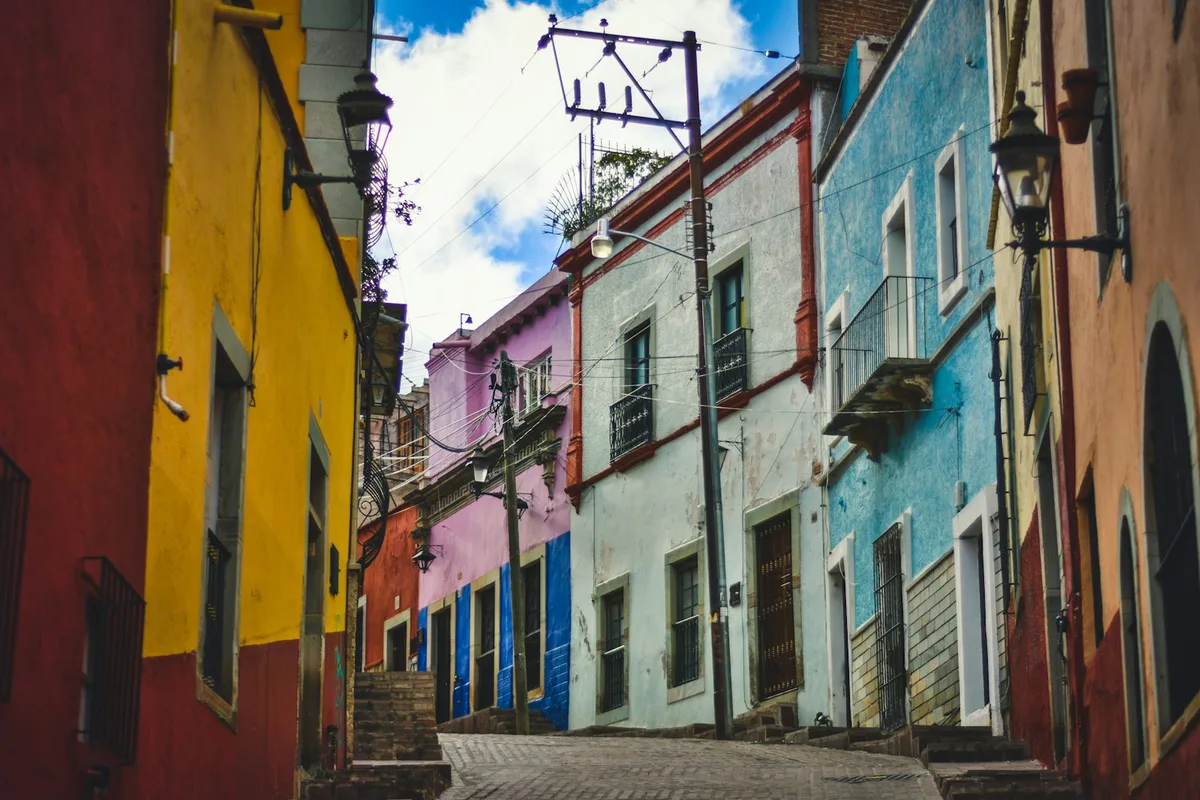
A UNESCO-listed colonial mining city built into a ravine, known for its stacked, brightly painted houses, underground roadway tunnels, and the mummy museum and Callejón del Beso alley.
Visitor guide
Guanajuato is a colonial silver-mining city and the capital of the state of Guanajuato in central Mexico. Built in a narrow valley, it is known for its winding alleys, colorful hillside houses, baroque churches and roads that run through underground tunnels, and its historic center and nearby mines were listed as a UNESCO World Heritage Site in 1988.
The Spanish found deposits in the area in the 1540s, and in 1548 the outpost was formally established as Real de Minas de Guanajuato. According to Wikipedia, the silver mines were among the most important in the Americas during the colonial period, and UNESCO describes Guanajuato as the world's leading silver-extraction centre in the 18th century, with La Valenciana among its richest mines (estimates of its share of world output range widely). The owners of La Valenciana, the Counts of Valenciana, became one of the most powerful families in New Spain, and much of the city's baroque church decoration was funded by the mining wealth.
Guanajuato was the site of the first major battle of the Mexican War of Independence. On 28 September 1810, insurgent forces besieged royalist troops sheltered in the Alhondiga de Granaditas, a large granary. By tradition, a miner known as El Pipila shielded himself with a stone slab and set the main door on fire, allowing the insurgents to break in. A large statue of El Pipila now overlooks the city from a hilltop. The Alhondiga later served as barracks and a prison before becoming a museum in 1958 (today the Regional Museum of Guanajuato).
Flooding was a recurring problem because of the steep hillsides, and major floods in 1760 and 1780 led to ditches and tunnels to divert the water. After dams controlled the flooding in the 1960s, many of these tunnels were converted into roadways, and several main roads still run partly underground, including one that follows the original course of the Guanajuato River for about three kilometers. Above ground, the Callejon del Beso, the Alley of the Kiss, is only about 168 centimeters wide in places, with balconies almost touching. Local legend says couples who kiss on the third step will have seven years of happiness.
The Teatro Juarez, built between 1872 and 1903 by Antonio Rivas Mercado, has a neoclassical facade crowned with sculptures of the Muses and an ornate interior. It is a main venue of the Festival Internacional Cervantino, an arts festival begun in 1972 and held every October. The Basilica Colegiata de Nuestra Senora de Guanajuato was built between 1671 and 1696, and the University of Guanajuato, which grew out of an early 18th-century Jesuit school, is recognized by the wide staircase at its main building.
The Diego Rivera Museum occupies the house where the painter was born and holds early works. The Museo de las Momias displays naturally mummified bodies exhumed from the municipal cemetery between 1870 and 1958; INAH, Mexico's national anthropology institute, counts 117 mummified bodies, 81 kept in the museum and 36 at the Parador Turistico Sangre de Cristo, while Wikipedia gives 111 in the collection and describes it as the largest collection of mummies in the Western Hemisphere.
The city's streets are steep and often stepped or closed to traffic, so exploring is mostly on foot. A private guided visit with a driver is a practical way to see the hilltop viewpoint, the historic center and the tunnels without managing parking or transfers.
See every tour and attraction we cover in Mexico.