TorontoOntario · 36 tours
 Niagara FallsOntario · 25 tours
 New York CityNew York · 30 tours
 Las VegasNevada · 8 tours
 San FranciscoCalifornia · 16 tours
 VancouverBritish Columbia · 17 tours
 DubaiUAE · 54 tours
 Abu DhabiUAE · 5 tours
 Buenos AiresArgentina · 23 tours
 AthensGreece · 31 tours
 AucklandNew Zealand · 38 tours
 CancunMexico · 54 tours
No destinations match “”. Try searching all tours instead — that search understands full questions, not just place names.
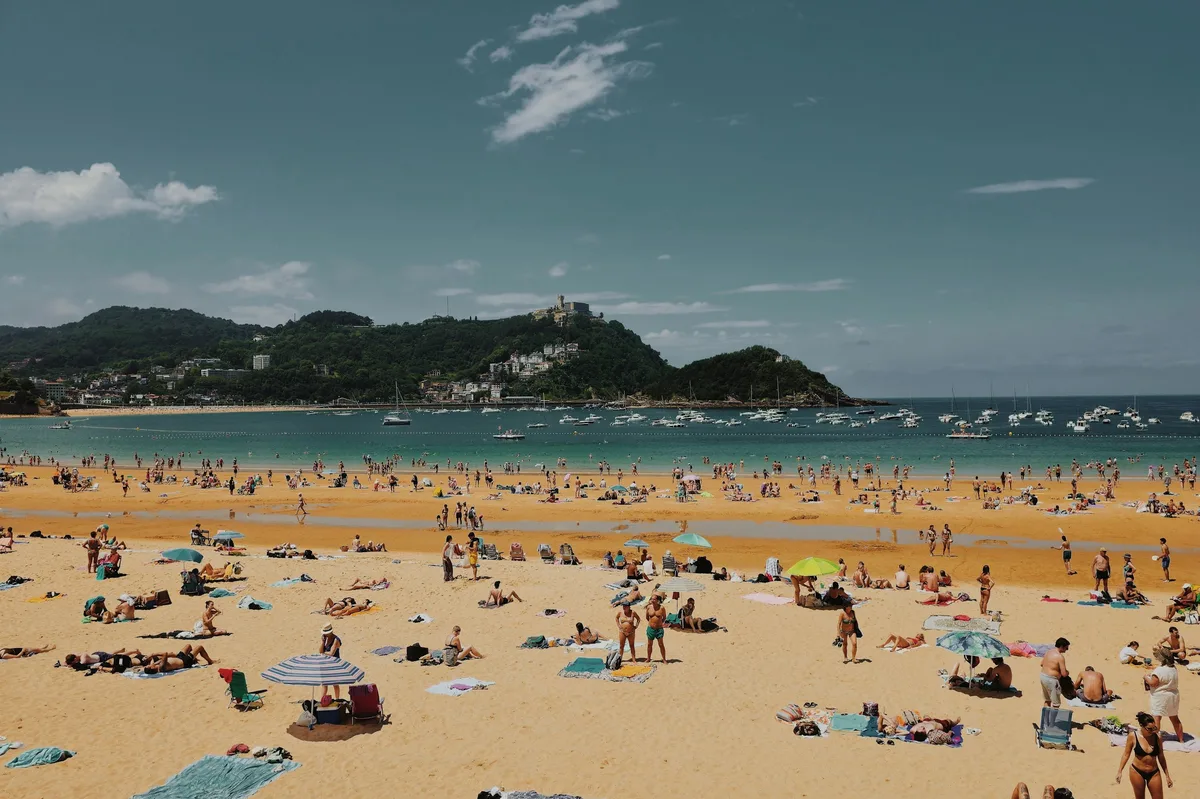
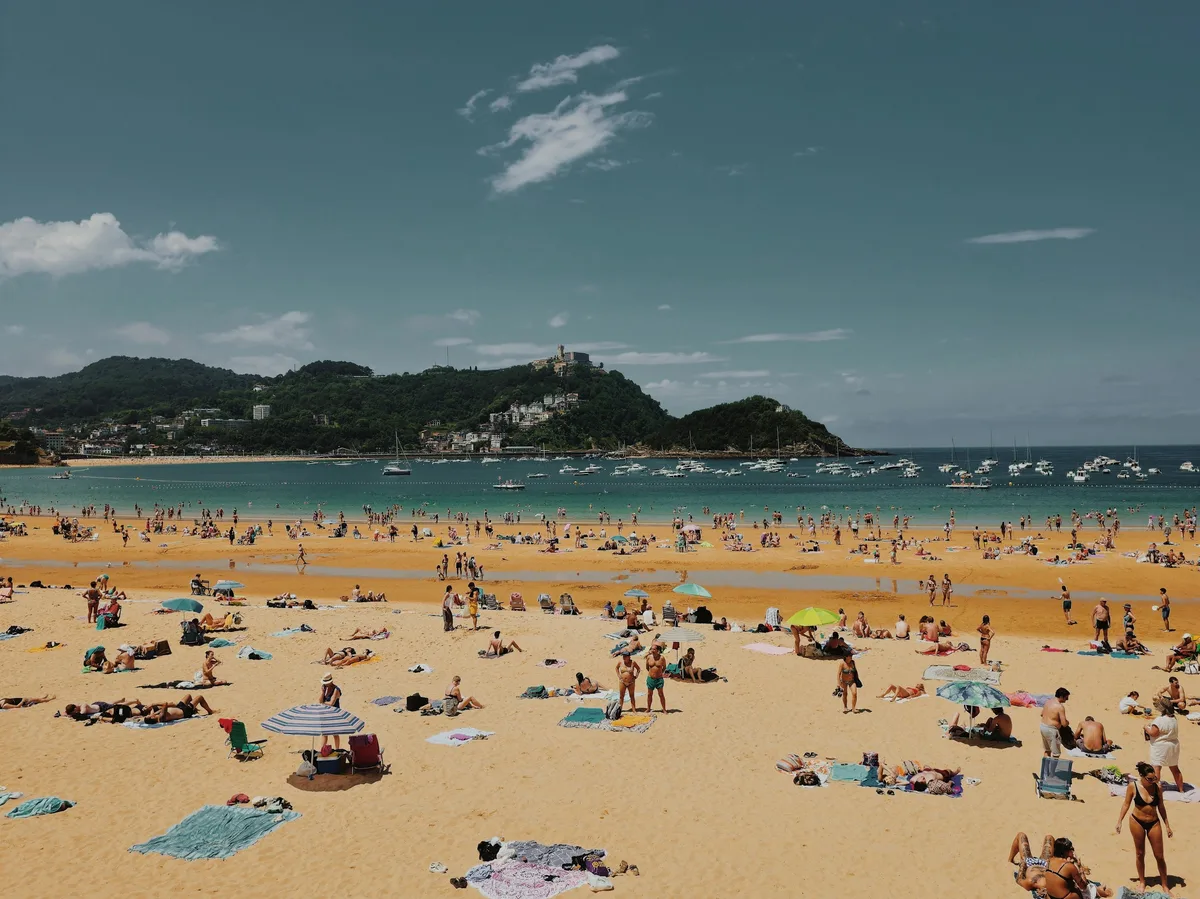
San Sebastián's shell-shaped city beach along the Basque coast, framed by Monte Igueldo and Monte Urgull, and considered one of Europe's finest urban beaches.
Visitor guide
La Concha is the city beach of San Sebastian (Donostia), on the Basque coast of northern Spain. Its name means 'The Shell' in Spanish, a reference to the curve of the bay it borders. Framed by Mount Igueldo to the west and Mount Urgull to the east, it is the centrepiece of the city's seafront.
According to Wikipedia, La Concha Bay measures roughly 0.9 kilometres long and about one kilometre wide at most. It separates the city from the Cantabrian Sea, and the wide, crescent-like arc of sand looks out over a small island, Santa Clara, set near the bay's mouth. The island lies a little over a kilometre from the beach and can be reached by ferry, according to the same source.
The beaches of the bay add up to roughly two kilometres: about 1,400 metres of La Concha proper and about 600 metres at neighbouring Ondarreta Beach, the two separated by the grounds of Miramar Palace. The tide has a visible effect on the beach, which becomes much wider at low tide and narrower as the water rises, although Wikipedia notes these changes last only a few hours. Some geological accounts suggest Urgull was once an island, later joined to the mainland by sediment carried by the Urumea River, though that claim is flagged as needing better sourcing.
A promenade runs the length of the bay and is part of the city's identity. It begins at the foot of the Town Hall and follows the curve of the sand, with ornate street lamps, large clocks and a famous wrought-iron railing designed by Juan Rafael Alday in the early twentieth century. Along the way are the La Perla spa buildings and a royal bath house.
The Paseo de Miraconcha ends at Miramar Palace, built in the late nineteenth century as part of San Sebastian's rise as a fashionable summer destination. Beyond it, the Paseo de Ondarreta continues to the sculptures known as the Comb of the Wind (Peine del Viento) by the Basque sculptor Eduardo Chillida, which mark the promenade's end and the base of Mount Igueldo.
Accounts agree that the bay became fashionable through royal patronage. One local source says that in 1845 doctors advised Queen Isabella II to take sea baths here for a skin condition, and her visits drew the court with her; another source is less specific about San Sebastian's role in her early bathing. The city later became the official summer residence of the court under Queen Regent Maria Christina of Austria from 1887, and Miramar Palace followed.
This history explains the elegant seafront architecture and the tradition of promenading along the bay. The bathing houses, spa buildings and hotels that line the shore date to the era when the bay was a seaside resort for royalty and high society.
Beyond the sand, the bay is best appreciated from the surrounding hills. Mount Igueldo and Mount Urgull both give panoramic views over the shell-shaped curve of the beach, the island and the old town. The promenade is flat and easy for walking, and it connects naturally to the old quarter and the harbour. Because the sea conditions and tides change, it is sensible to look at local guidance before swimming. A private guided visit can combine the beach with the old town and the surrounding hills, and Voyzo can arrange this with a private vehicle and driver.
See every tour and attraction we cover in Spain.