TorontoOntario · 36 tours
 Niagara FallsOntario · 25 tours
 New York CityNew York · 30 tours
 Las VegasNevada · 8 tours
 San FranciscoCalifornia · 16 tours
 VancouverBritish Columbia · 17 tours
 DubaiUAE · 54 tours
 Abu DhabiUAE · 5 tours
 Buenos AiresArgentina · 23 tours
 AthensGreece · 31 tours
 AucklandNew Zealand · 38 tours
 CancunMexico · 54 tours
No destinations match “”. Try searching all tours instead — that search understands full questions, not just place names.
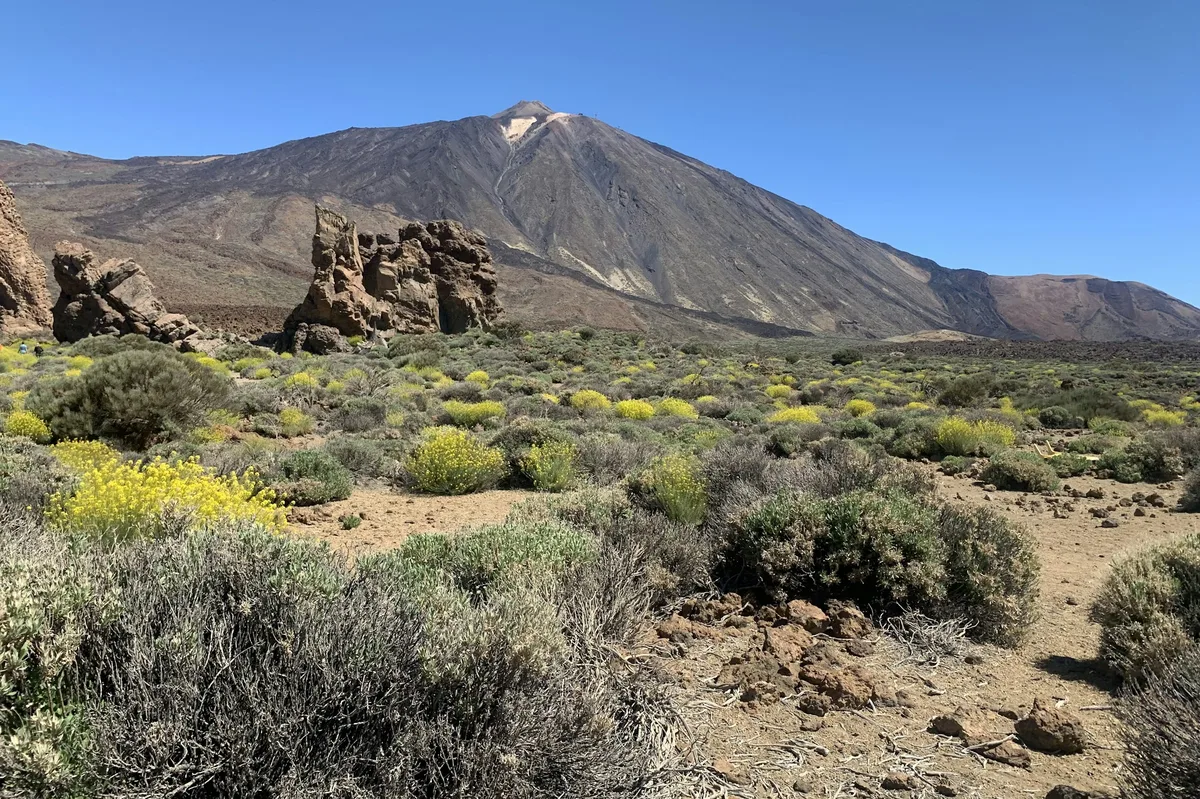
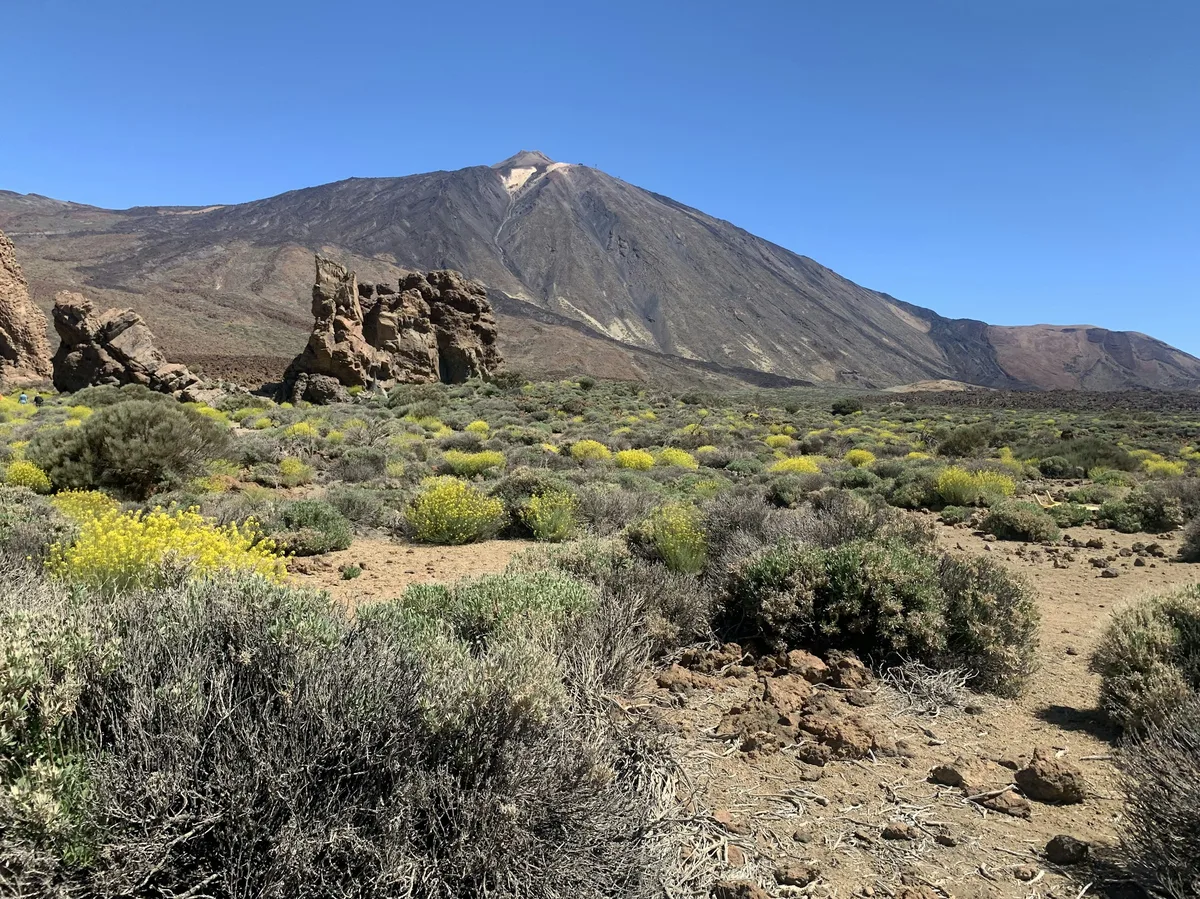
A UNESCO World Heritage volcanic landscape on Tenerife surrounding Mount Teide, Spain's highest peak, and considered one of the world's best stargazing sites.
Visitor guide
Teide National Park is a protected volcanic landscape on the island of Tenerife in Spain's Canary Islands. It surrounds Mount Teide, which at 3,718 metres is Spain's highest mountain, and it is a UNESCO World Heritage Site. The park is known for its lava fields, rock formations, unusual high-altitude plants and clear skies.
According to Wikipedia, Mount Teide is the highest volcano on Atlantic Ocean islands, and measured from its base on the ocean floor it rises roughly 7,500 metres. Beside it stands Pico Viejo at 3,135 metres, the second-highest volcano in the Canaries. These are the only two peaks in the archipelago above 3,000 metres.
The park lies mostly within the municipality of La Orotava and covers about 18,990 hectares. It was declared a national park on 22 January 1954, and UNESCO inscribed it as a World Heritage Site on 28 June 2007 under natural criteria. Its volcanic structures and evolved magmas are described as complementary to those of Hawaii Volcanoes National Park, and visitors often compare its colour-banded terrain with canyon country elsewhere.
Much of the park lies inside the Las Canadas caldera, a vast bowl-shaped depression. Its walls shelter the interior, which allows fragile species such as the Canary Island pine and cedar to grow at altitudes where they might otherwise struggle. The Roques de Garcia, a group of weathered rock pinnacles within the caldera, are among the best-known landmarks and a favourite subject for photographers.
The terrain varies from black and rust-coloured lava flows to pale pumice plains and layered rock faces. Pine forest covers the slopes from roughly 1,000 to 2,100 metres, and above this the landscape opens into a high-altitude volcanic desert.
The park's vascular flora includes 168 species, 33 of them endemic to Tenerife. Among the most recognisable are the Teide white broom, the Teide bugloss, whose red flower spikes can form a pyramid up to about three metres tall, and the Teide violet, which grows near the summit and is described as Spain's highest flowering plant. Flowering is concentrated in May and June, and many plants have adapted with rounded shapes, downy or waxy coverings and reduced leaf area.
Invertebrates are diverse, and more than 40 percent of them are endemic. Vertebrates are fewer: ten bird species nest in the park, including the Tenerife blue chaffinch and Berthelot's pipit, and three endemic reptiles live there. Bats are the only native mammals, while mouflon and rabbits are introduced species.
The Guanches, the island's aboriginal people, considered the area significant. According to Wikipedia they believed Teide was a gate to hell, which they called Echeyde, and important archaeological sites have been found within the park. A small chapel dedicated to the Virgen de las Nieves is described as the highest Christian church in Spain.
The Izaña Teide Observatory, at about 2,371 metres, benefits from clear, dry air and a very large number of sunshine hours each year. Telescopes on a ridge east of Teide have made the area an important site for astronomy, and the high elevation and low humidity are why it is often associated with stargazing. Agencies have also used the park's terrain to test instruments and rovers for planetary missions.
Conditions change quickly with altitude, and the climate can be sunny and dry with sharp temperature swings, including freezing nights. Reaching the summit itself requires a free permit that must be arranged in advance, according to Wikipedia. A private guided visit can help travellers choose viewpoints and understand the geology, and Voyzo can arrange this with a private vehicle and driver.
See every tour and attraction we cover in Spain.