TorontoOntario · 36 tours
 Niagara FallsOntario · 25 tours
 New York CityNew York · 30 tours
 Las VegasNevada · 8 tours
 San FranciscoCalifornia · 16 tours
 VancouverBritish Columbia · 17 tours
 DubaiUAE · 54 tours
 Abu DhabiUAE · 5 tours
 Buenos AiresArgentina · 23 tours
 AthensGreece · 31 tours
 AucklandNew Zealand · 38 tours
 CancunMexico · 54 tours
No destinations match “”. Try searching all tours instead — that search understands full questions, not just place names.
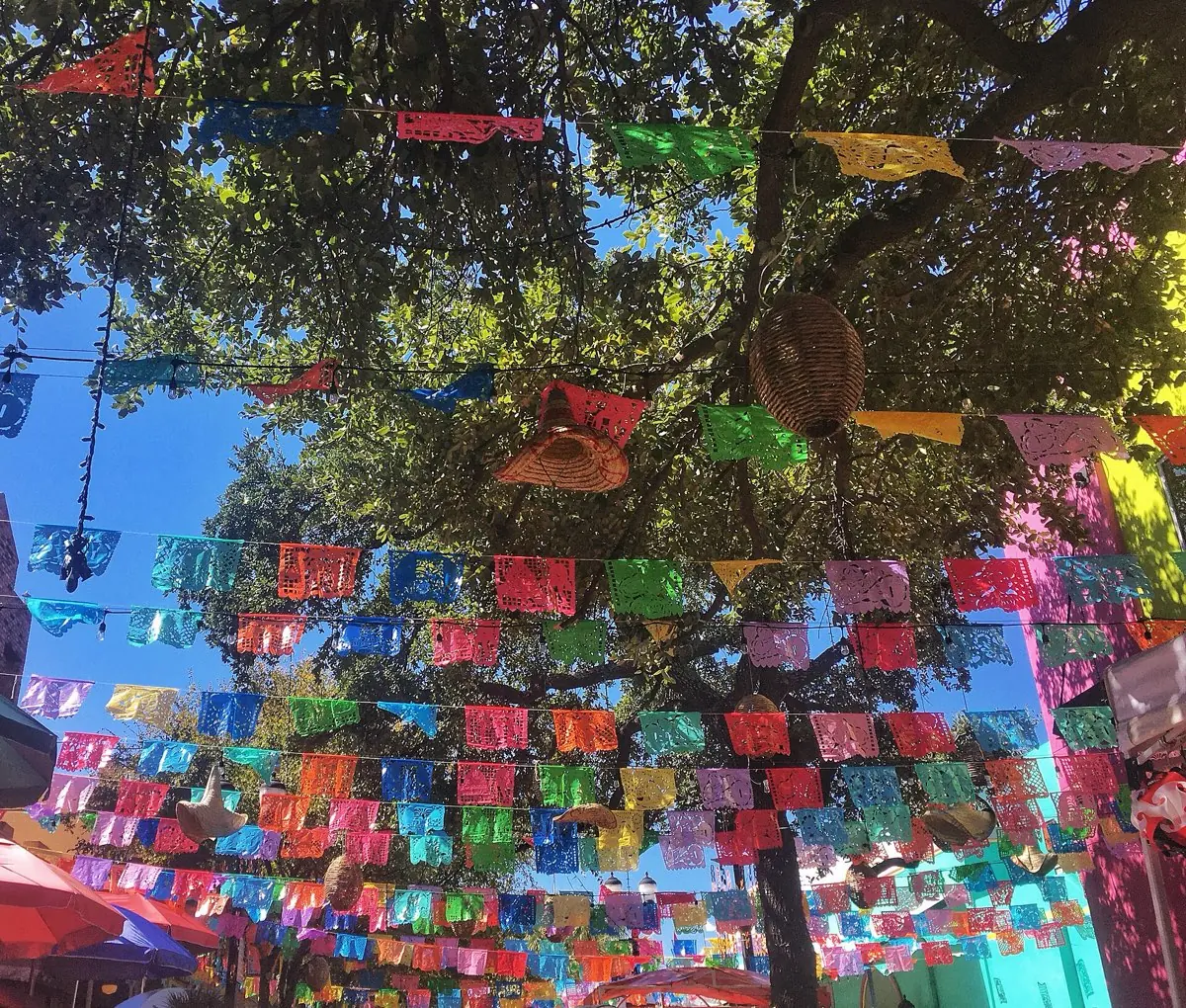
A historic Mexican market plaza in downtown San Antonio, packed with shops, food stalls, and mariachi music.
Visitor guide
Market Square, also called El Mercado, is a three-block pedestrian plaza of Mexican shops, restaurants and stalls in downtown San Antonio. It is a long-running center of the city's Mexican-American food and craft traditions and the traditional home of its Cinco de Mayo celebrations.
Sources differ on how old the market is: some tourism accounts cite 1730, while others say San Antonians have shopped here since the 1820s. The Texas Historical Commission says the market moved to this spot in the 1890s to serve a growing number of new settlers. A historical marker summarized by the Historical Marker Database says Alamo Plaza was the center of commerce before the Civil War and that construction of the Municipal Market began in 1899.
The El Mercado building was a Works Progress Administration project of 1938 to 1939, built after an earlier municipal market house, known as the Giles building, was torn down. It was first called the Municipal Truck Market because of a wide entry that let farmers drive in and sell produce straight from their trucks, though locals called it the Farmer's Market. The Living New Deal site notes the building was painted turquoise. The last produce was sold in 1975, and the building was converted into an enclosed, air-conditioned mercado whose interior was designed to resemble an authentic Mexican market; the wide San Saba Street opening was closed in, and a photo exhibit inside that entrance covers the market's history. The marker describes renovation work in 1976 to 1978 that turned Produce Row and Concho Street into landscaped pedestrian avenues.
Around the same era, San Antonio's Chili Queens cooked Mexican food over mesquite fires in the plazas, serving from dusk with tables, benches and oil lanterns while musicians played nearby. A University of the Incarnate Word history lists chili con carne, tamales, enchiladas and beans on their menus, and says they worked at Alamo Plaza, Military Plaza and Market Square. They left Military Plaza when City Hall was built there in 1889 and, after the Municipal Market House opened in 1900, moved west to Haymarket Plaza and Milam Park. Texas Public Radio adds that after the railroad arrived in 1877, travel writers and magazines publicized the queens, and that scribes called escribanos wrote letters for customers in the plazas. Accounts disagree on exactly when the tradition began and ended: one history dates it from the 1860s to the early 1940s, another from about 1870 to 1930, and the city repeatedly closed the stands over sanitation concerns before the Health Department closed them for good in the early 1940s. Their legacy continues in today's street-food vendors and family-run Tex-Mex restaurants.
The queens also helped spread chili beyond Texas: Wikipedia notes that the San Antonio Chili Stand at the 1893 Columbian Exposition in Chicago gave many Americans their first taste of it, and that Texas named chili con carne its official state dish in 1977.
Wikipedia's account counts El Mercado with 32 specialty shops and the Farmers Market Plaza with 80, while the Texas Historical Commission counts more than 100 shops and stalls across the Market Square, Produce Row and Farmers Market Plaza. Walkways are hung with papel picado, and vendors sell Mexican clothing, crafts, molcajetes and dried chilies. Local eateries serve street foods such as elotes, gorditas and aguas frescas.
Mi Tierra Cafe y Panaderia is the anchor restaurant, with sources giving 1941 as its opening. Texas Cooking reports that founder Pete Cortez, who came from Guadalajara, bought a three-table restaurant in 1941, bought a second, 24-hour restaurant in El Mercado in 1951, and added the bakery in 1955. He rented month to month for about 20 years before buying the whole block in 1961, only to learn that urban renewal officials planned to demolish it; after nearly ten years of advocacy, El Mercado was renovated instead. The same article says the restaurant has run almost continuously since 1951, closing for about half a day on November 22, 1963 and again for half a day when Cortez died, and describes a large mural of notable San Antonio and Mexican figures and a collection of mariachi costumes on the walls.
Market Square is billed as the largest Mexican market in the United States, a claim that traces to a local tourism source rather than an independent survey, so treat it as a tourism description. It hosts Cinco de Mayo and other fiestas through the year.
Voyzo runs San Antonio as a private tour with your own vehicle and driver and door-to-door pickup, which makes it easy to arrive at Market Square with time to browse and eat, then continue to other stops. Check the operators for current market and restaurant hours.
See every tour and attraction we cover in San Antonio.