TorontoOntario · 36 tours
 Niagara FallsOntario · 25 tours
 New York CityNew York · 30 tours
 Las VegasNevada · 8 tours
 San FranciscoCalifornia · 16 tours
 VancouverBritish Columbia · 17 tours
 DubaiUAE · 54 tours
 Abu DhabiUAE · 5 tours
 Buenos AiresArgentina · 23 tours
 AthensGreece · 31 tours
 AucklandNew Zealand · 38 tours
 CancunMexico · 54 tours
No destinations match “”. Try searching all tours instead — that search understands full questions, not just place names.
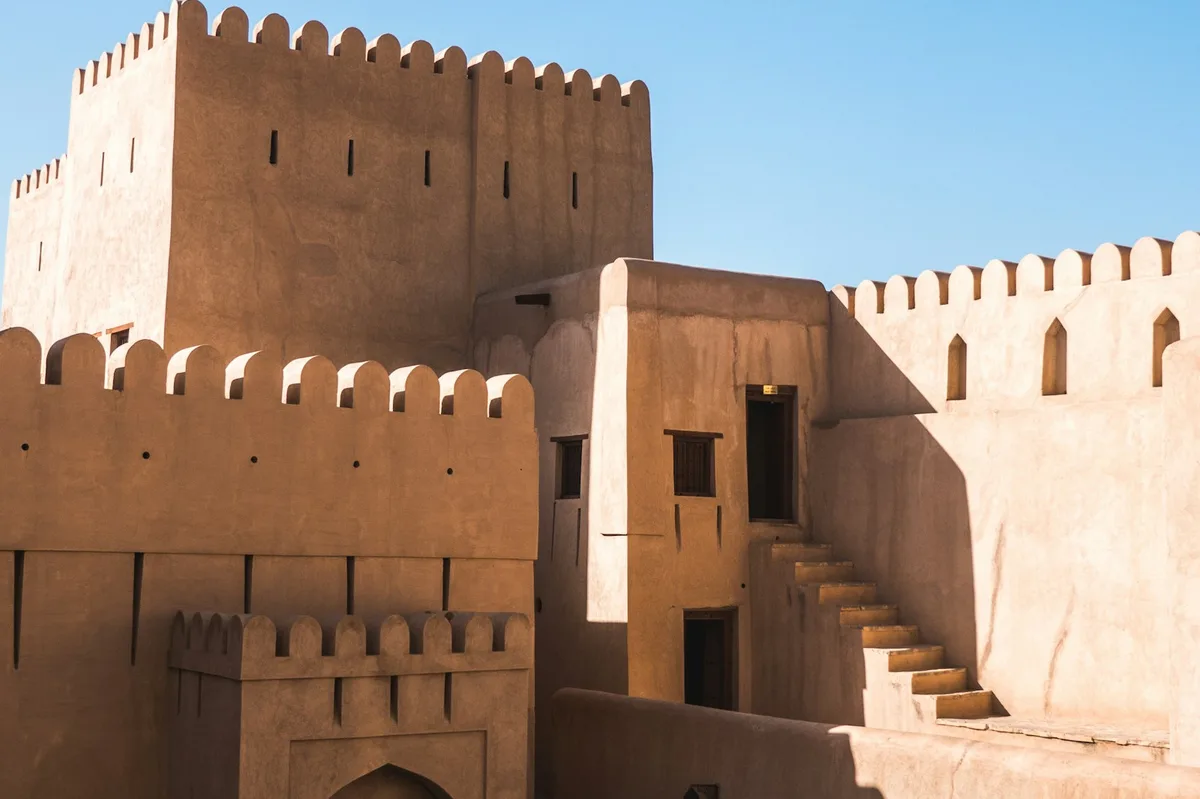
A 17th-century fort with a massive circular tower at the center of Nizwa, once Oman's capital, next to a souq famous for khanjars, dates, and silver.
 Multi-Day Tours
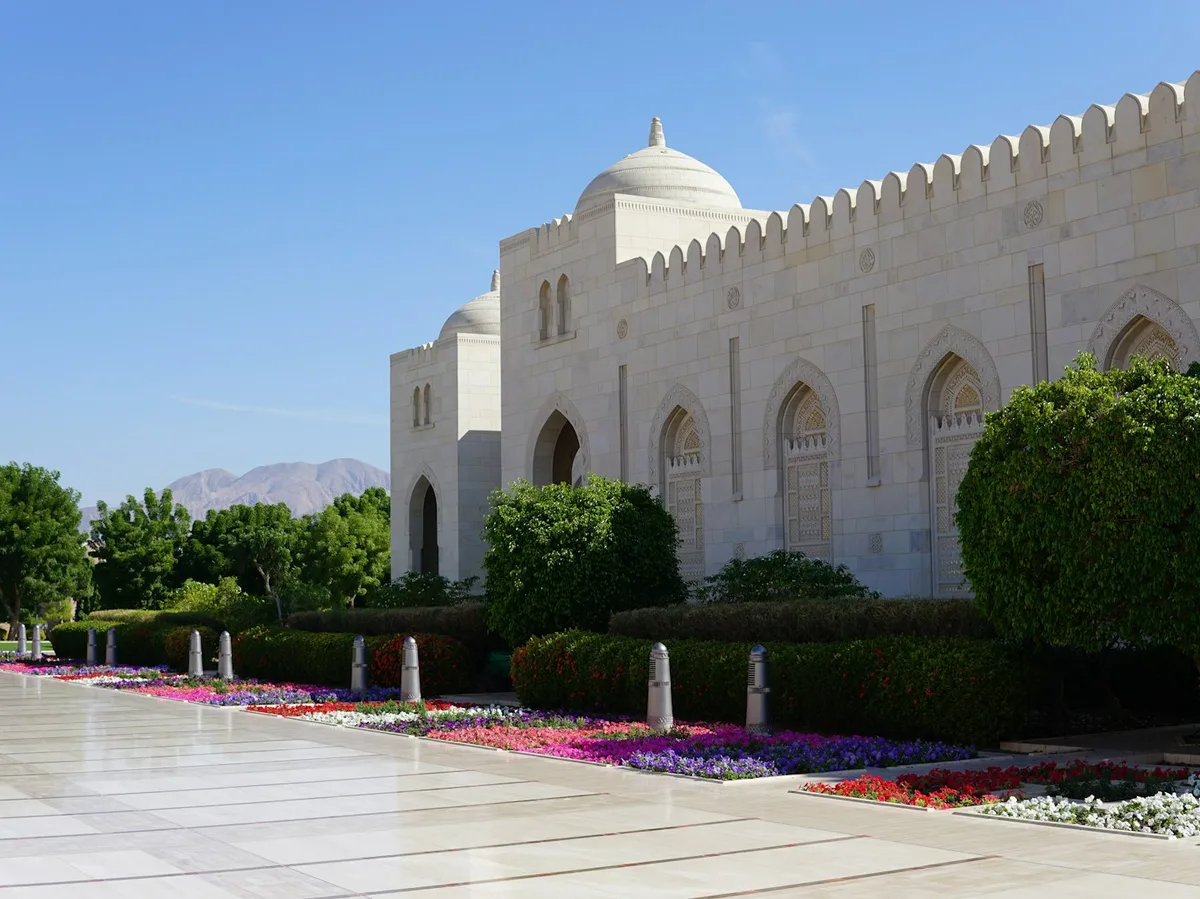
An 8-day route from Muscat's Sultan Qaboos Grand Mosque and Mutrah Souq along the coast to Sur, into Wahiba Sands for a desert camp night, up into the Jabal Akhdar mountains, and through Nizwa's fort and souq.
 Multi-Day Tours
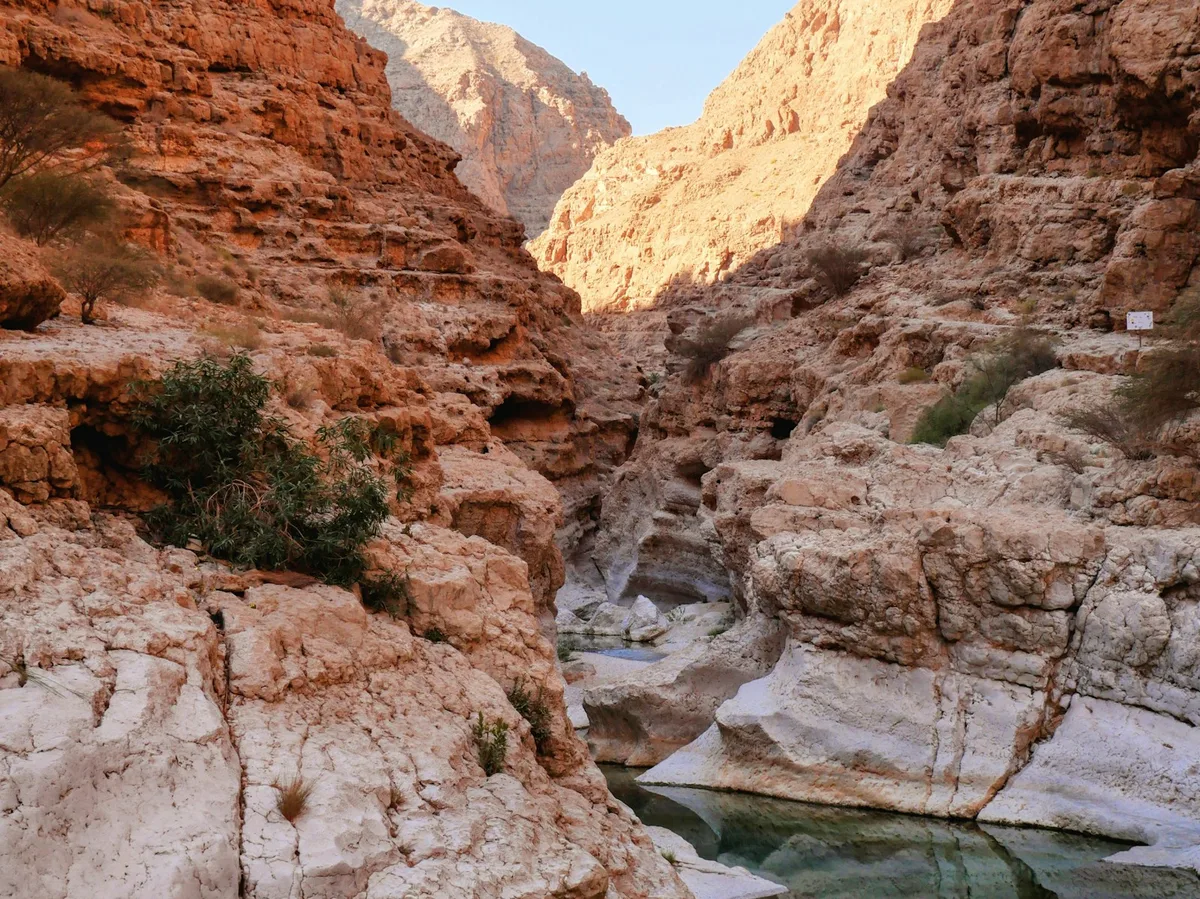
A 13-day, hike-focused private route through Oman's cities and mountains — from Muscat's mosque and forts, through the canyons of Wadi Nakhr and Jebel Akhdar, to a night in Wahiba Sands and a hike through Wadi Shab's pools and waterfalls.
Visitor guide
Nizwa Fort is a 17th-century fortress in Nizwa, a historic town in Oman's Ad Dakhiliyah Governorate that once served as a seat of the country's Imams. Its massive round tower dominates the town's skyline beside the palm groves and the traditional souq.
According to Wikipedia, the fort was built in the 1650s under Imam Sultan bin Saif Al Ya'rubi, the second Ya'rubi imam, on an older structure said to date back to the 12th century. The main bulk of the work took about twelve years, and the fort was built above an underground stream. Another section of the same article gives the construction year as 1668, so the exact date is best described as the mid-17th century.
The fort served as the administrative seat of the presiding Imams and Walis in both peace and conflict. It also acted as a stronghold against raiders eager to take Nizwa's agricultural wealth and its strategic position at the crossroads of routes linking the interior with Muscat and the south.
The central feature is the drum-like tower. Wikipedia gives two sets of figures: a height of about 30 metres and a diameter of 36 metres in one place, and 34 metres by 45 metres in another, so the dimensions are commonly quoted with some variation. The foundations are said to extend some 30 metres into the ground, and part of the tower is filled with rocks, earth and rubble to make it more robust.
Defence was built into every detail. Twenty-four openings around the tower top were used for firing, and the article says the fort originally had twenty-four cannons covering all directions, of which four remain on the tower top and two guard the entrance. It lists 480 gun-ports and a summit wall that could be manned by 120 guards with muskets and flintlocks. The only route to the top is a narrow, twisting staircase closed by a heavy wooden door studded with spikes.
Wikipedia describes shafts above the doors from which boiling oil, water or date syrup could be poured on attackers, and about six pitfalls placed in the dark passageway, some covered by removable stair planks. For a long siege, the compound had several cisterns, underground cellars for food and munitions, and access to the stream running beneath the fort.
Wikipedia calls Nizwa Fort Oman's most visited national monument, and notes that the fort, a mosque and the souq were renovated in the 1990s using traditional materials. It sits beside Nizwa's traditional market, which is known for silver jewellery, khanjars (curved daggers), copperware, pottery, leather goods and local dates. The surrounding town is a date-growing centre, with palm farms along the wadis and the Falaj Daris irrigation system, which is part of UNESCO's Aflaj Irrigation Systems of Oman listing.
In the early 1950s the fort's tower was reportedly bombed by the British Royal Air Force during the conflict that ended with the Jebel Akhdar War. Nizwa lies at the foot of the Western Hajar Mountains, roughly 140 km from Muscat, and is often paired with nearby forts at Bahla and Jabrin. A private guided visit with a driver suits the town, since the fort, souq and palm groves lie close together.
See every tour and attraction we cover in Oman.