TorontoOntario · 36 tours
 Niagara FallsOntario · 25 tours
 New York CityNew York · 30 tours
 Las VegasNevada · 8 tours
 San FranciscoCalifornia · 16 tours
 VancouverBritish Columbia · 17 tours
 DubaiUAE · 54 tours
 Abu DhabiUAE · 5 tours
 Buenos AiresArgentina · 23 tours
 AthensGreece · 31 tours
 AucklandNew Zealand · 38 tours
 CancunMexico · 54 tours
No destinations match “”. Try searching all tours instead — that search understands full questions, not just place names.
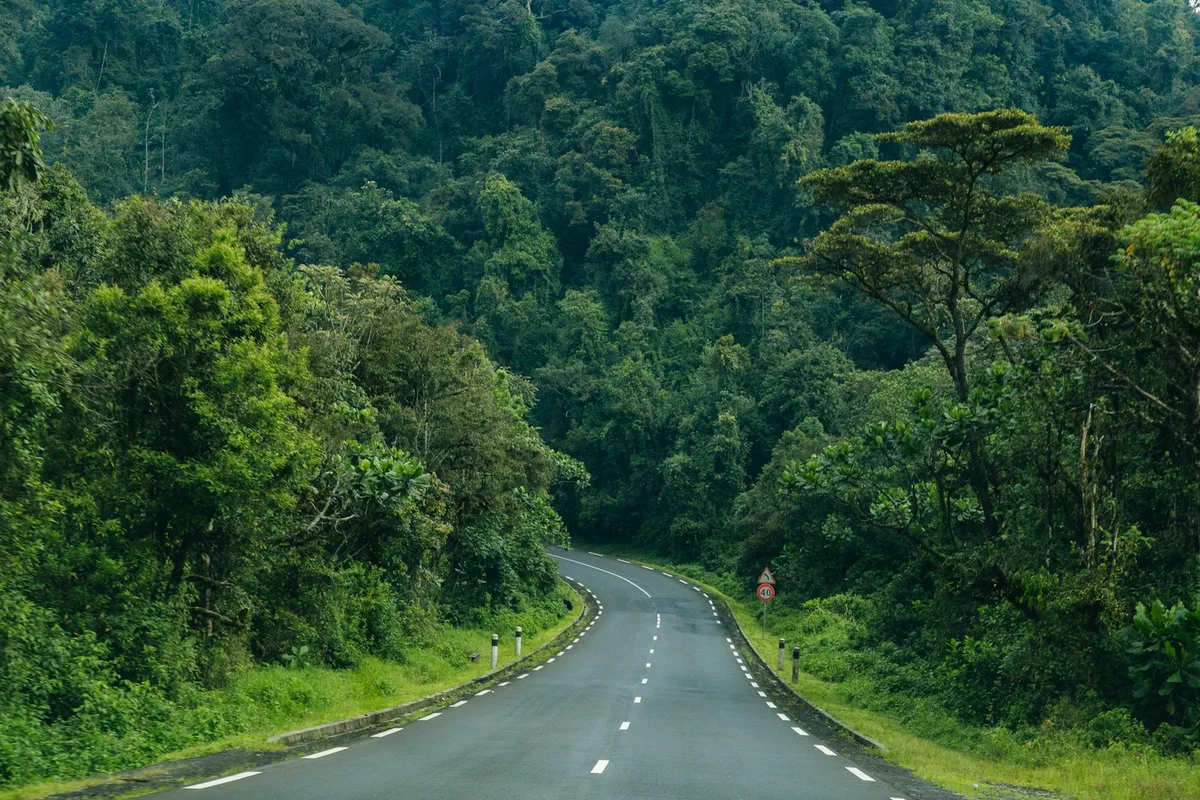
A montane rainforest in southwestern Rwanda, one of Africa's oldest, with a canopy walkway suspended high above the forest floor and troops of chimpanzees and colobus monkeys.
Visitor guide
Nyungwe Forest National Park is a montane rainforest in southwestern Rwanda on the border with Burundi. Covering about 1,019 square kilometres, it is a major centre of biodiversity and was added to the UNESCO World Heritage List in September 2023.
According to Wikipedia, Nyungwe includes rainforest, bamboo, grassland, swamps and bogs. It is contiguous with Kibira National Park in Burundi, and Lake Kivu and the Democratic Republic of the Congo lie to the west. Mount Bigugu, at 2,921 metres, rises within the park, and the forest reaches about 3,000 metres. The article describes it as likely the best-preserved montane rainforest in Africa. It lies on a watershed between the Congo and Nile basins, and one branch of the Nile's sources is said to rise on its eastern side.
Several biogeographical zones meet here, creating many microhabitats. Wikipedia lists 13 primate species, about a quarter of Africa's total, more than 300 bird species including 30 Albertine Rift endemics, 1,068 plant species, 85 mammal species, 32 amphibian species and 38 reptile species. Many species have restricted ranges and are found only in the Albertine Rift montane forests ecoregion.
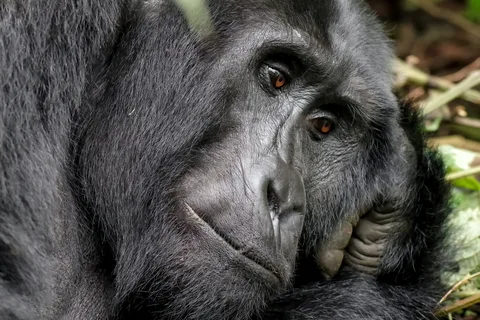
Notable primates include chimpanzees and colobus monkeys; the article also mentions L'Hoest's, golden, silver and vervet monkeys, as well as olive baboons and grey-cheeked mangabeys. Colobus groups were recorded at up to 400 members in biodiversity surveys in 1984. The Wikipedia article does not mention a canopy walkway, though one is widely advertised for the park, so that detail is not described here as verified.
The Belgian colonial government created a forest reserve in 1933, partly to curb the conversion of forest to pasture. Enforcement was weak and local people kept hunting, collecting honey, cutting wood and mining gold. Between 1958 and 1973 the forest lost over 150 square kilometres to fires, logging, hunting and small-scale farming. The last buffalo was reportedly killed in 1974 and the last elephant in 1999. Trail development began at Uwinka in 1987. The 1994 war and genocide damaged research and tourism facilities, and rebuilding began in 1995.
Wikipedia gives conflicting dates for national park status: the introduction says 2004, while the infobox lists 1933 for the forest reserve and 2005 for the national park. In October 2020 the Rwanda Development Board signed an agreement with African Parks to manage the park for an initial 20 years. Domestic visitors make up roughly 45 to 50 percent of tourists, according to the article's projections.
Nyungwe lies in a remote corner of Rwanda and is often combined with Lake Kivu. The forest is cool and often wet, and trails can be muddy, so a private guided visit with an experienced driver and park guides is a practical way to organise the trip. The article does not cover specific trails, which should be confirmed with the park.
See every tour and attraction we cover in Rwanda.