TorontoOntario · 36 tours
 Niagara FallsOntario · 25 tours
 New York CityNew York · 30 tours
 Las VegasNevada · 8 tours
 San FranciscoCalifornia · 16 tours
 VancouverBritish Columbia · 17 tours
 DubaiUAE · 54 tours
 Abu DhabiUAE · 5 tours
 Buenos AiresArgentina · 23 tours
 AthensGreece · 31 tours
 AucklandNew Zealand · 38 tours
 CancunMexico · 54 tours
No destinations match “”. Try searching all tours instead — that search understands full questions, not just place names.
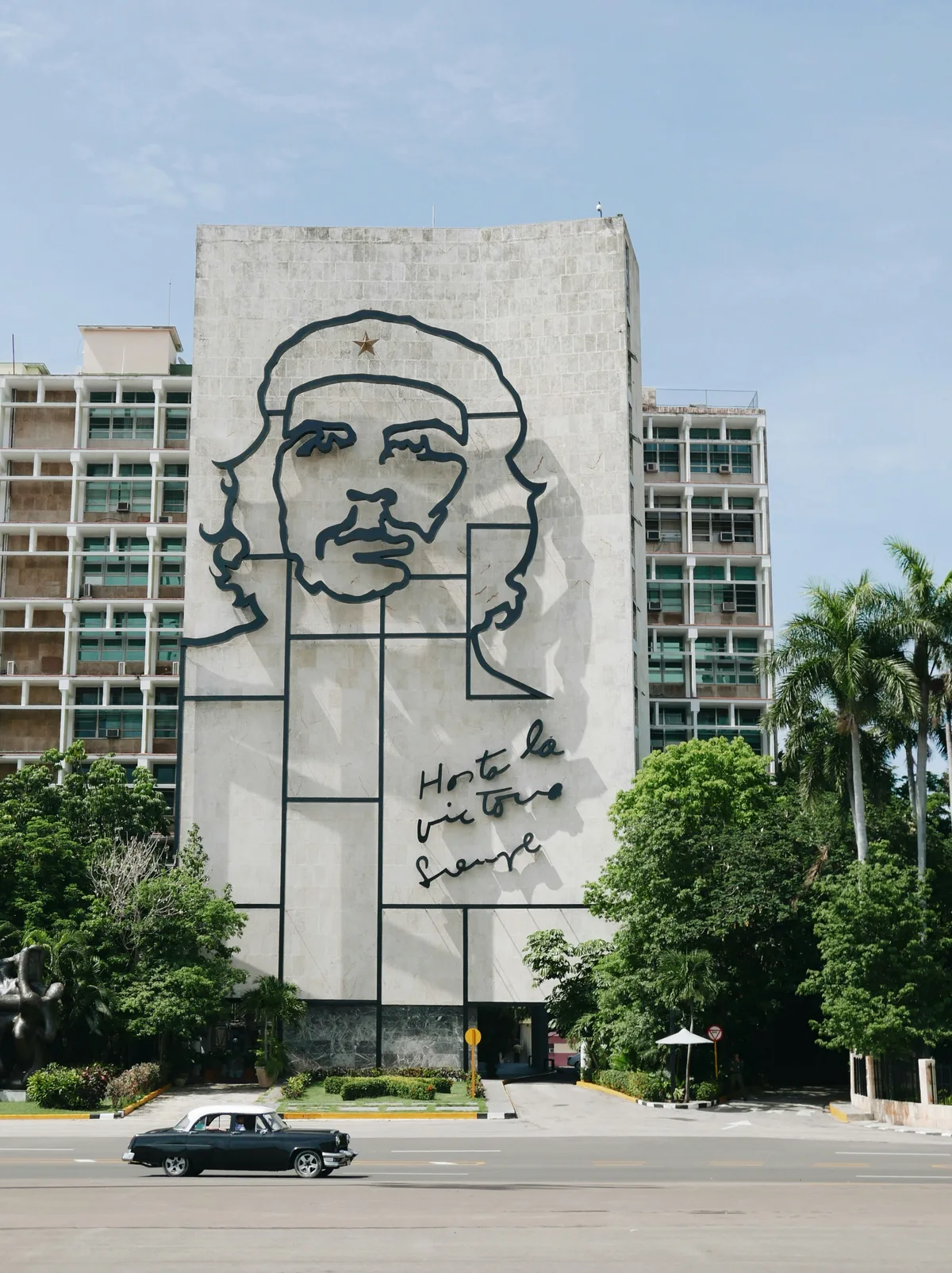
Havana's ceremonial civic square, dominated by the Jose Marti Memorial obelisk and the outline murals of Che Guevara and Camilo Cienfuegos on the government buildings facing it.
Visitor guide
The Plaza de la Revolucion is a large public square in Havana, Cuba, in the municipality of the same name, dominated by the Jose Marti Memorial and steel portraits of Che Guevara and Camilo Cienfuegos. Covering about 72,000 square metres, it is the city's principal setting for political gatherings.
Plans for the site go back to Jean-Claude Nicolas Forestier's 1926 master plan for Havana, which identified the Loma de los Catalanes as a place for a civic centre. According to Wikipedia, the square was originally called the Plaza Civica. The main construction took place in the 1950s under Fulgencio Batista, with Wikipedia giving conflicting completion dates of 1958 and 1959.
The square also lies within a municipality of about 139,000 residents that runs from the plaza to the Malecon sea wall and includes the Vedado district. Wikipedia flags parts of its article as needing further citations, so some historical details are best treated as reported rather than verified.
The memorial is a 109-metre tower shaped like a five-pointed star and clad in grey marble from the Isle of Pines, with an elevator and an enclosed observation deck described as the highest point in Havana. At its base stands an 18-metre white marble statue of Marti, carved in place by Juan Jose Sicre, on a platform with six half-height columns that serves as a podium for rallies.
Design competitions began in 1939, and a 1943 competition was won by Aquiles Maza and Juan Jose Sicre. Batista chose another design instead, by a team led by Raoul Otero de Galarraga, which was modified after public criticism. Construction of the tower began in 1953, the centenary of Marti's birth. Inside, the memorial has rooms on Marti's life and correspondence and a room on the history of the plaza.
Facing the memorial are the Ministry of the Interior and the Ministry of Communications. Steel outlines on their facades depict Che Guevara with the words Hasta la Victoria Siempre, and Camilo Cienfuegos with Vas bien, Fidel. The Palace of the Revolution, the seat of government and the Communist Party, is behind the memorial.
The National Theatre of Cuba, approved in 1951 and said to have been inspired by Radio City Music Hall, stands nearby. It was formally inaugurated in 1979 and has two main halls, Sala Covarrubias and Sala Avellaneda, with a combined capacity of 3,500, according to Wikipedia.
Fidel Castro addressed very large crowds in the plaza, including on 1 May and 26 July. Pope John Paul II celebrated a large Mass there during his 1998 visit, and Pope Francis did the same in 2015. The square functions as a government and ceremonial site, and access to some areas can be restricted.
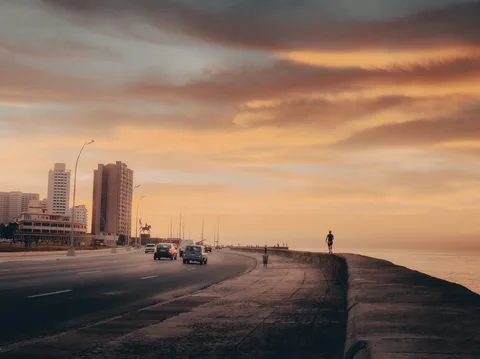
A private guided stop here is often combined with a drive through Vedado and the Malecon. A guide can explain the monuments and their political context. Photographs are usually taken from the plaza, and the surrounding buildings are government offices, so respectful behaviour is expected.
See every tour and attraction we cover in Cuba.