TorontoOntario · 36 tours
 Niagara FallsOntario · 25 tours
 New York CityNew York · 30 tours
 Las VegasNevada · 8 tours
 San FranciscoCalifornia · 16 tours
 VancouverBritish Columbia · 17 tours
 DubaiUAE · 54 tours
 Abu DhabiUAE · 5 tours
 Buenos AiresArgentina · 23 tours
 AthensGreece · 31 tours
 AucklandNew Zealand · 38 tours
 CancunMexico · 54 tours
No destinations match “”. Try searching all tours instead — that search understands full questions, not just place names.
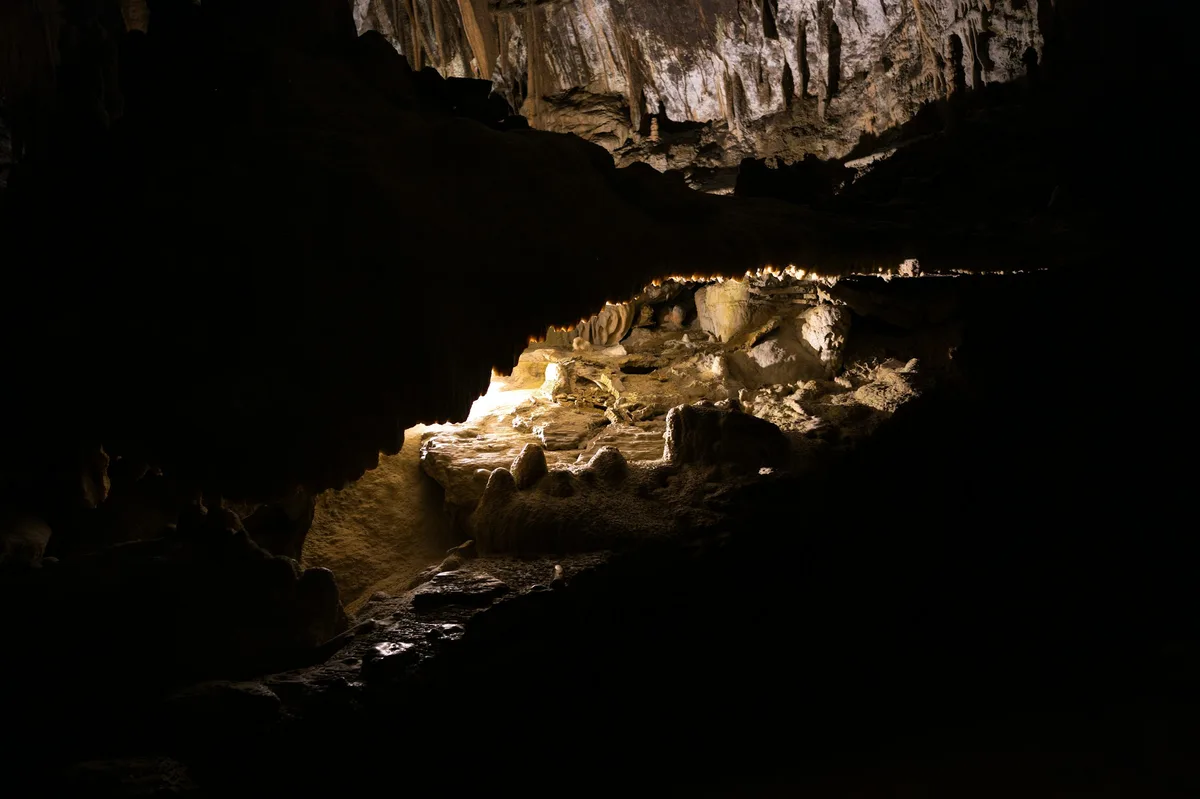
One of the largest karst cave systems in the world, explored partly by an underground train through illuminated stalactite and stalagmite formations.
Visitor guide
Postojna Cave is a karst cave system near the town of Postojna in southwestern Slovenia. About 24 kilometres long by recent surveys (the Slovenian Tourist Board gives a little over 20 kilometres), it is the second-longest cave system in the country and one of its top tourist sites, carved over millions of years by the Pivka River and known for its stalactites, stalagmites and its rare resident olms.
According to Wikipedia, the cave was first described in the 17th century by Johann Weikhard von Valvasor, a pioneer in the study of karst phenomena, although graffiti inside dated to 1213 points to a much longer history of use. In 1818, as the cave was being prepared for a visit by Emperor Francis I of Austria, a local lamp lighter named Luka Cec accidentally discovered a new section. Archduke Ferdinand visited in 1819, the year the cave is said to have become officially known as a tourist destination, and Cec became the first official guide. In the 1850s the geographer Adolf Schmidl published the first comprehensive scientific overview of the Postojna caves, which became a standard reference for speleology.
Postojna adopted electric lighting in 1884, before Ljubljana itself, and rails for a tourist cave train were laid in 1872, at first pushed by guides, then pulled by a gas locomotive in the early 20th century and by an electric one after 1945. During the First World War Russian prisoners of war were forced to build a bridge across a large chasm inside the cave. In the Second World War, German occupiers stored nearly 1,000 barrels of aircraft fuel in the cave, which Slovene Partisans destroyed in April 1944. The fire burned for seven days and blackened the entrance. Wikipedia also records that the cave houses what it calls the world's first and only underground post office, opened in 1899.
The cave system is made up of four interconnected caves linked by the same underground river, and includes stalactites, stalagmites and curtain-like formations. In 2015 and 2017 cave divers explored an underwater passage toward Planina Cave, lengthening the system to 24,340 metres. The caves are home to the olm, an endemic amphibian described as the largest cave-dwelling amphibian in the world. The tour includes an aquarium with some olms. In 2016 a female olm laid over 50 eggs, which drew global news, and 22 young hatched that year, according to Wikipedia. The temperature in the cave is around 10 degrees Celsius, so visitors usually bring a warm layer.
Only a portion of the 24-kilometre system is open to visitors. The cave operator describes a train ride of about 3.7 kilometres followed by a walk along a footpath, with the whole tour taking about one and a half hours, and the Slovenian Tourist Board says 5.3 kilometres of the system are accessible to visitors. The EXPO Postojna Cave Karst exhibition, opened in 2014, explains cave and karst phenomena through projections and interactive displays. At the end of the 1990s the cave was one of the world's most visited show caves, with nearly one million visitors per year.
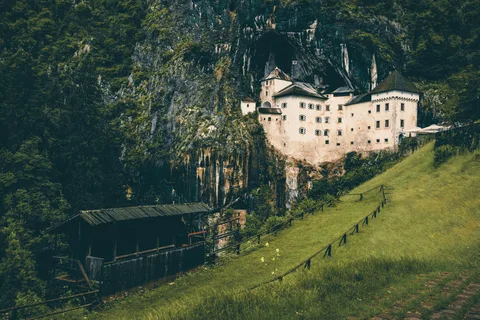
Postojna Cave and Predjama Castle lie only about 9 kilometres apart, so they pair naturally in a single day. A private tour with a driver and guide lets your group move between them at its own pace.
See every tour and attraction we cover in Slovenia.