TorontoOntario · 36 tours
 Niagara FallsOntario · 25 tours
 New York CityNew York · 30 tours
 Las VegasNevada · 8 tours
 San FranciscoCalifornia · 16 tours
 VancouverBritish Columbia · 17 tours
 DubaiUAE · 54 tours
 Abu DhabiUAE · 5 tours
 Buenos AiresArgentina · 23 tours
 AthensGreece · 31 tours
 AucklandNew Zealand · 38 tours
 CancunMexico · 54 tours
No destinations match “”. Try searching all tours instead — that search understands full questions, not just place names.
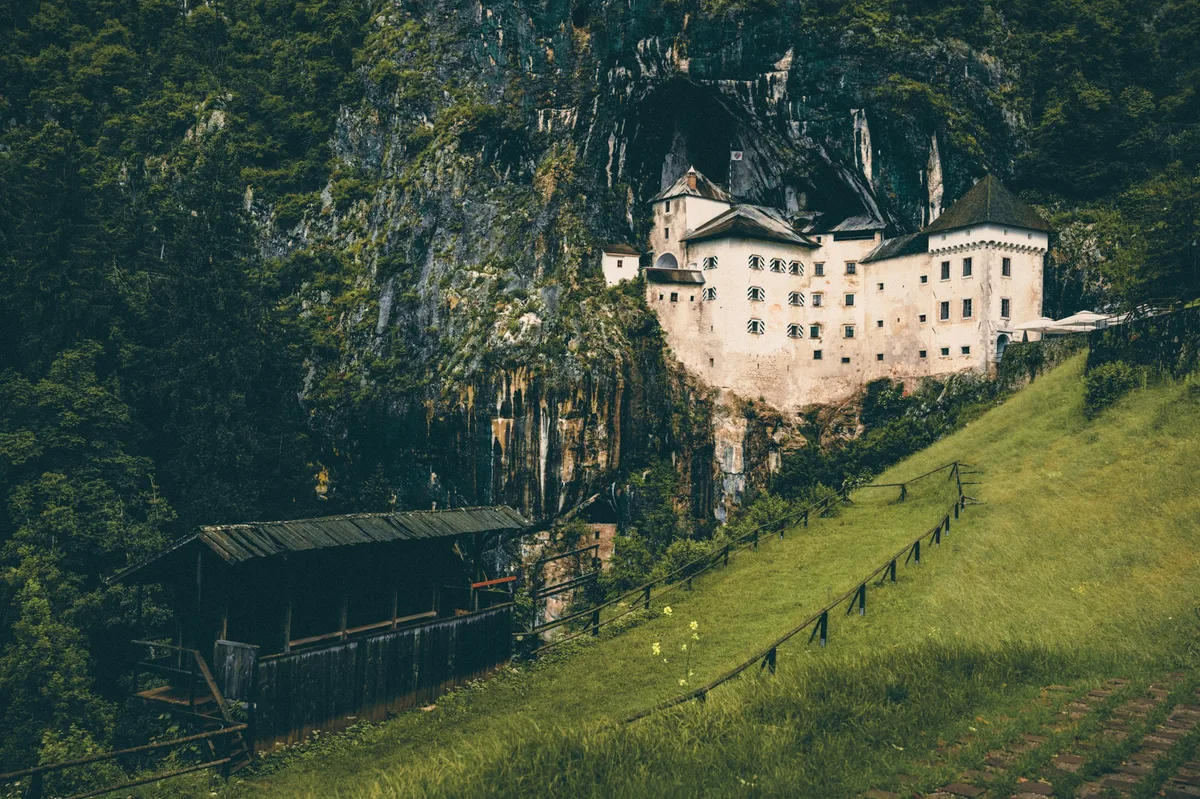
A Renaissance castle built into the mouth of a cave halfway up a cliff face near Postojna — one of the most striking fortress settings in Europe.
Visitor guide
Predjama Castle is a Renaissance castle built into the mouth of a cave in south-central Slovenia, in the historical region of Inner Carniola. Set high in a stone wall under a natural rocky arch, it lies in the village of Predjama, about 11 kilometres from the town of Postojna and 9 kilometres from Postojna Cave.
Wikipedia reports that the castle was first mentioned in 1274 under the German name Luegg, when the Patriarch of Aquileia built a Gothic castle here. It was deliberately placed under a natural rocky arch high in the cliff to make access difficult. The Luegg noble family, also known as the Knights of Adelsberg, later acquired and expanded it. Because the German name of the castle was Hohlenburg Lueg, meaning cave castle, the setting has long defined its character: the building seems to grow out of the cliff face, with the cave behind it.
The castle became known as the seat of the knight Erasmus of Lueg, lord of the castle in the 15th century and a renowned robber baron, who was the son of the imperial governor of Trieste. According to legend, he came into conflict with the Habsburgs after killing the commander of the imperial army, Marshal Pappenheim, who had offended the honor of Erasmus's deceased friend, the condottiere Andrej Baumkircher. Fleeing the vengeance of Emperor Frederick III, he reached Predjama, allied himself with King Matthias Corvinus of Hungary, and began attacking Habsburg estates and towns in Carniola. The emperor commissioned the governor of Trieste, Andrej Ravbar, to capture or kill him, and Erasmus was killed after a long siege.
A popular story says a servant betrayed him and he was killed by a cannon shot while in the lavatory. Wikipedia describes that detail as a popular but unfounded legend. Another often-told detail is that a hidden natural shaft, which Erasmus ordered enlarged, led out of the castle to the top of the cliff, 25 metres from the edge, allowing him to bring in food and continue his raids during the siege.
After the siege and destruction of the original castle, its ruins passed to the Oberburg family. The second castle, built by the Purgstall family in the early 16th century, was destroyed by an earthquake in 1511. In 1567 Archduke Charles of Austria leased the castle to Baron Philipp von Cobenzl, and in 1570 the current castle was built in the Renaissance style, pressed against the vertical cliff beneath the original medieval fortification. Wikipedia says it has remained virtually unchanged since then. In the 18th century it was a favorite summer residence of the Cobenzl family, and it passed through the Coronini von Cronberg and Windischgratz families before being confiscated and nationalized after the Second World War and turned into a museum.
Predjama is most often combined with nearby Postojna Cave. A private tour with a driver and guide can link the two sights and tell the story of Erasmus and the siege on the ground.
See every tour and attraction we cover in Slovenia.