TorontoOntario · 36 tours
 Niagara FallsOntario · 25 tours
 New York CityNew York · 30 tours
 Las VegasNevada · 8 tours
 San FranciscoCalifornia · 16 tours
 VancouverBritish Columbia · 17 tours
 DubaiUAE · 54 tours
 Abu DhabiUAE · 5 tours
 Buenos AiresArgentina · 23 tours
 AthensGreece · 31 tours
 AucklandNew Zealand · 38 tours
 CancunMexico · 54 tours
No destinations match “”. Try searching all tours instead — that search understands full questions, not just place names.
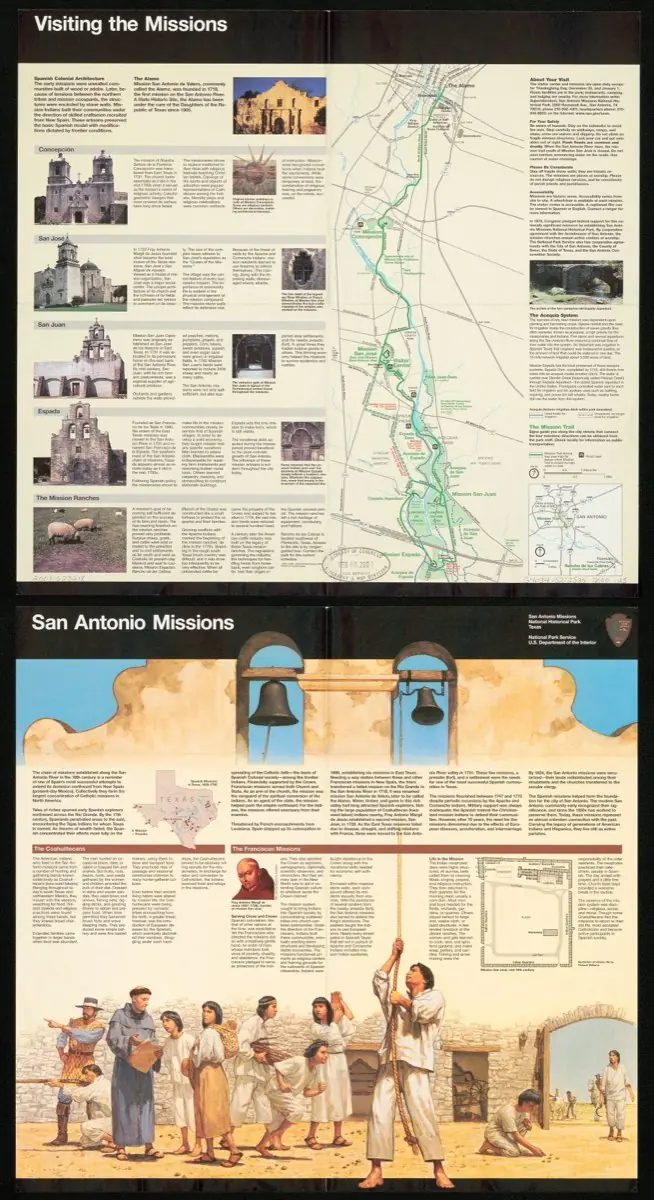
A chain of four Spanish colonial missions along the river, among the best-preserved in the US.
Visitor guide
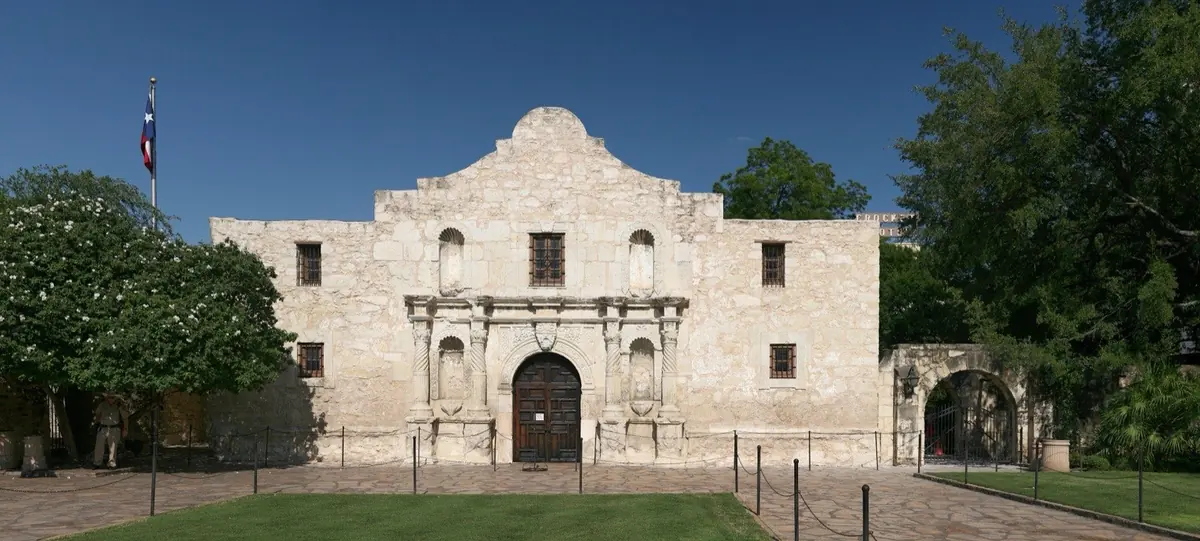
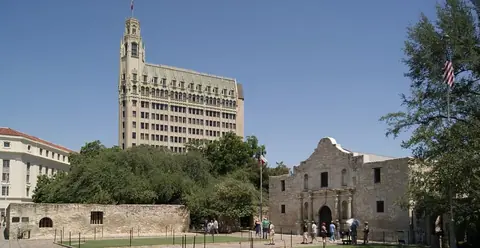
San Antonio Missions National Historical Park preserves four Spanish colonial missions along the San Antonio River: Mission Concepción, Mission San José, Mission San Juan Capistrano and Mission Espada. Together with the Alamo, they form the San Antonio Missions World Heritage Site, which the National Park Service describes as the only UNESCO World Heritage Site in Texas.
The NPS explains that beginning in 1718, five mission communities formed along the San Antonio River on the northern frontier of New Spain, aiming to bring a new religion, farming and settled communities to the region. Before then, hundreds of small Native bands had lived in South Texas for thousands of years as nomadic hunter-gatherers; the Spanish later grouped them under the label Coahuiltecan, and the NPS notes that pressure from groups moving south from the north and east had already cost many of them land, water and food resources. Indigenous residents lived in quarters built against the compound walls, the missionary lived beside the church, and workshops and storerooms filled the central grounds, with croplands and ranches outside the walls. Native and Spanish cultures blended into South Texas culture, visible in frescoes, foods, clothing and customs, and the NPS says mission descendant families today have Indigenous, Latino and European heritage and keep close ties to the missions.
The park's roots are modern: it began in 1975 as the Mission Parkway, a National Register listing of 84 sites along the river, was authorized as a national historical park on November 10, 1978 and was established on April 1, 1983. Wikipedia gives its size as roughly 948 acres, about 572 of them federal. UNESCO designated the World Heritage Site on July 5, 2015.
Mission Concepción was founded in East Texas and moved to San Antonio in 1731. Its stone church, dedicated in 1755, is described in the NPS Spanish Missions itinerary as the oldest, best-preserved stone church in the United States (other sources call it the oldest unrestored one), and parts of its painted decoration survive. It became a National Historic Landmark on April 15, 1970. The grounds were also the site of the Battle of Concepción on October 28, 1835, a roughly 30-minute fight between Mexican troops (the Alamo's own history names General Martin Perfecto de Cos as commander of the 275-man detachment; other accounts name Colonel Domingo de Ugartechea) and Texian forces led by James Bowie and James Fannin, which historian J. R. Edmondson calls the first major engagement of the Texas Revolution.
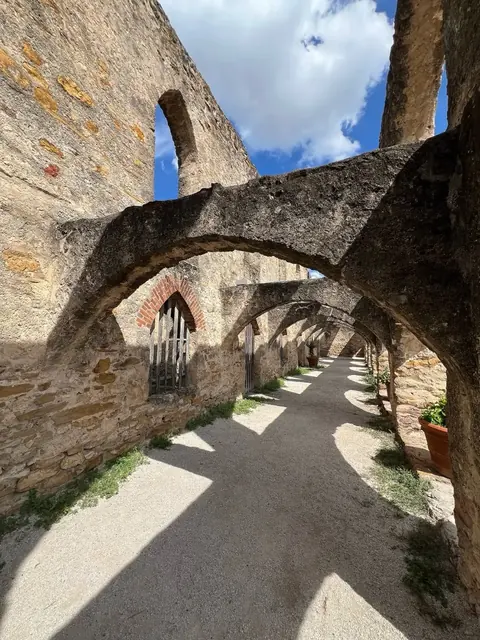
Mission San José, established in 1720 under Father Antonio Margil, is nicknamed the Queen of Missions; its stone church was completed in 1782, according to the NPS, and the mission was extensively restored from the 1930s. Its first buildings were brush, straw and mud, soon replaced in stone, and rooms for about 350 Native residents were built into the heavy outer wall. The Rose Window on the sacristy wall was sculpted in 1775; its carver is unknown, and the popular story that Pedro Huizar made it for a sweetheart named Rosa who died at sea is folklore. In 1794 the mission's lands were given to its Native residents and mission activity officially ended in 1824; Civil Works Administration and Works Progress Administration crews rebuilt the walls and Indian quarters and restored the granary from 1933.
Mission San Juan Capistrano began in East Texas in 1716 as San José de los Nazonis. When it moved to the San Antonio River on March 5, 1731, it took a new name because the area already had a Mission San José. Mission Espada traces its origin to 1690, when San Francisco de los Tejas was founded in East Texas; it was renamed on its move in 1731, its convento and small chapel date from 1745 (a larger church begun in 1762 was torn down in 1777 as structurally unsound, according to the NPS). Rancho de las Cabras, a ranch under Espada's jurisdiction, supplied crops and livestock.
Mission Concepción has the greatest concentration of original wall art in the park. Frescoes were made by applying mineral pigment to wet lime plaster, which absorbs the color as it hardens back into limestone. The NPS says yellow and red came from iron oxides in nearby sandstone and clay, black was likely a carbon pigment, and the source of the blue is uncertain. The Franciscans planned the decoration and Indigenous residents were taught the trade. A visiting friar in 1778 praised the artistry, reportedly marveling that such good artists could be found in so desolate a place. Conservation work in 1988 removed about 250 years of dirt and non-original plaster from the convento library, and further restoration in 2010 uncovered more original paint in the chapel, baptistry, sanctuary and nave.
Water mattered as much as stone. The NPS says mission residents began digging acequias, or irrigation ditches, in the early 1700s, before the walls and stone churches. A dam diverted water from the river about 3 miles north of the farmland, and builders followed the land's natural contours so gravity carried it to fields of corn, beans, squash and peppers, with sluice gates controlling the flow and the water returned to the river afterward. The Espada Aqueduct, a National Historic Landmark since 1964, carries the Espada acequia over a creek and is described by the NPS as the oldest remaining Spanish aqueduct in the United States. Wikipedia says Espada's system of seven ditches covered about 15 miles and irrigated roughly 3,500 acres, and that neighbors still use the acequia today.
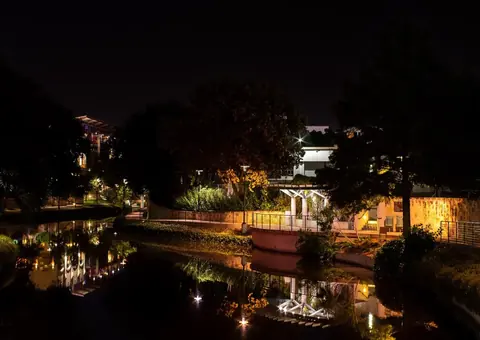
The Mission Reach project, completed in October 2013, added about 15 miles of hiking, biking and paddling trails linking the missions to the River Walk, and the NPS lists the Hike & Bike Trail as connecting the four missions to downtown. Portions of all four missions are owned by the Archdiocese of San Antonio and still operate as active parishes, so visitors should check the NPS for Mass times and access.
The missions are spread along the river, so a vehicle helps. Voyzo runs this as a private tour with your own driver and door-to-door pickup, letting you choose which missions to see in depth; check the NPS for current hours and access.
See every tour and attraction we cover in San Antonio.