TorontoOntario · 36 tours
 Niagara FallsOntario · 25 tours
 New York CityNew York · 30 tours
 Las VegasNevada · 8 tours
 San FranciscoCalifornia · 16 tours
 VancouverBritish Columbia · 17 tours
 DubaiUAE · 54 tours
 Abu DhabiUAE · 5 tours
 Buenos AiresArgentina · 23 tours
 AthensGreece · 31 tours
 AucklandNew Zealand · 38 tours
 CancunMexico · 54 tours
No destinations match “”. Try searching all tours instead — that search understands full questions, not just place names.
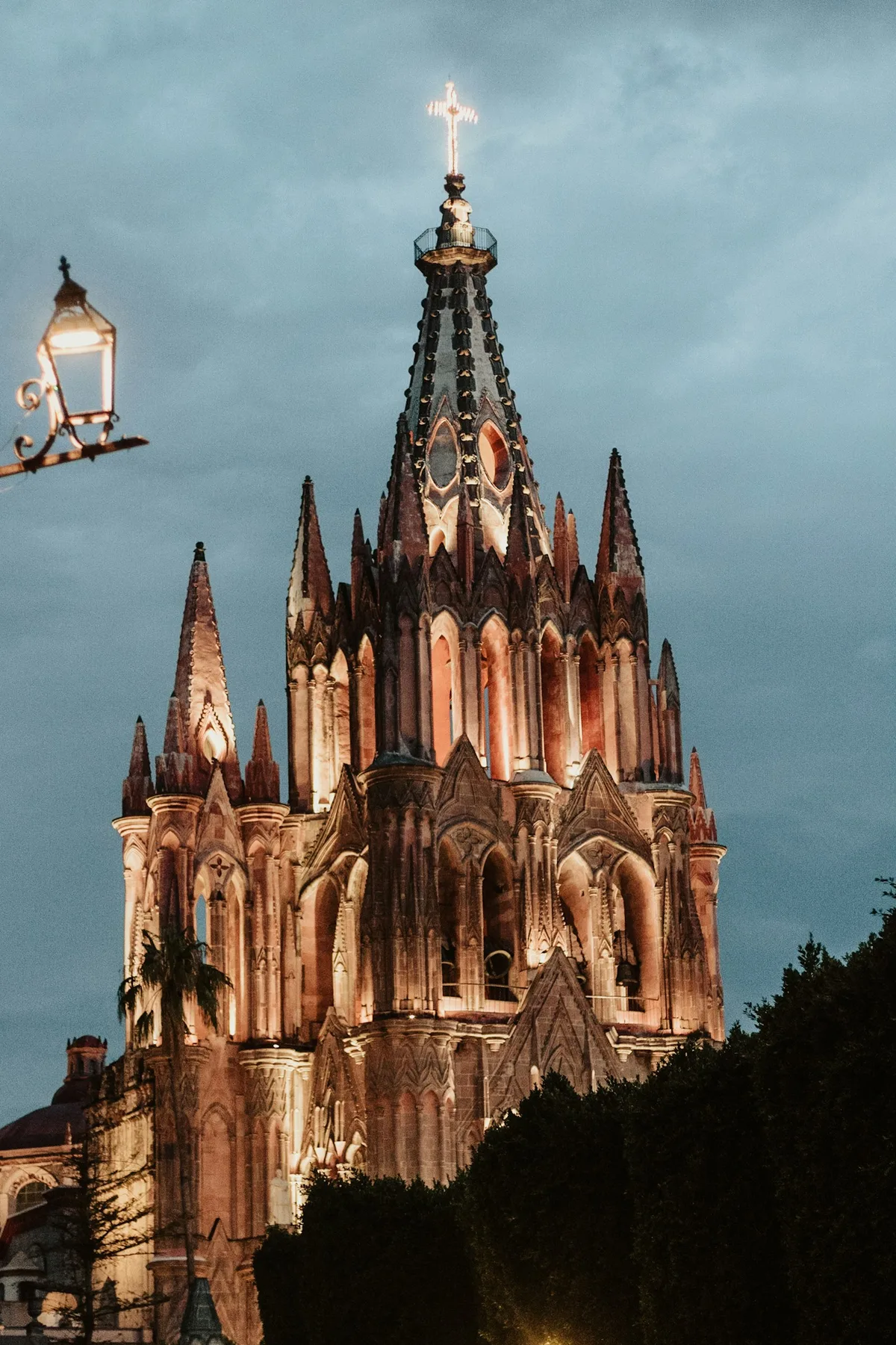
A UNESCO World Heritage colonial town in Guanajuato state, centered on the pink neo-Gothic La Parroquia de San Miguel Arcángel church and known for its arts scene and cobblestone streets.
Visitor guide
San Miguel de Allende is a colonial town in the state of Guanajuato in central Mexico, known for its cobblestone streets, baroque and neo-Gothic architecture and its art community. UNESCO inscribed the Protective Town of San Miguel and the Sanctuary of Jesus Nazareno de Atotonilco as a World Heritage Site in 2008.
Before the Spanish arrived, the site was a Chichimeca village. Spanish settlement met resistance, and the town was re-established in 1555 at a site with two freshwater springs, serving as both a mission and a military outpost. Silver discoveries in the mid-16th century made it a key stop on the road to Mexico City. According to Wikipedia, trade, textiles and supplies for mining camps funded many mansions and churches, and by the mid-18th century it was among the most prosperous settlements in New Spain. The historic core, with buildings mostly from the 17th and 18th centuries, covers about 43 hectares.
The town is named for Ignacio Allende, who was born in a house facing the central plaza. Allende and Juan Aldama conspired against colonial rule with Miguel Hidalgo and Josefa Ortiz de Dominguez. After Hidalgo's call to arms in the nearby town of Dolores in 1810, the insurgent army stopped at the Atotonilco sanctuary before entering San Miguel. In 1826 the state congress added Allende's name to the town. His former home, built in 1759, now houses a regional history museum.
The parish church of San Miguel Arcangel, known as La Parroquia, is the town's emblem. It was built in the 17th century, and its pink-stone neo-Gothic facade was added in 1880 by Zeferino Gutierrez, a self-taught indigenous bricklayer and architect. Its two towers are visible from much of the town. In front of it is the Jardin Allende, the main plaza, with wrought-iron benches and trimmed laurel trees; bands often play there on weekends, and it is the center of local social life.
The town declined through much of the 19th century. Its revival began in 1937, when American writer Stirling Dickinson arrived; with Peruvian intellectual Felipe Cossio del Pomar he founded the Escuela de Bellas Artes in 1938 in a former convent. The Instituto Allende followed in the 1940s, and after World War II, American veterans studying under the G.I. Bill drew international attention. Artists such as David Alfaro Siqueiros taught there. The former Fabrica La Aurora textile mill has since been converted into galleries, shops and cafes.
The town sits at about 1,900 meters elevation with a mild highland climate; rain falls mostly from June through September, and winter nights can be cool. The biggest celebration honors the patron saint, the Archangel Michael, around his feast day of 29 September, with processions and elaborate spinning fireworks structures called castillos. Holy Week brings altars to the Virgin of Sorrows and a silent Good Friday procession, and a chamber music festival takes place each August.
The historic center is compact but hilly with uneven cobbles. A private guided visit with a driver suits the town well, covering the plaza, the church and the Atotonilco sanctuary about 14 kilometers north.
See every tour and attraction we cover in Mexico.