TorontoOntario · 36 tours
 Niagara FallsOntario · 25 tours
 New York CityNew York · 30 tours
 Las VegasNevada · 8 tours
 San FranciscoCalifornia · 16 tours
 VancouverBritish Columbia · 17 tours
 DubaiUAE · 54 tours
 Abu DhabiUAE · 5 tours
 Buenos AiresArgentina · 23 tours
 AthensGreece · 31 tours
 AucklandNew Zealand · 38 tours
 CancunMexico · 54 tours
No destinations match “”. Try searching all tours instead — that search understands full questions, not just place names.
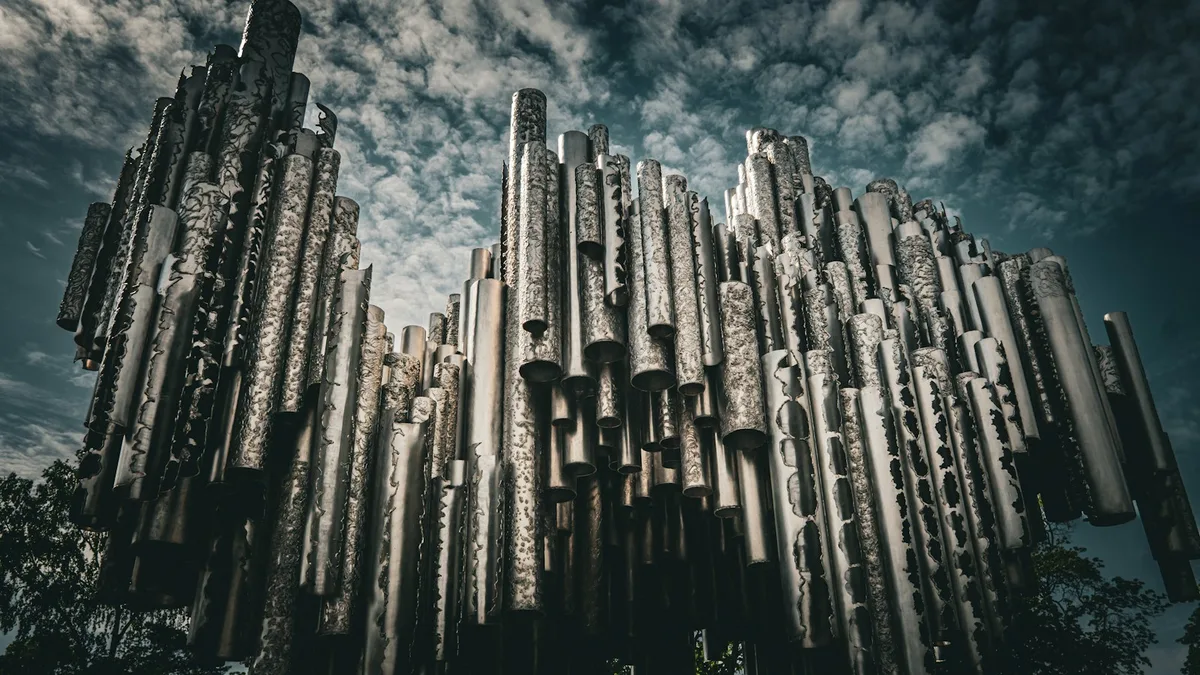
A wave-like sculpture of more than 600 welded steel pipes in Helsinki's Sibelius Park, built in 1967 to honor composer Jean Sibelius and resembling a silent pipe organ.
Visitor guide
The Sibelius Monument is a public sculpture in Sibelius Park in the Toolo district of Helsinki, Finland, dedicated to the composer Jean Sibelius, who died in 1957. Created by the sculptor Eila Hiltunen and unveiled in 1967, it is best known for a cluster of welded stainless steel pipes that many visitors compare to a pipe organ.
The design, titled Passio Musicae and originally Credo, won a competition run by the Sibelius Society of Finland in 1961-1962. The result sparked heated public debate. According to Wikipedia, critics called the abstract design a tin can and objected to using welded metal to honour a national hero. As a concession to those critics, the Society required Hiltunen to add a figurative element, a portrait of the composer.
Work began in 1961 and was completed in 1967, and the monument was unveiled and donated to the City of Helsinki on 7 September 1967. Hiltunen also had disputes with the Society over payment, and she later suffered asthma and bronchitis that she attributed to welding fumes.
The abstract part of the monument is made of more than 600 acid-resistant steel pipes, welded together and textured, forming a shape measuring about 8.5 by 10.5 by 6.5 metres and weighing about 24 tonnes. Visitors can walk inside the structure. Hiltunen intended it to evoke Sibelius's music, though many observers see an organ, or the birch forests and reeds of the Finnish landscape.
Beside it is a high-relief stainless steel portrait of Sibelius in his forties, about one metre high and framed by three free-form shards. The steel was pickled and passivated, so it has neither patinated nor corroded. The pipes can also produce sound from wind and rain and echo voices and birdsong.
The monument is managed by the Helsinki Art Museum and is one of the city's most recognisable sights. It helped establish Hiltunen as a leading Finnish sculptor, although it also overshadowed her other work, and commentators credit it with advancing modernism and the representation of women in Finnish sculpture.
Finland donated a miniature of the work to UNESCO in 1967 and a full-scale partial study to the United Nations in New York in 1983. Hiltunen later challenged two other works for resembling her design, including Ernst Nordin's Norra skenet in Sweden, although the outcome of one of those disputes is not recorded in the source.
Sibelius Park is a public park in Helsinki's Toolo district. The monument is easiest to appreciate by walking around and into it, since the pipes and the portrait look different from each side. Sibelius himself, whose music is closely tied to Finland's national identity, gives the monument its meaning for many Finnish visitors.
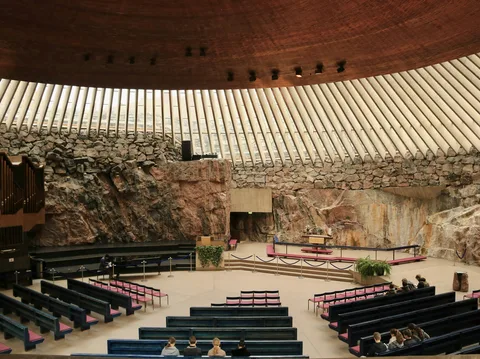
It combines naturally with a private city tour, as it lies in the same Toolo district as the Temppeliaukio Rock Church.
See every tour and attraction we cover in Finland.