TorontoOntario · 36 tours
 Niagara FallsOntario · 25 tours
 New York CityNew York · 30 tours
 Las VegasNevada · 8 tours
 San FranciscoCalifornia · 16 tours
 VancouverBritish Columbia · 17 tours
 DubaiUAE · 54 tours
 Abu DhabiUAE · 5 tours
 Buenos AiresArgentina · 23 tours
 AthensGreece · 31 tours
 AucklandNew Zealand · 38 tours
 CancunMexico · 54 tours
No destinations match “”. Try searching all tours instead — that search understands full questions, not just place names.
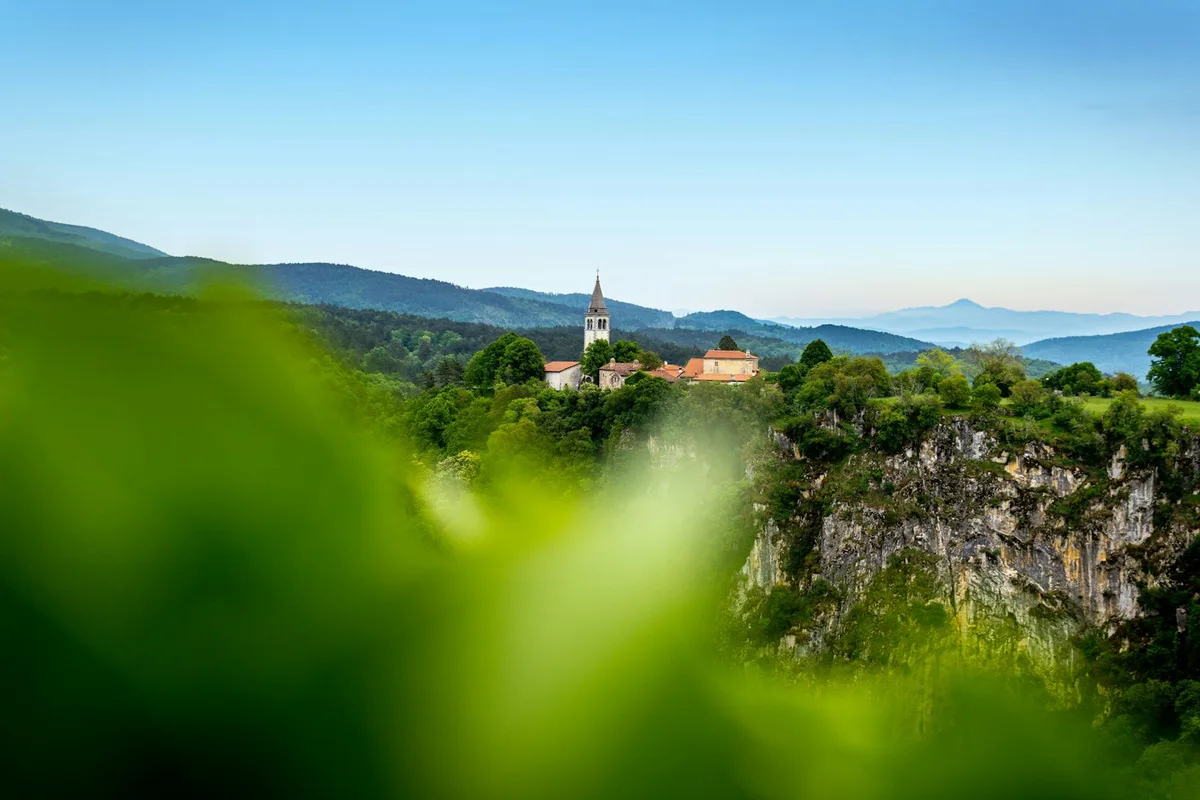
A UNESCO World Heritage cave system in the Karst region, its collapsed dolines and one of the largest known underground canyons carved by the Reka River.
Visitor guide
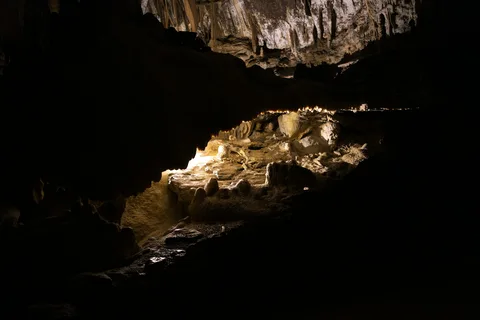
Skocjan Caves is a vast karst cave system on the Karst Plateau in southwestern Slovenia, where the Reka River disappears underground through a series of canyons and chambers. Inscribed on the UNESCO World Heritage List in 1986, it is protected within Skocjan Caves Regional Park and is known for one of the largest underground chambers in Europe.
Wikipedia explains that at the Big Collapse Doline, known in Slovene as Velika Dolina, the Reka River disappears into the Skocjan Caves and then flows underground for 34 kilometres before resurfacing near Monfalcone in Italy, where it contributes roughly one third of the flow of the Timavo River. The explored length of the caves is 6,200 metres, formed in a 300-metre-thick layer of Cretaceous and Paleocene limestone. The underground channel known as Hanke's Channel is about 3.5 kilometres long, 10 to 60 metres wide and more than 140 metres high. It opens into chambers including Martel's Chamber, which has a volume of 2.2 million cubic metres and is considered the largest discovered underground chamber in Europe and one of the largest in the world.
The river's capacity is limited by a small siphon at the end of the canyon, which cannot handle large volumes of water in heavy rain. In such events, according to Wikipedia, water levels can rise by more than one hundred metres. Skocjan Caves was designated a Ramsar wetland of international importance in 1999, and together with the underground stream of the Reka it forms one of the longest karst underground wetlands in Europe.
The first written sources about the caves date to antiquity: the 2nd-century BC writer Posidonius of Apamea mentions them, and they appear on early maps such as the Lazius-Ortelius map of 1561 and Mercator's Novus Atlas of 1637. In 1689 the Carniolan scholar Johann Weikhard von Valvasor described the sink of the Reka. The French painter Louis-Francois Cassas was commissioned in 1782 to paint landscapes of the caves. Systematic exploration began with a speleology expedition in 1884, explorers reached the banks of the Dead Lake in 1890, and the discovery of Silent Cave in 1904 followed the climbing of a sixty-metre wall. In 1990 Slovenian divers swam through the Ledeni dihnik siphon and found over 200 metres of new passages.
The area has evidence of human habitation going back over ten thousand years, according to Wikipedia. A discovery in Fly Cave indicates Greek influence, and a cave temple was established from the Bronze Age into the Iron Age. Three thousand years ago, the site is described as a significant pilgrimage place, associated with ancestor worship and communication with the afterlife.
Modern tourism began in 1819 with the introduction of a visitors' book, and steps to the bottom of the Big Collapse Doline were ordered by the local councilor Matej Tominc around the same time. The first section of the caves was opened to tourists by 1933 but was badly damaged by a flood in 1963. In 2011 the area was renovated and a new steel bridge was added, allowing visitors to see the underground canyon. Guided tours are given in several languages, including English. Skocjan is often combined with Postojna Cave on a day through the Karst region, and a private tour with a driver and guide suits that route; underground temperatures are cool, so bring a warm layer.
See every tour and attraction we cover in Slovenia.