TorontoOntario · 36 tours
 Niagara FallsOntario · 25 tours
 New York CityNew York · 30 tours
 Las VegasNevada · 8 tours
 San FranciscoCalifornia · 16 tours
 VancouverBritish Columbia · 17 tours
 DubaiUAE · 54 tours
 Abu DhabiUAE · 5 tours
 Buenos AiresArgentina · 23 tours
 AthensGreece · 31 tours
 AucklandNew Zealand · 38 tours
 CancunMexico · 54 tours
No destinations match “”. Try searching all tours instead — that search understands full questions, not just place names.
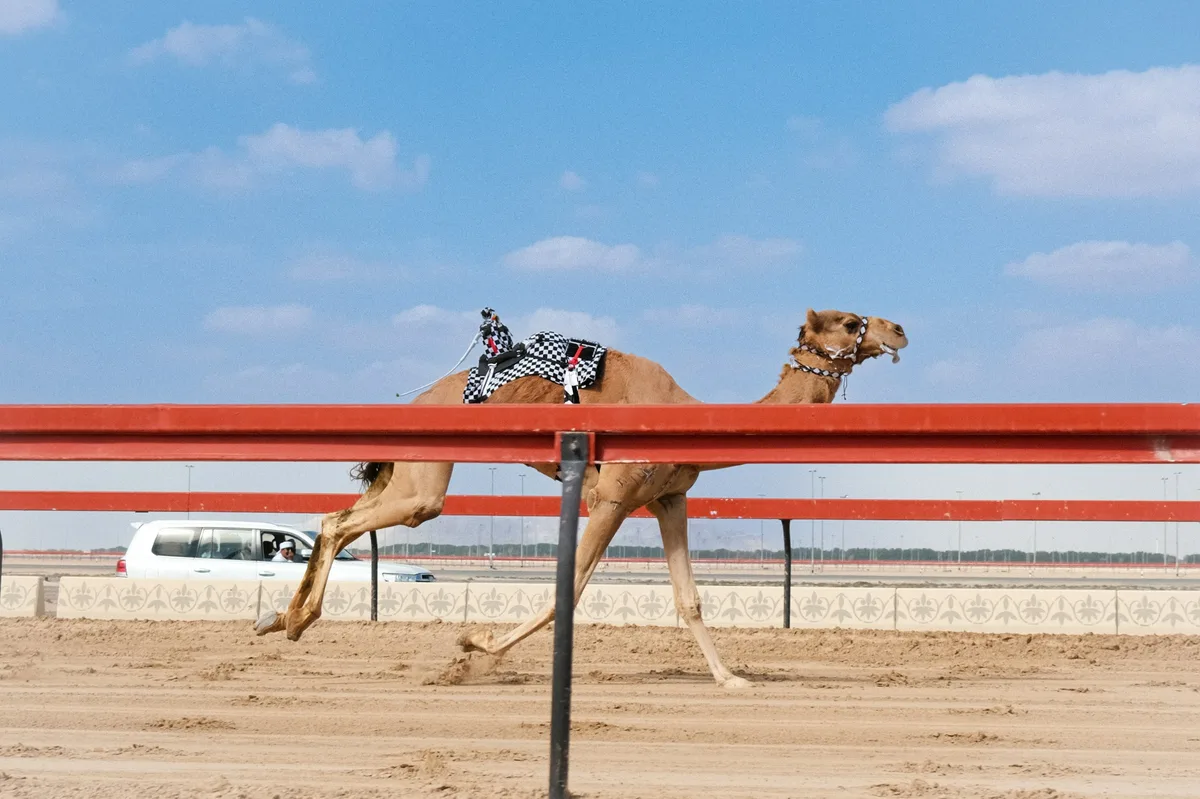
A traditional trading atmosphere offering cultural insight into camels' role in Emirati life.
Visitor guide
The Al Ain Camel Market is a traditional livestock market on the Mezyad Road south of Al Ain in the Emirate of Abu Dhabi, United Arab Emirates, where dromedary camels are traded alongside goats and sheep. It offers a window into the role of the camel in Arabian and Emirati life, in a city whose oases have been settled for millennia.
Visitor guides place the market on Street 137, commonly called Mezyad Road, and sources disagree on the distance from the centre: Gulf News gives about 15 km from downtown, while Lonely Planet gives about 8 km south, behind Bawadi Mall and as part of the Al Ain Central Market. Wikipedia's Mezyad article notes the road passes the city's traditional camel market, and its Al Ain article lists traditional souqs for fruit, vegetables and livestock on the road to Mezyad. Guides describe animals in pens ranging from young calves, some of which may later become racing camels, to large bulls kept for breeding. Trading is concentrated in the morning, although the corralled animals can usually be seen later in the day. Visit Abu Dhabi describes it as an active working market where visits are supervised by market staff. No source found gives a founding date, so its history is best described as part of a long local tradition of livestock trade.
Wikipedia says the dromedary was first domesticated in the southern Arabian Peninsula around 4000 to 3000 BC and has been functionally extinct in the wild for about 2,000 years. Adult males stand roughly 1.8 to 2.4 metres at the shoulder. The single hump stores fat, and the animal can lose more than 30 per cent of its body water, which most mammals could not survive. Bedouin communities relied on camels for transport across the desert as well as milk, wool and meat, and Visit Abu Dhabi notes that camel milk, wool and meat remain widely used. Camel racing is described by Wikipedia as especially popular in the Arab world, and the article names the racing camel, Al-Arabiat and Al-Kazmiat among prominent UAE breeds.
Al Ain, whose Arabic name means 'The Spring', lies about 160 km east of the capital and borders the Omani town of Al Buraimi. Wikipedia says the area has been inhabited for nearly 8,000 years and that the cultural sites of Al Ain, with Hafit, Hili, Bidaa Bint Saud and the oases, became the first UAE World Heritage Site recognised by UNESCO in 2011. The city has seven oases irrigated by the underground falaj system, and Wikipedia notes that falaj channels in the area have been dated to the Iron Age. This is the setting in which camel caravans and tribal communities once moved between oases and the coast.
Visit Al Ain advises dressing modestly and not touching the camels without permission, and Lonely Planet notes that taking photographs may prompt requests for payment. Because it is a working market and not a museum, activity changes with the day. A private guided visit can help with local etiquette and combine the market with the oasis and forts in the same outing.
See every tour and attraction we cover in Al Ain.