TorontoOntario · 36 tours
 Niagara FallsOntario · 25 tours
 New York CityNew York · 30 tours
 Las VegasNevada · 8 tours
 San FranciscoCalifornia · 16 tours
 VancouverBritish Columbia · 17 tours
 DubaiUAE · 54 tours
 Abu DhabiUAE · 5 tours
 Buenos AiresArgentina · 23 tours
 AthensGreece · 31 tours
 AucklandNew Zealand · 38 tours
 CancunMexico · 54 tours
No destinations match “”. Try searching all tours instead — that search understands full questions, not just place names.
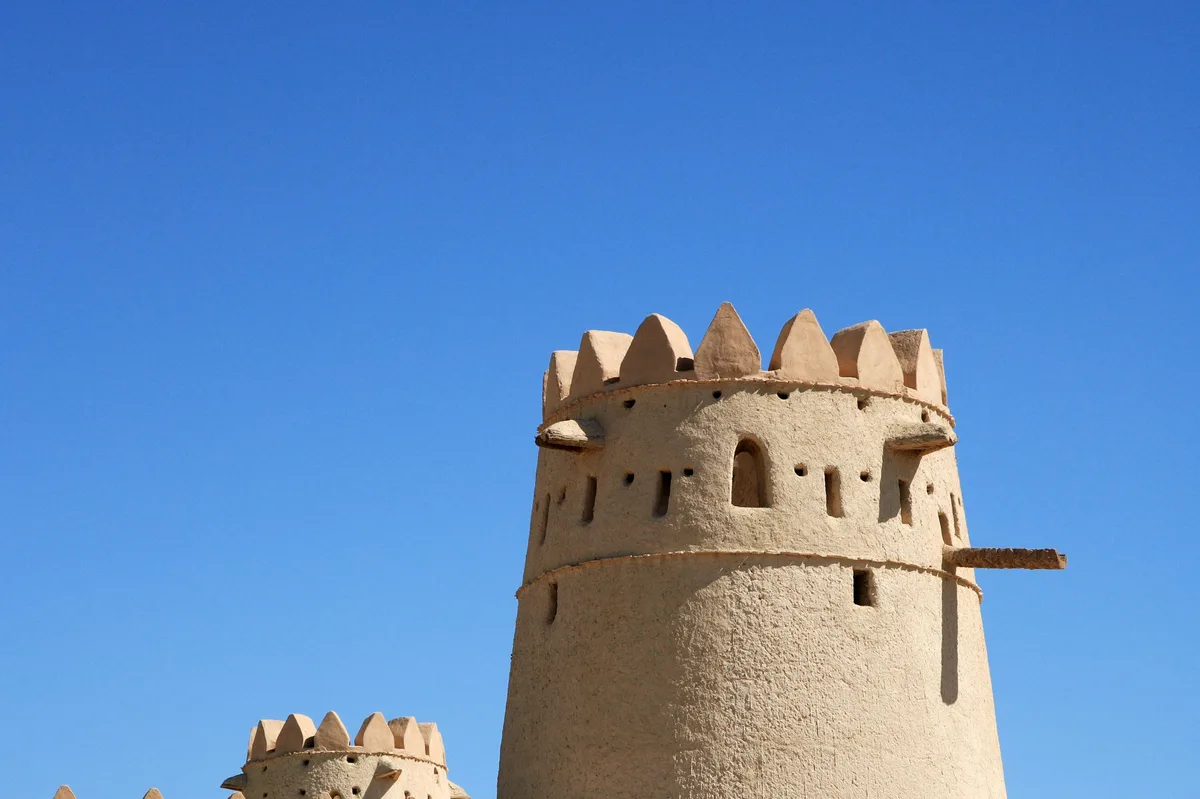
The former residence of Sheikh Zayed bin Sultan Al Nahyan, the UAE's first President, displaying his personal belongings, artefacts, and photographs.
Visitor guide
Al Ain Palace Museum, also called the Sheikh Zayed Palace Museum, is a restored house museum in Al Ain, Abu Dhabi, United Arab Emirates. It was the home of Sheikh Zayed bin Sultan Al Nahyan, the founding President of the UAE, and presents his family life and the early history of the state.
Wikipedia says the palace was originally built in 1937 on the western side of Al Ain Oasis, though one category tag in the article lists 1910, so dates vary. Sheikh Zayed lived here until 1966, the year he became Ruler of Abu Dhabi. The oasis behind the museum is, according to Wikipedia, more than 1,200 hectares in area, holds more than 147,000 date palms producing about 100 varieties of dates, and is watered by the underground falaj irrigation system. It was inscribed by UNESCO in 2011 as part of the Cultural Sites of Al Ain, the first UAE site on the World Heritage List. The museum has an entrance to the oasis, with a path through it toward the Al Ain Museum.
Wikipedia gives Zayed's birth as 6 May 1918 at Qasr Al Hosn in Abu Dhabi, although the Al Ain article notes some hold that he was born in Al Ain. After his father's death in 1926 he moved to Al Ain, where he lived among the Bedouin and learned their skills. In 1946 he became governor of the Eastern Region, based at Muwaiji Fort, and he later took a particular interest in restoring the falaj network that kept the oasis plantations fertile. He founded Al Ain's first formal school, the Al Nahyaneia Model School, in 1959. He became Ruler of Abu Dhabi on 6 August 1966 and was the UAE's first president from its formation on 2 December 1971 until his death on 2 November 2004.
Sources differ on the date of the conversion. Wikipedia gives 1998, while Abu Dhabi Culture describes restoration commissioned in 1998 and a house museum opened to the public in 2001. The best-supported reading is that work began in 1998 and the museum opened around 2001. The museum presents many of the palace rooms, several of them majlis, or reception rooms where visitors were received.
Exhibits include artefacts, photographs and personal belongings of Sheikh Zayed and his family, arranged to present traditional hospitality, crafts and governance. Highlights described by Wikipedia and Abu Dhabi Culture include an art gallery, a replica grand court tent that reflects the Bedouin tradition of receiving guests, a Land Rover like the one Sheikh Zayed drove in the desert to visit Bedouin communities, and a display of the Al Nahyan family tree. Together these give a sense of life in Al Ain before the UAE federation in 1971.
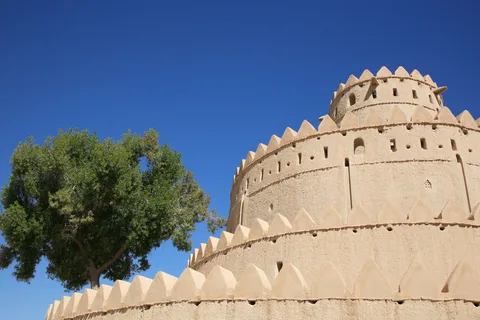
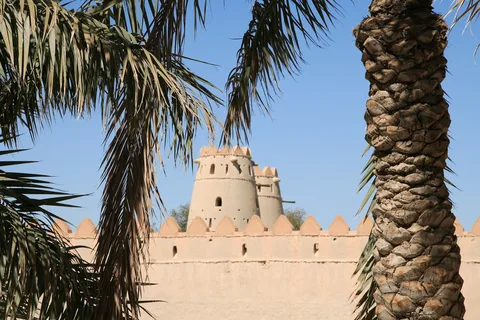
Al Jahili Fort stands nearby; Wikipedia says construction began in 1891 under Sheikh Zayed bin Khalifa Al Nahyan to protect date palm farmers, that it was a base for the Trucial Oman Levies, later the Trucial Oman Scouts, from 1955, and that it was restored in the mid-1980s and again in 2007 to 2008. The fort is square, about 118 metres long and 8 metres high, with three round watchtowers and a rectangular one. Visiting arrangements and exhibitions may change, including renovation works, so it is best to confirm details when planning. A private tour with a driver can link the palace with the oasis and fort in a single day.
See every tour and attraction we cover in Al Ain.