TorontoOntario · 36 tours
 Niagara FallsOntario · 25 tours
 New York CityNew York · 30 tours
 Las VegasNevada · 8 tours
 San FranciscoCalifornia · 16 tours
 VancouverBritish Columbia · 17 tours
 DubaiUAE · 54 tours
 Abu DhabiUAE · 5 tours
 Buenos AiresArgentina · 23 tours
 AthensGreece · 31 tours
 AucklandNew Zealand · 38 tours
 CancunMexico · 54 tours
No destinations match “”. Try searching all tours instead — that search understands full questions, not just place names.
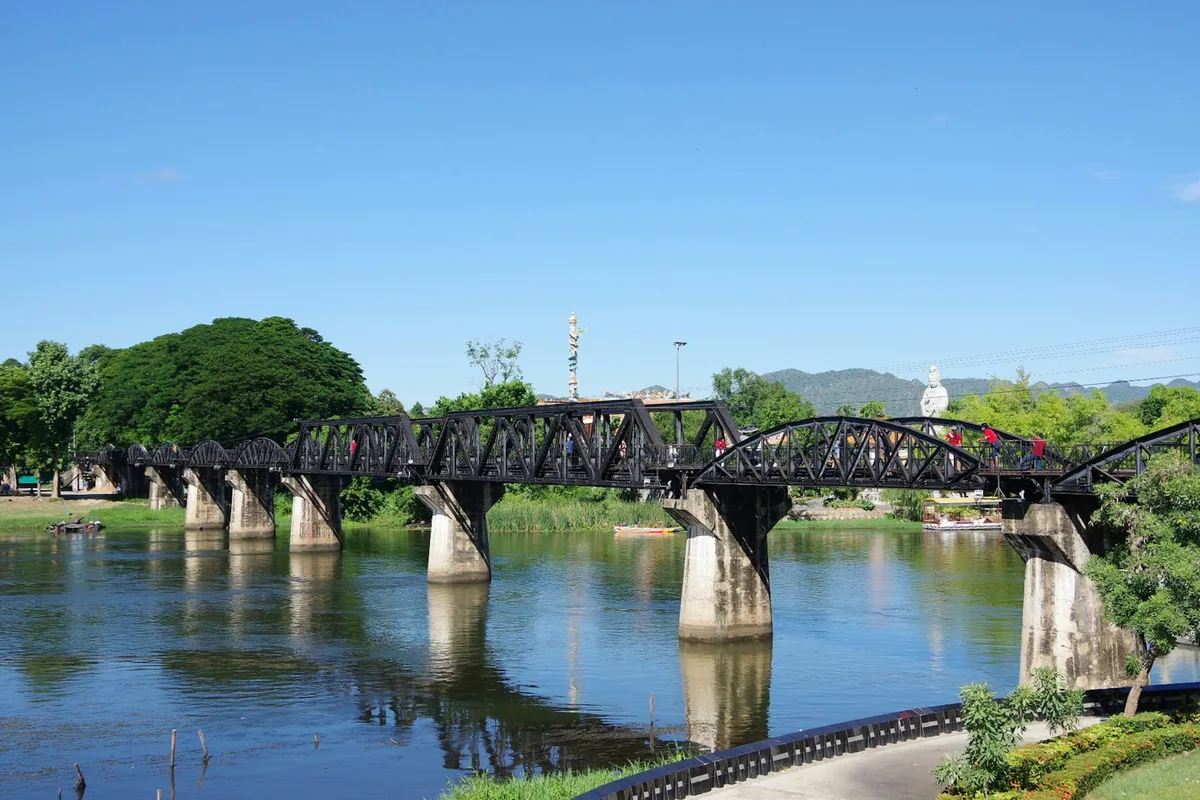
A steel bridge built by Allied POWs and forced labor during World War II as part of the Thailand-Burma "Death Railway," now a memorial site alongside the Kanchanaburi war cemeteries.
 Multi-Day Tours
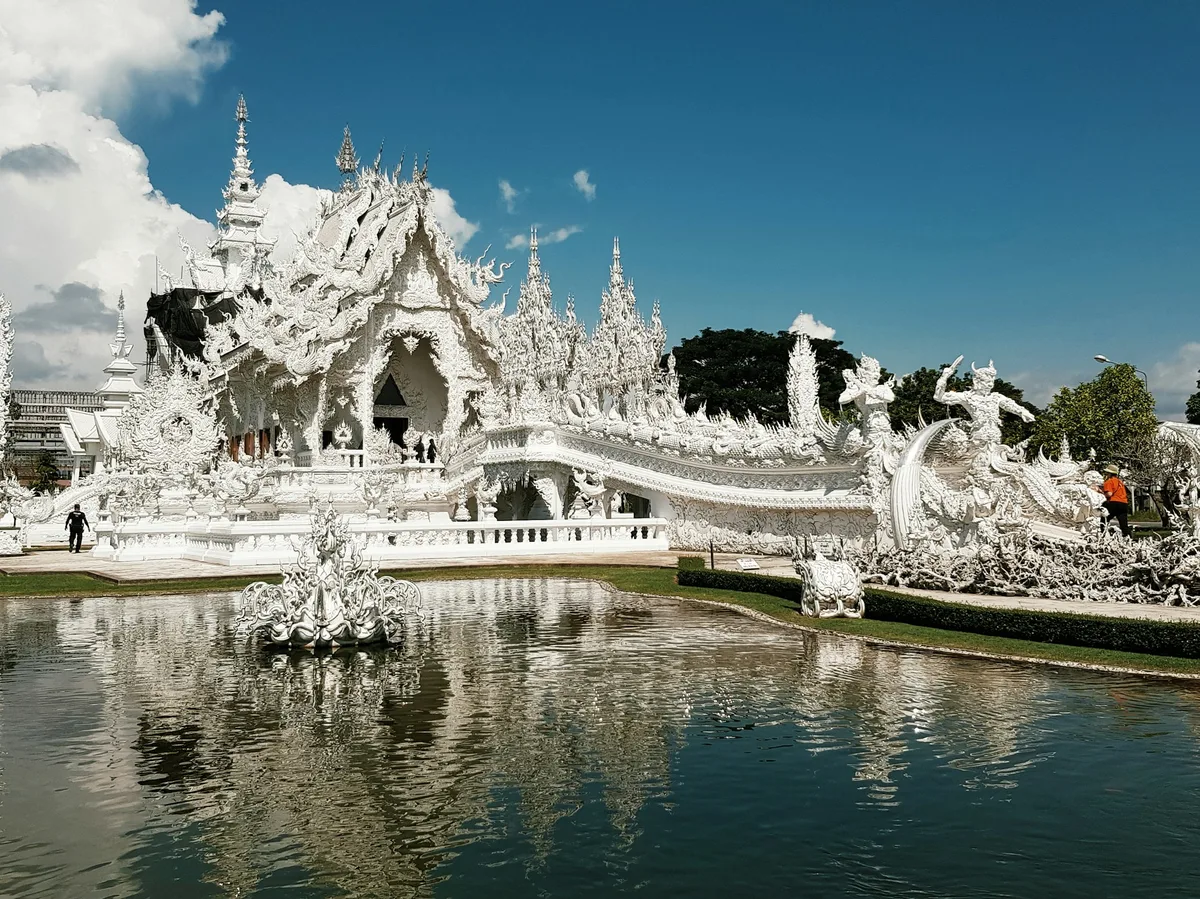
A 12-day route through Thailand's history and far north that Voyzo's other Thailand itineraries don't cover — the Death Railway and Hellfire Pass near Kanchanaburi, the ancient capital of Ayutthaya, the Golden Triangle and White Temple near Chiang Rai — before Chiang Mai and beach time in Phuket.
 Multi-Day Tours
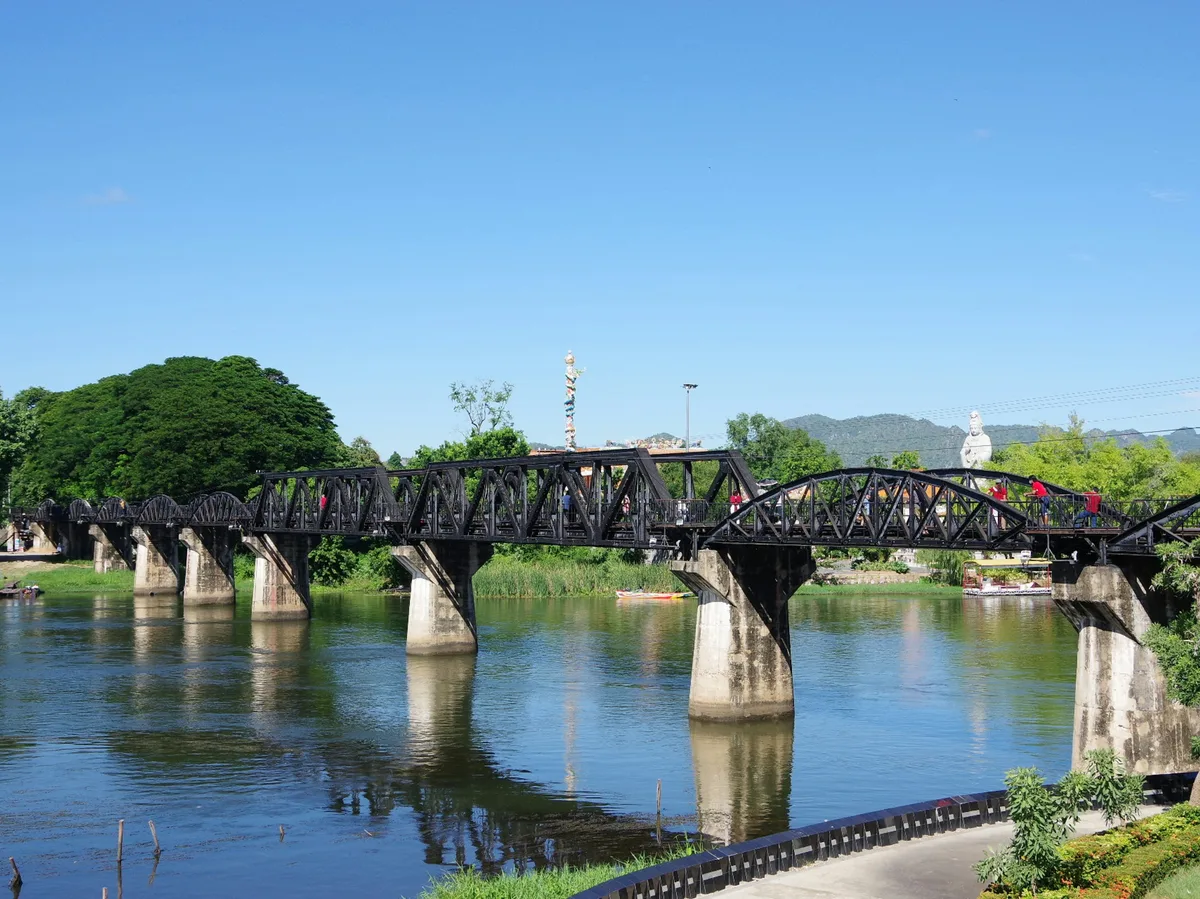
A compact, 7-day central-Thailand history trip with no beach extension — Bangkok's Grand Palace and khlongs, the ancient capital of Ayutthaya, and Kanchanaburi's Bridge on the River Kwai, Hellfire Pass, and Don Rak War Cemetery.
Visitor guide
The Bridge on the River Kwai is a steel railway bridge at Kanchanaburi in western Thailand, built during the Second World War as part of the Thailand-Burma Railway, often called the Death Railway. It is a memorial site today, set among museums and war cemeteries that commemorate the Allied prisoners of war and Asian labourers who built and died on the line.
According to Wikipedia, the railway ran about 415 kilometres from Ban Pong in Thailand to Thanbyuzayat in Burma, and was built by Japan to supply its forces in the Burma campaign. Construction began in both countries in September 1942, and the two sections met near Konkoita, with the line ceremonially opened on 25 October 1943. The workforce included Allied prisoners of war moved north from Singapore, along with large numbers of forced Southeast Asian civilian labourers. Estimates for civilian numbers conflict: Wikipedia states that more than 90,000 civilians died, while Australian Department of Veterans' Affairs sources cite roughly 75,000 rōmusha deaths, and about 12,000 to 12,500 Allied prisoners died from malnutrition, disease and abuse. Of 61,811 Allied prisoners recorded, 12,621 died.
Work on the bridge near Kanchanaburi began on 26 October 1942 with British prisoners, later joined by Dutch prisoners and Chinese, Malay and Tamil civilians. A wooden bridge was finished in February 1943, and a steel and concrete bridge with curved truss spans, brought from Java, followed in June 1943. Allied aircraft bombed the bridges in 1945, and the rail bridges were destroyed in June of that year. Some spans were replaced in 1952 with trusses supplied by Japan as reparations. The structure that stands today therefore combines original and replacement sections.
The place name became widely known through the 1957 film The Bridge on the River Kwai, adapted from a French novel. The film is a work of fiction, and its portrayal of the bridge's construction differs from the historical record. Richard Flanagan's 2013 novel The Narrow Road to the Deep North, which won the 2014 Booker Prize, draws on Australian prisoners' experience of building the railway.
Kanchanaburi War Cemetery holds roughly 7,000 Allied graves, and Chungkai War Cemetery roughly 1,700, with Australia's Department of Veterans' Affairs listing 1,427 Commonwealth and 314 Dutch burials at Chungkai. The Thailand-Burma Railway Centre, opened in 2003, and the JEATH War Museum in Kanchanaburi document the story. Further along the line, Hellfire Pass in the Tenasserim Hills was one of several cuttings on the railway, worked day and night by the light of open flames, and it has its own museum run in cooperation with Australia and Thailand. A section of the line near Kanchanaburi is still used by trains today.
This is a site that rewards context and a respectful pace. A private guided visit with a dedicated vehicle and driver lets visitors take time at the bridge, the cemeteries and the museums, and is often combined with other sights in the region.
See every tour and attraction we cover in Thailand.