TorontoOntario · 36 tours
 Niagara FallsOntario · 25 tours
 New York CityNew York · 30 tours
 Las VegasNevada · 8 tours
 San FranciscoCalifornia · 16 tours
 VancouverBritish Columbia · 17 tours
 DubaiUAE · 54 tours
 Abu DhabiUAE · 5 tours
 Buenos AiresArgentina · 23 tours
 AthensGreece · 31 tours
 AucklandNew Zealand · 38 tours
 CancunMexico · 54 tours
No destinations match “”. Try searching all tours instead — that search understands full questions, not just place names.
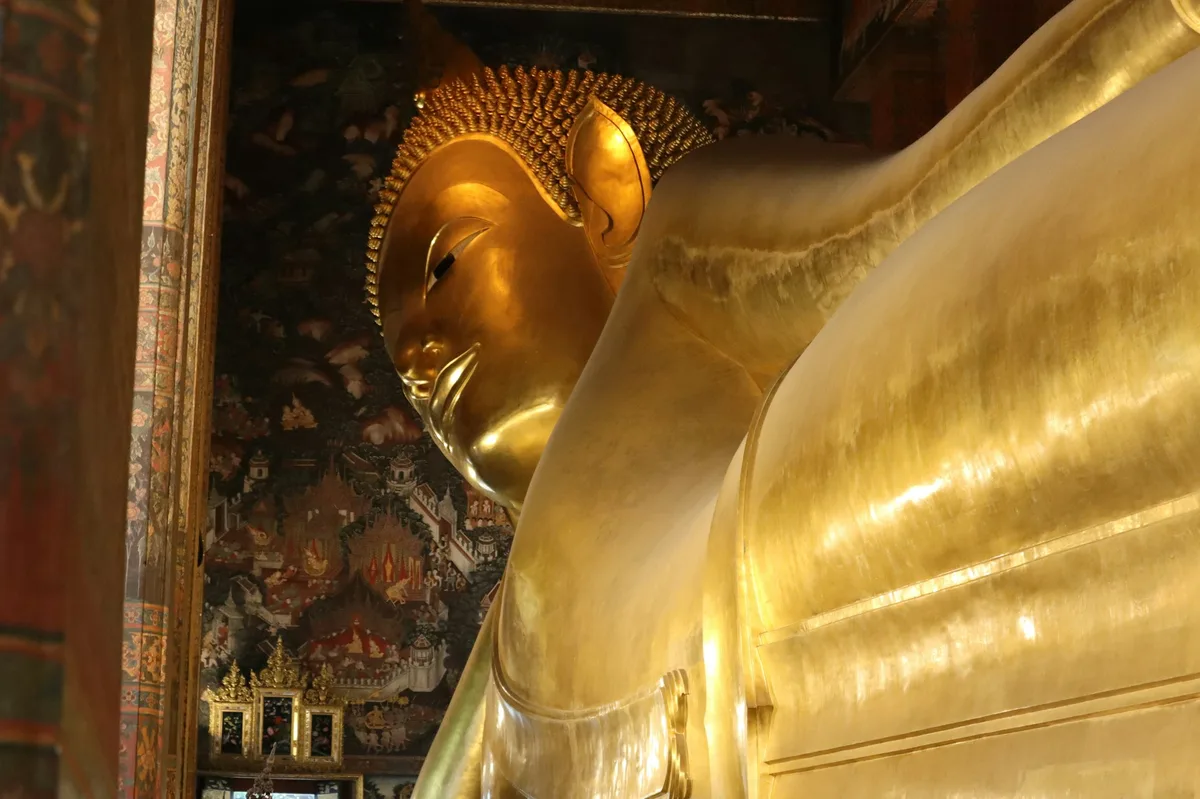
Home to the 46-metre gold-plated Reclining Buddha, and one of Bangkok's oldest and largest temple complexes, next to the Grand Palace.
Visitor guide
Wat Pho, formally Wat Phra Chetuphon Wimon Mangkhalaram Rajwaramahawihan, is a large Buddhist temple complex in Bangkok, Thailand, directly south of the Grand Palace. It is known as the Temple of the Reclining Buddha and is regarded as the birthplace of traditional Thai massage.
The founder and construction date of the original temple are unknown. According to Wikipedia, it was probably built in the Ayutthaya period and may have been expanded under King Phetracha in the late 17th century. Its older name, Wat Photaram, refers to the Bodhi tree at Bodh Gaya in India, and the shortened name Wat Pho derives from it. When Rama I moved the capital to Bangkok in 1782 and built the Grand Palace next door, the temple gained the status of a royal monastery, which it retains. In 1788 he ordered the dilapidated temple rebuilt, a project that took more than seven years, and he gathered Buddha images from abandoned temples in Ayutthaya, Sukhothai and elsewhere to be housed here.
Rama III renovated and enlarged the complex from 1832 over roughly sixteen years, and most of what stands today was built or rebuilt then. Rama IV later added a fourth great chedi, and the temple was restored in 1982 ahead of Bangkok's bicentennial.
The Reclining Buddha was built by Rama III in 1832 and depicts the Buddha entering nirvana. It is about 15 metres high and 46 metres long, with a brick core covered in plaster and then gilded. The soles of the feet, around three metres high, are inlaid with mother-of-pearl and divided into 108 panels showing auspicious symbols. Along the corridor behind the image stand 108 bronze bowls, and visitors drop coins into them as an act of merit, which also helps fund the temple's upkeep.
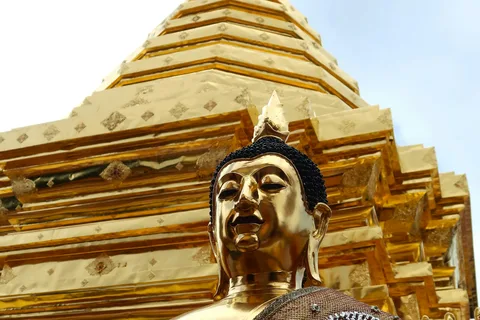
The grounds hold four great chedis, each about 42 metres tall, dedicated to the first four kings of the Chakri dynasty. Rama I built the green one to enshrine remains of a bronze Ayutthaya Buddha, Rama III the white and yellow ones, and Rama IV the blue one. Dozens of smaller chedis hold royal ashes and relics. The main ordination hall, the ubosot, was dedicated in 1791 in Ayutthaya style and later enlarged under Rama III in Rattanakosin style; marble panels around its base depict scenes from the Ramakien epic. The cloister holds roughly 400 Buddha images, many from northern Thailand. Chinese guardian statues, said to have arrived as ship ballast, stand in the courtyards.
Rama III also turned Wat Pho into a public centre of learning by having texts and diagrams inscribed throughout the complex, covering subjects such as history, medicine, literature, proverbs and Buddhism. UNESCO registered the marble illustrations and inscriptions in its Memory of the World Programme in 2008. Medical pavilions display plaques of pressure points, and the temple's school of traditional medicine teaches Thai massage, pharmacy and related practices. Thai massage has since been added to UNESCO's list of intangible cultural heritage. Wikipedia notes that sources differ on details such as the year the massage school was founded and the exact area of the grounds.
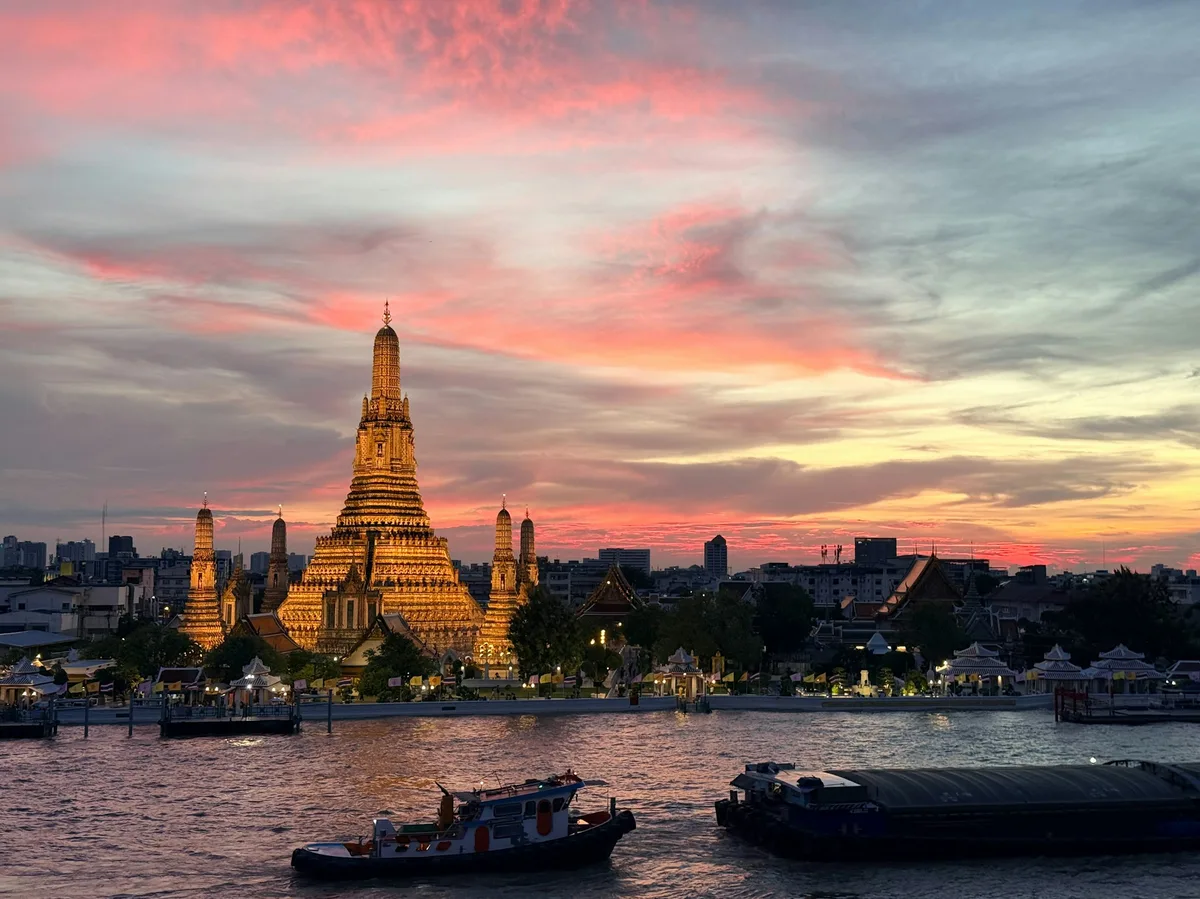
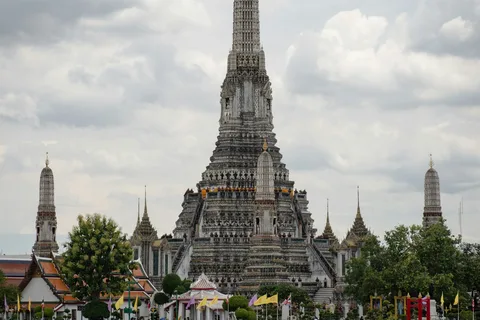
Wat Pho is a short walk from the Grand Palace and a ferry crossing from Wat Arun, so many visitors combine all three. A private guided tour with a driver can link them in one comfortable day.
See every tour and attraction we cover in Thailand.