TorontoOntario · 36 tours
 Niagara FallsOntario · 25 tours
 New York CityNew York · 30 tours
 Las VegasNevada · 8 tours
 San FranciscoCalifornia · 16 tours
 VancouverBritish Columbia · 17 tours
 DubaiUAE · 54 tours
 Abu DhabiUAE · 5 tours
 Buenos AiresArgentina · 23 tours
 AthensGreece · 31 tours
 AucklandNew Zealand · 38 tours
 CancunMexico · 54 tours
No destinations match “”. Try searching all tours instead — that search understands full questions, not just place names.
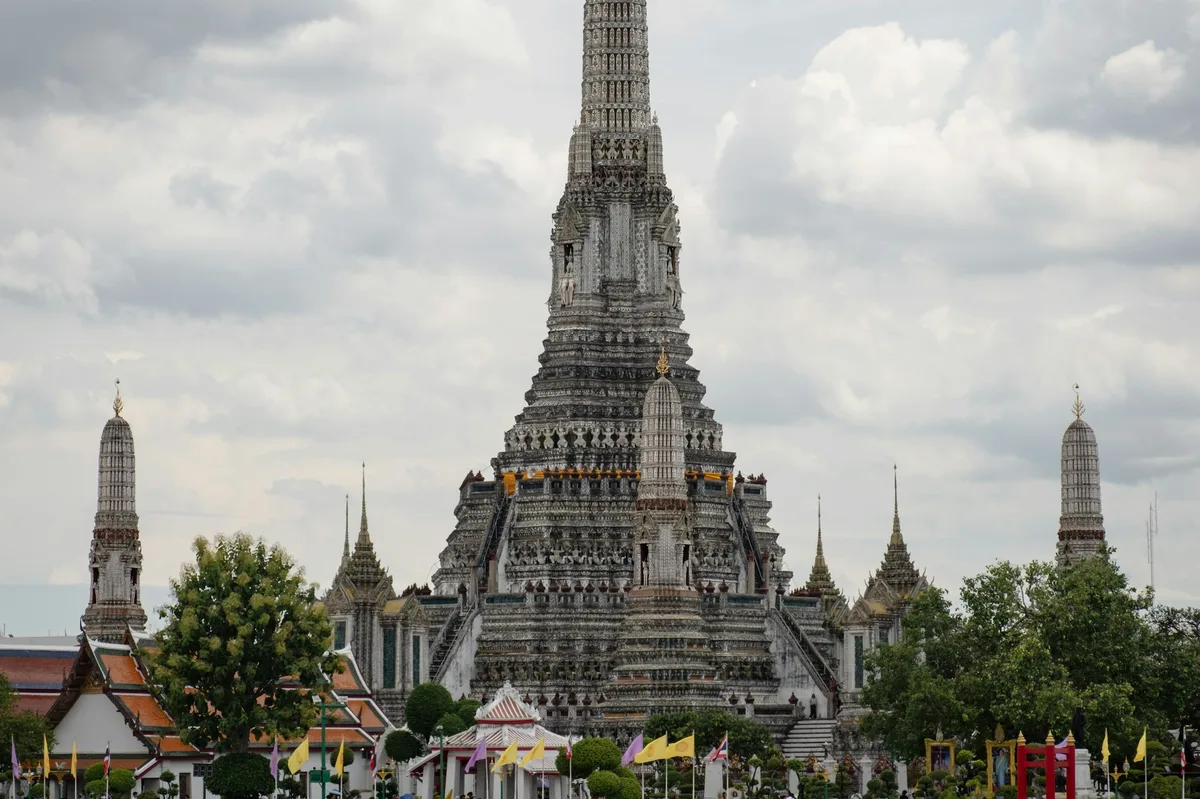
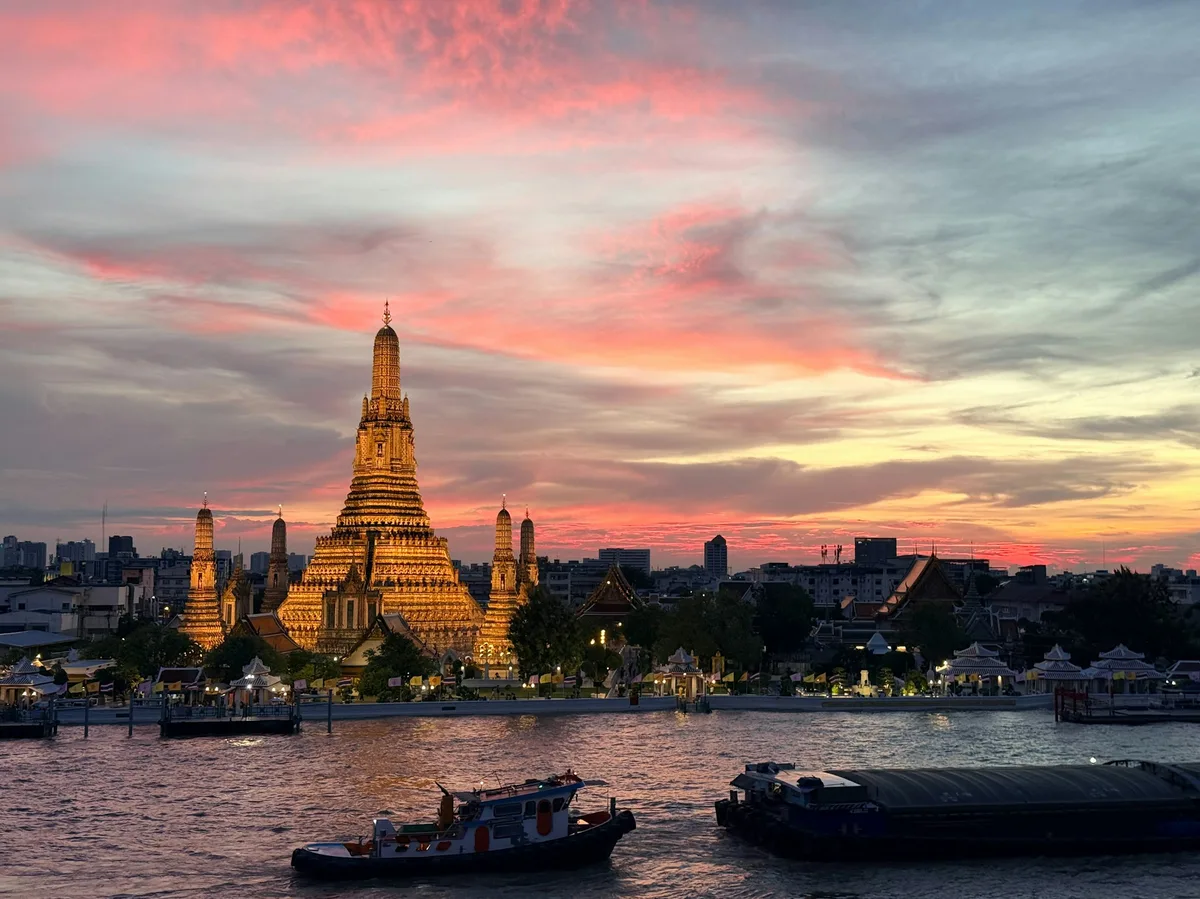
The Temple of Dawn, its central prang rising directly from the bank of the Chao Phraya River across from Bangkok's old city — best seen at sunset from the water.
Visitor guide
Wat Arun Ratchawararam Ratchawaramahawihan, the Temple of Dawn, is a Buddhist temple on the western bank of the Chao Phraya River in Bangkok's Thonburi side, Thailand. It is famous for its tall central prang, a Khmer-style tower decorated with colourful porcelain, which faces the old city across the water.
The temple's name honours Aruna, the charioteer of the Hindu sun god Surya, often personified as the first rays of the sun. According to Wikipedia, the site was earlier called Wat Bang Makok and then Wat Makok, and a temple stood here during the Ayutthaya period, since French maps from the reign of King Narai appear to show it. After the fall of Ayutthaya, King Taksin made nearby Thonburi his capital and renamed it Wat Chaeng. A legend says he vowed to restore the temple after reaching it at dawn. The Emerald Buddha was enshrined here until it was moved to Wat Phra Kaew across the river in 1785.
When Rama I moved the royal palace to the eastern bank, the temple was left aside until Rama II restored it in the early 19th century and planned a much taller pagoda. Work continued under Rama III, and the main prang was completed in 1851 after about nine years of building.
The central prang is a towering spire encrusted with fragments of Chinese porcelain and seashells, materials that boats from China had reportedly carried as ballast. Wikipedia notes that sources give its height anywhere between about 67 and 86 metres. Four smaller prangs stand at its corners, and the summit carries a seven-pronged trident often called the Trident of Shiva. On the second terrace stand four statues of the god Indra riding the three-headed elephant Erawan, and figures of Chinese soldiers and animals line the base.
The prang represents Mount Meru from Hindu cosmology, and Buddhist interpretations read its levels as the realms of existence and the heavens. A satellite prang is dedicated to Phra Phai, the wind god. The 19th-century French explorer Henri Mouhot described the temple in 1858 as the most beautiful pagoda in Bangkok.
Wat Arun blends Indian, Chinese and Khmer influences with Siamese tradition. Six Chinese-style pavilions of green granite stand along the riverside, each with a landing. The ordination hall holds a Buddha image reportedly designed under Rama II, and demon guardians from the Ramakien, the Thai version of the Ramayana, flank its entrance. Its murals date from the reign of Rama V.
The temple was restored under Rama V and again in 1980, before Bangkok's bicentenary. A major restoration of the prang ran from 2013 to 2017, replacing broken tiles and using lime plaster in place of earlier cement repairs; some critics said the result looked whitewashed, while the Fine Arts Department defended it as faithful to the original. Each year, in the Kathina ceremony, the king traditionally travels here by royal barge to present robes to the monks.
Visitors usually reach Wat Arun by a short ferry across the river from the Rattanakosin side, and it is often visited alongside Wat Pho and the Grand Palace. A private guided tour with a driver can link them in one day.
See every tour and attraction we cover in Thailand.