TorontoOntario · 36 tours
 Niagara FallsOntario · 25 tours
 New York CityNew York · 30 tours
 Las VegasNevada · 8 tours
 San FranciscoCalifornia · 16 tours
 VancouverBritish Columbia · 17 tours
 DubaiUAE · 54 tours
 Abu DhabiUAE · 5 tours
 Buenos AiresArgentina · 23 tours
 AthensGreece · 31 tours
 AucklandNew Zealand · 38 tours
 CancunMexico · 54 tours
No destinations match “”. Try searching all tours instead — that search understands full questions, not just place names.
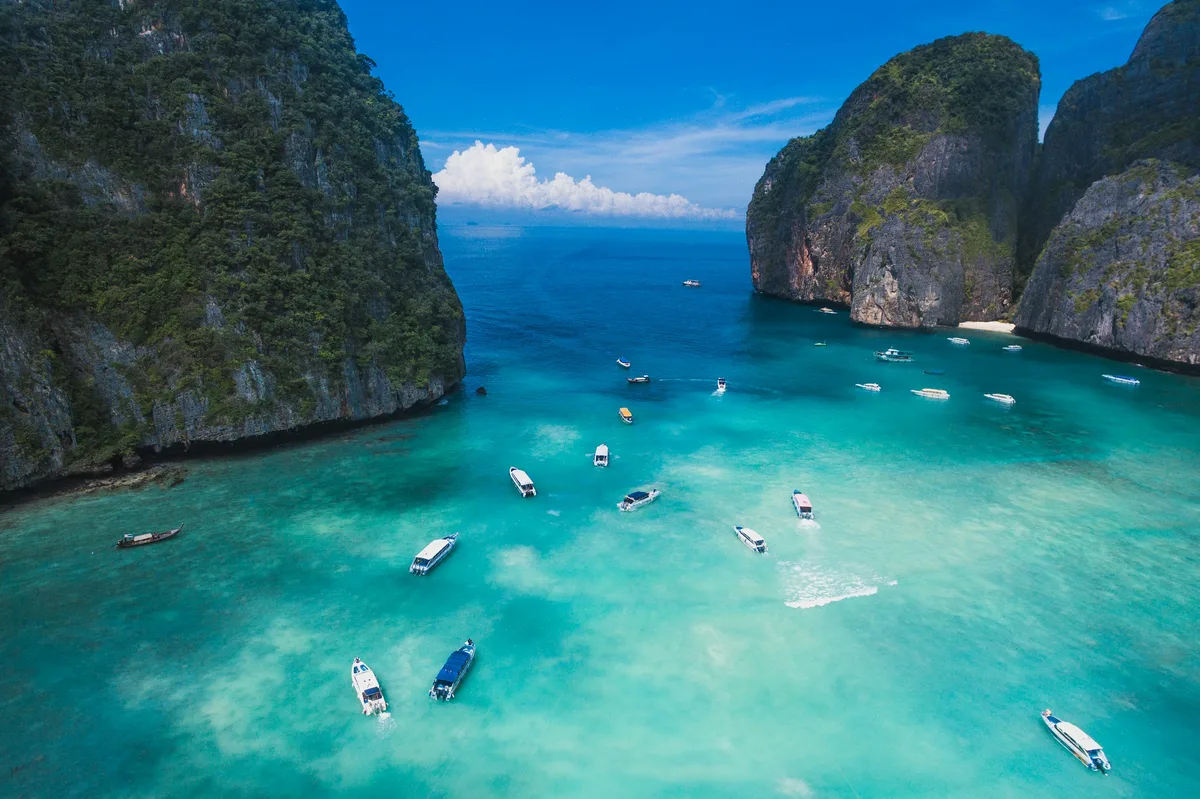
Limestone cliffs rising straight out of turquoise water off Phuket and Krabi, with Maya Bay among the best known of the island group's coves.
Visitor guide
The Phi Phi Islands are a group of six islands in southern Thailand, roughly 46 kilometres southeast of Phuket and administratively part of Krabi Province. Limestone cliffs, caves and white-sand beaches define the group, and most of it lies within a national park. Maya Bay on Phi Phi Le is the cove made famous by a Hollywood film.
According to Wikipedia, the islands cover about 12 square kilometres and sit within the Hat Noppharat Thara-Mu Ko Phi Phi National Park, which includes marine waters and coral reefs. The two main islands are Phi Phi Don, about 8 kilometres long and the only one with a significant resident population, and the smaller Phi Phi Le, known for its beaches and cliffs. The others, including Ko Mai Phai, Ko Yung, Bida Nok and Bida Nai, are mostly limestone outcrops rising from the sea. The village of Ton Sai on Phi Phi Don sits on a low sandy isthmus between two tall limestone ridges, with a bay on either side.
Phi Phi Le became internationally known as a filming location for the 2000 film The Beach, starring Leonardo DiCaprio. The film's release was followed by a tourism boom and criticism of environmental damage, though the filmmakers disputed some claims about altering the site. Maya Bay was closed to visitors in June 2018 to let its ecosystem recover and, per Wikipedia, reopened in January 2022; before the closure it reportedly received as many as 5,000 tourists and 200 boats a day. Phi Phi Le is also home to the so-called Viking Cave, where edible bird's nests are harvested.
The name Phi Phi comes from Malay; the islands were once called Pulau Api-Api, after the grey mangrove. Thai Malay fishermen settled Phi Phi Don in the late 1940s, and the island later became a coconut plantation. Most permanent residents are Muslim, and the Urak Lawoi, a seafaring people, are the main ethnic group among them. The permanent population was estimated at 2,000 to 3,000 as of 2018.
On 26 December 2004 the Indian Ocean tsunami devastated much of Phi Phi Don's inhabited area, with waves around 3 metres in Ton Sai Bay and 6.5 metres in Loh Dalum Bay. Volunteer groups and the Thai government carried out a large clean-up, and a tsunami early-warning system was installed.
Environmental pressure from tourism, including waste and wastewater, has led activists to call for visitor limits. Motor vehicles are mostly restricted on Phi Phi Don, so people get around on foot, bicycle or push cart. Ferries connect the islands with Phuket, Ko Lanta and Krabi. The climate is tropical monsoon, with a rainy season from May to December and a hotter, drier period from January to April.
Because boat access and conditions vary, a private guided trip with a dedicated driver for the mainland transfers can make the day simpler. Itineraries are tailored on request.
See every tour and attraction we cover in Thailand.