TorontoOntario · 36 tours
 Niagara FallsOntario · 25 tours
 New York CityNew York · 30 tours
 Las VegasNevada · 8 tours
 San FranciscoCalifornia · 16 tours
 VancouverBritish Columbia · 17 tours
 DubaiUAE · 54 tours
 Abu DhabiUAE · 5 tours
 Buenos AiresArgentina · 23 tours
 AthensGreece · 31 tours
 AucklandNew Zealand · 38 tours
 CancunMexico · 54 tours
No destinations match “”. Try searching all tours instead — that search understands full questions, not just place names.
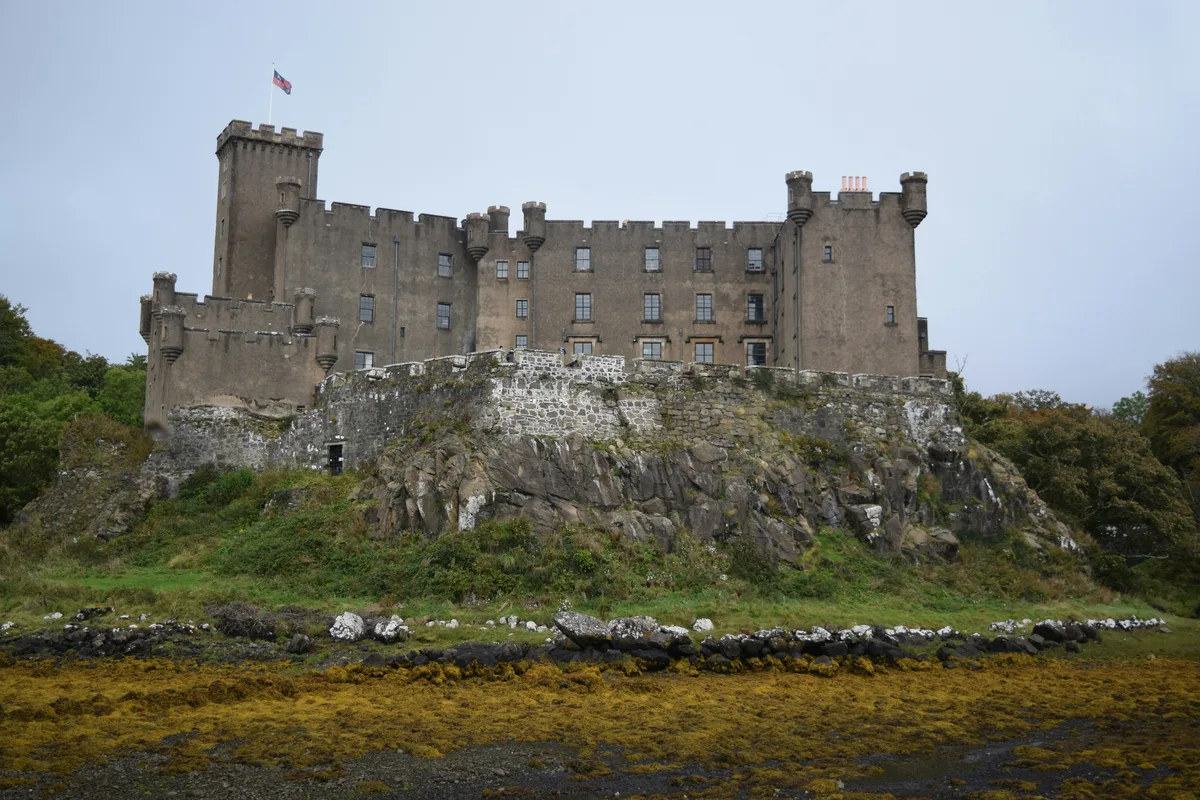
The Isle of Skye seat of Clan MacLeod and one of Scotland's oldest continuously inhabited castles, set on a rock above a sea loch with gardens running down to the water.
Visitor guide
Dunvegan Castle is the seat of the chiefs of Clan MacLeod on the Isle of Skye, off the west coast of Scotland. It stands on a rock above an inlet of the sea loch Loch Dunvegan and is still lived in by the MacLeod family, with its grounds and gardens listed as a designed landscape.
Wikipedia places the castle's construction between the thirteenth and nineteenth centuries. The promontory was first enclosed by a curtain wall in the thirteenth century, and a four-storey tower house followed in the late fourteenth century. Around 1500 Alasdair Crotach, the eighth chief, added the separate Fairy Tower. In the seventeenth century new ranges were built between the old tower and the Fairy Tower, beginning in 1623 with a state apartment built by Ruairidh Mor, also known as Rory Mor.
The old tower was abandoned until the late eighteenth century. The 23rd chief then began to give the castle a more uniform appearance, and his successors added mock battlements and a new approach over a drawbridge from the east. By around 1840 the process of remodelling the building in a Scots Baronial style was complete, which is why the castle looks more like a fairy-tale fortress than a medieval keep.
The castle sits on a rock about 15 metres above sea level, with a partly natural ditch about 5.5 metres deep on the landward side. Its Gaelic name is Caisteal Dhuin Bheagain. The grounds are included in the Inventory of Gardens and Designed Landscapes in Scotland, and the castle itself is a Category A listed building.
The castle has been associated with the MacLeod chiefs since the thirteenth century, and the present chief is styled MacLeod of MacLeod. Three heirlooms are especially famous: the Dunvegan Cup, Sir Rory Mor's Horn and the Fairy Flag.
The Fairy Flag is a fragile piece of silk about 45 centimetres square, yellow or brown in colour and marked with small red dots. Alan Wace of the Victoria and Albert Museum concluded in the early twentieth century that the silk was woven in Syria or Rhodes. Several legends surround it, and they should be read as legend rather than history. One says it was a gift from the fairies, another that a chief's fairy wife gave it to him at the Fairy Bridge and promised help in times of danger. Legend also credits it with rallying the clan at battles such as Bloody Bay and Glendale.
Dunvegan Castle is a family home that is also shown to visitors, combining historic rooms, family heirlooms and gardens. It is about two kilometres north of Dunvegan village on Skye's Duirinish peninsula. The castle has also appeared in fiction, including T. L. Huchu's novel The Mystery at Dunvegan Castle.
Because distances on Skye are long and roads often narrow, a private guided tour with a driver is a practical way to combine Dunvegan with other Skye sights such as Trotternish and the Fairy Pools.
See every tour and attraction we cover in United Kingdom.