TorontoOntario · 36 tours
 Niagara FallsOntario · 25 tours
 New York CityNew York · 30 tours
 Las VegasNevada · 8 tours
 San FranciscoCalifornia · 16 tours
 VancouverBritish Columbia · 17 tours
 DubaiUAE · 54 tours
 Abu DhabiUAE · 5 tours
 Buenos AiresArgentina · 23 tours
 AthensGreece · 31 tours
 AucklandNew Zealand · 38 tours
 CancunMexico · 54 tours
No destinations match “”. Try searching all tours instead — that search understands full questions, not just place names.
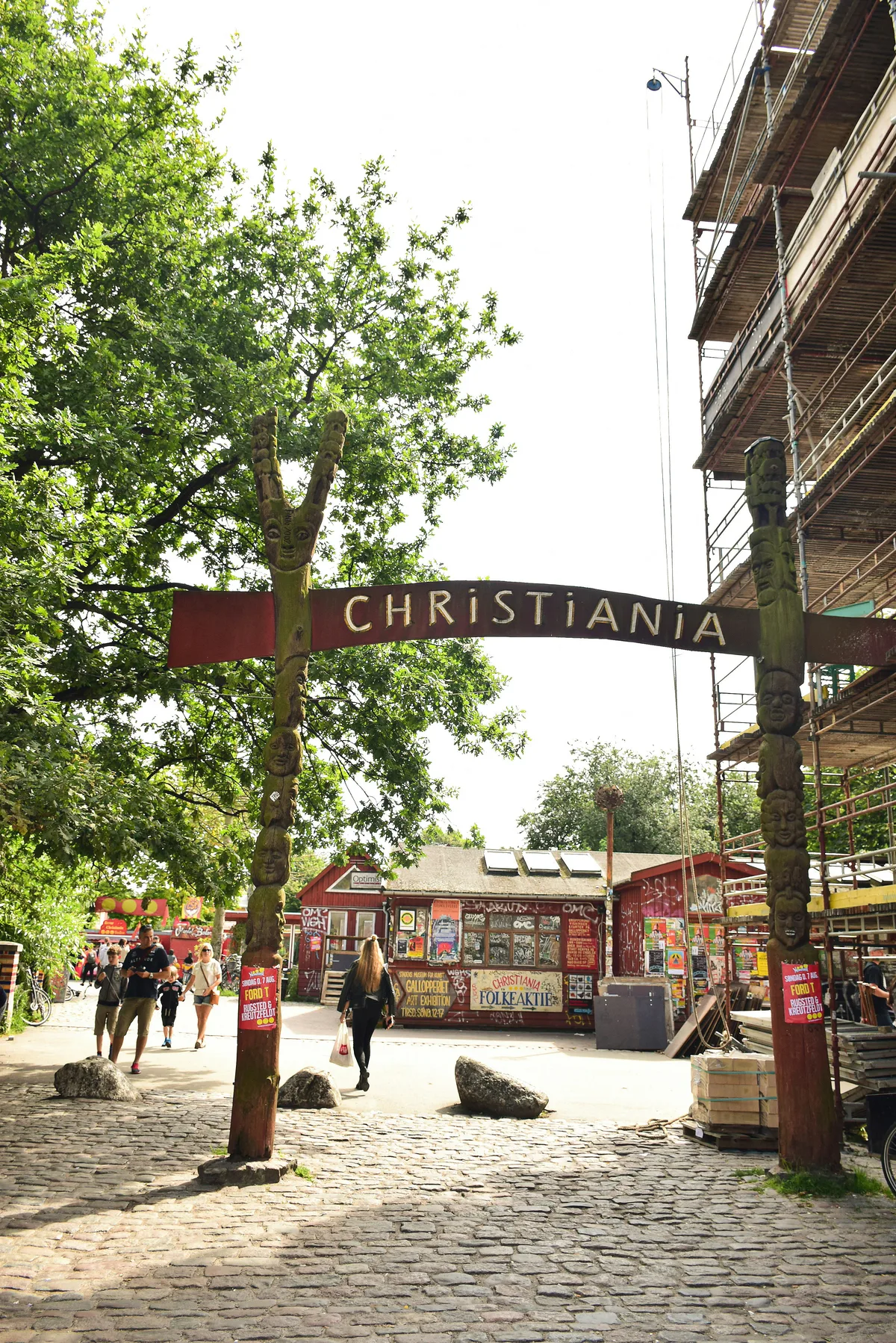
A self-governing neighborhood established by squatters in 1971 inside a former military barracks, known for its car-free streets, hand-painted houses, and distinct, semi-autonomous status within the city.
Visitor guide
Freetown Christiania is a self-governing intentional community in the Christianshavn district of Copenhagen, Denmark. Founded in 1971 on the site of a former military barracks, it covers roughly 34 hectares (84 acres) including its ramparts and moats, though some sources give a smaller land-only figure, and is known for its self-built houses, car-free lanes and independent spirit.
Christiania occupies the former Badsmandsstraede military barracks and parts of the old city ramparts. King Christian IV established the ramparts and Christianshavn in 1617 by reclaiming low beaches and islets, and later reinforcements created a complete defence ring. On 26 September 1971, the journalist Jacob Ludvigsen, who published the magazine Hovedbladet, declared the area open to civilians, with an article headlined that civilians had conquered the military's forbidden city. Four gunpowder storehouses along the ramparts, built in 1779 and 1780 after a powder facility in central Copenhagen exploded in 1770, were later renamed by residents. The outer defence line, known formally as Enveloppen, is called Dyssen by residents.
Christiania was initially tolerated by the authorities. The Ministry of Defence took the community to court in April 1976, and in February 1978 the Supreme Court ruled that the area should be cleared, though no immediate action followed. The Danish Parliament legalised Christiania in 1989. In 2011 the state signed an agreement to transfer the area to a new body, the Foundation Freetown Christiania, and residents made a first payment in July 2012 to become legal landowners of about 19 acres of the original 84-acre plot. In July 2013 Parliament repealed the Christiania Law. The 2004 Act of Parliament reaffirmed the state's legal claim to the base, the Eastern High Court upheld it in 2009, and the Supreme Court confirmed it in February 2011, which led to the agreement that followed.
The community governs itself through a Residents' Plenum, working groups and the Foundation. It drafted its own development plan, published in early 2006, which received the Society for the Beautification of Copenhagen's Initiative Award. Wikipedia estimates that 850 to 1,000 people live there. Its many self-built homes and workshops, including a glass house, reflect what Wikipedia calls architecture without architects. In 2007 the National Heritage Agency proposed protection for some of the old military buildings. In 2007 residents and the Copenhagen city council agreed to transfer control of parts of the area to the city over ten years for business development purposes, according to Wikipedia. Residents have also run campaigns, including murals and signs, on social issues.
Wikipedia reports that Christiania is considered the fourth-largest tourist attraction in Copenhagen, drawing about half a million visitors a year. A 1976 protest song, I kan ikke sla os ihjel, became the community's unofficial anthem, and the musician Lukas Forchhammer, a Christiania native, wrote the 2016 song Mama Said about growing up there. The documentary Christiania: 40 Years of Occupation covers its history. Residents are known as Christianites or Christianshavners.
A private guided visit with a driver can combine Christiania with nearby Christianshavn and the harbour.
See every tour and attraction we cover in Denmark.