TorontoOntario · 36 tours
 Niagara FallsOntario · 25 tours
 New York CityNew York · 30 tours
 Las VegasNevada · 8 tours
 San FranciscoCalifornia · 16 tours
 VancouverBritish Columbia · 17 tours
 DubaiUAE · 54 tours
 Abu DhabiUAE · 5 tours
 Buenos AiresArgentina · 23 tours
 AthensGreece · 31 tours
 AucklandNew Zealand · 38 tours
 CancunMexico · 54 tours
No destinations match “”. Try searching all tours instead — that search understands full questions, not just place names.
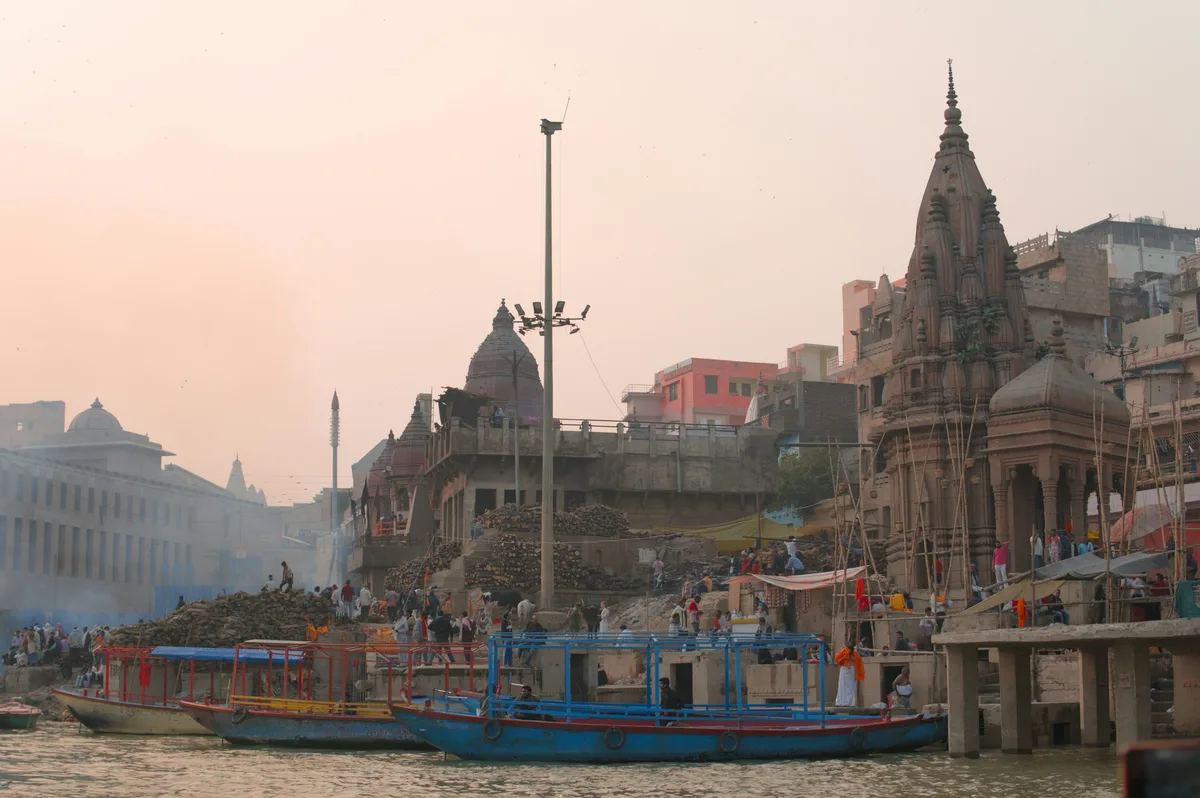
The riverside steps of one of the world's oldest continuously inhabited cities, where pilgrims bathe in the sacred Ganges and sunrise boat rides pass centuries-old temples.
 Multi-Day Tours
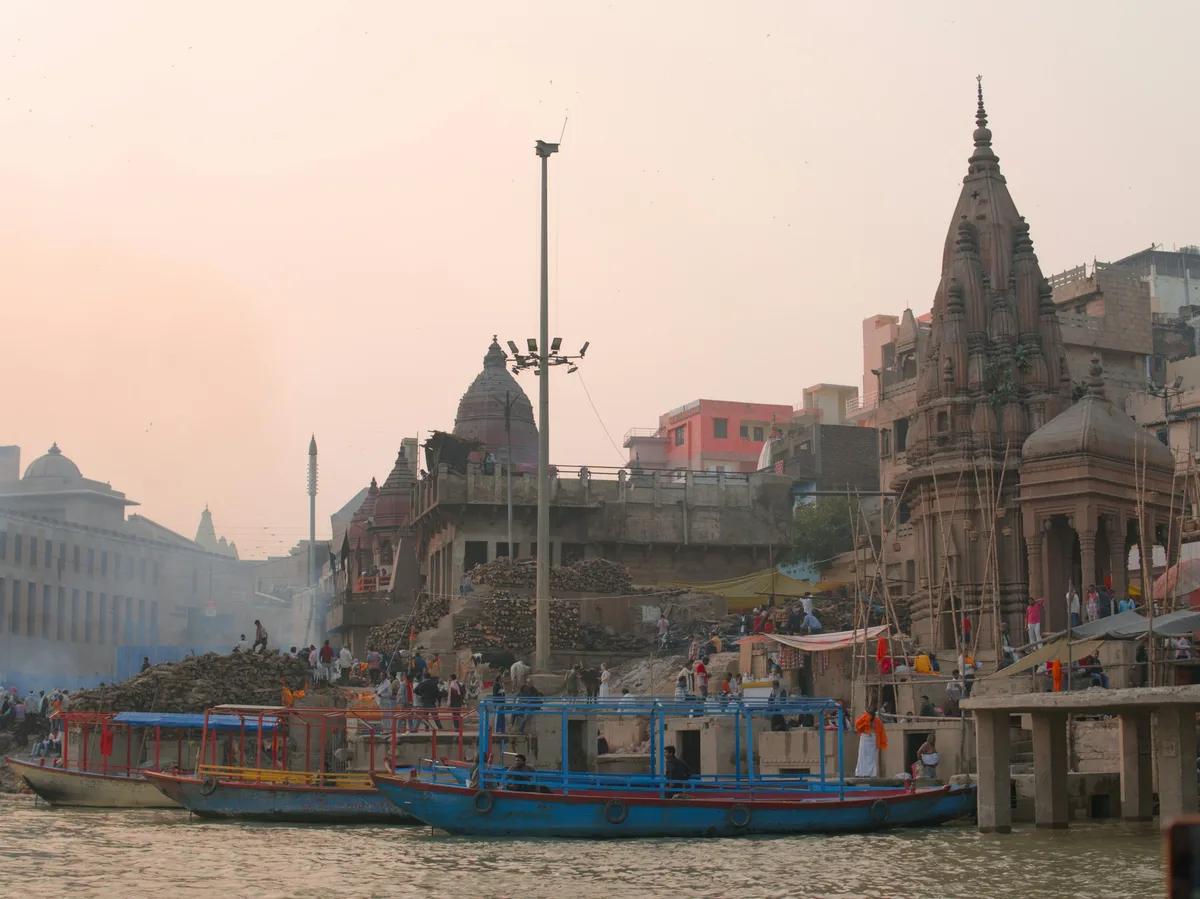
A 16-day deep-dive into Northern India — Delhi's forts, Jodhpur and Udaipur's palaces, Bhopal, the temples of Khajuraho, and sacred boat rides on the Ganges in Varanasi.
 Multi-Day Tours
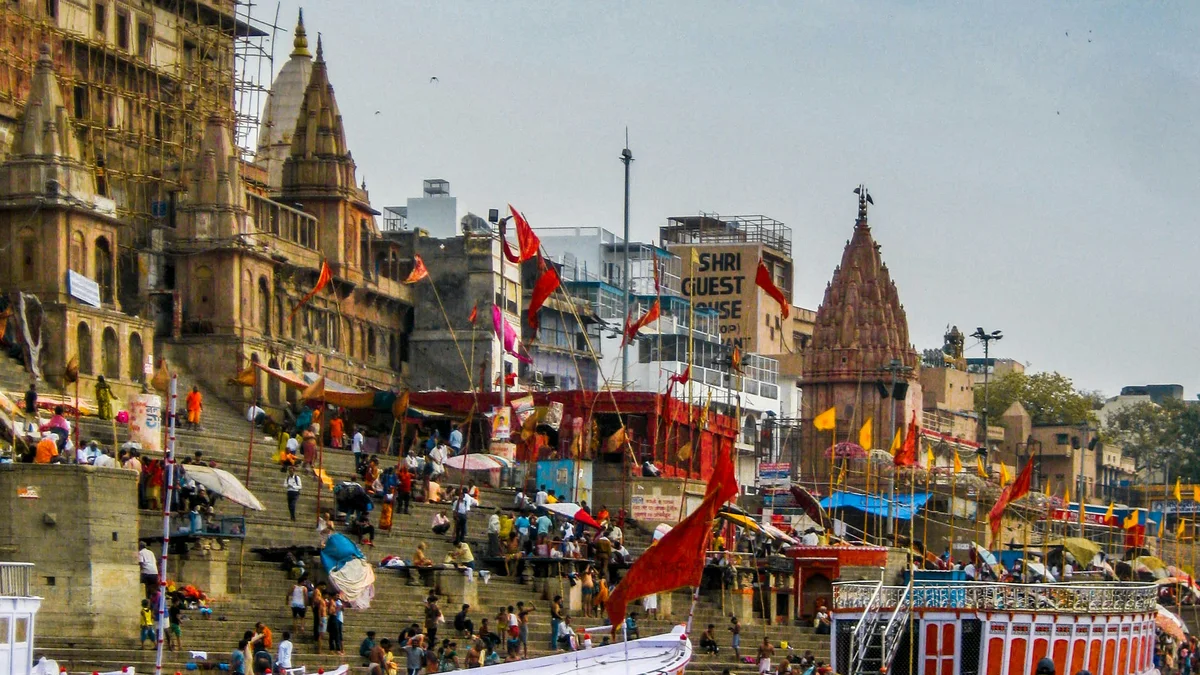
A 23-day journey across India's ancient heritage — the Taj Mahal in Agra, sacred Varanasi and Bodh Gaya, Kolkata, and the temples, tribal villages, and coastline of Odisha.
Visitor guide
The ghats of Varanasi are the riverfront steps that line the western bank of the Ganges in the city of Varanasi, in Uttar Pradesh, India. According to Wikipedia the city has 84 ghats, most used for bathing and prayer ceremonies, and they form the backdrop to one of the most important pilgrimage traditions in the Hindu world.
Varanasi, also called Benares or Kashi, lies on the left bank of the Ganges and is described by Wikipedia as one of the world's oldest continually inhabited cities. Excavations have turned up artefacts dating back to around 800 BCE in the city, with older finds at nearby sites. Kashi was the name of a kingdom in the first millennium BCE, and the Buddha is traditionally said to have given his first sermon at nearby Sarnath. The Chinese traveller Xuanzang, who visited around 635 CE, recorded the city as a centre of religious and artistic life. Later, poets and saints of the Bhakti movement, including Kabir, Ravidas and Tulsidas, were associated with the city.
The word ghat comes from the Sanskrit ghatta, meaning an embankment or landing place. Wikipedia notes that most of the present ghats were rebuilt in the 18th century under the patronage of the Maratha rulers and others, including the Scindias, Holkars, Bhonsles, Peshwas and the Maharajas of Benares. Earlier building was also sponsored by Rajput nobles such as Raja Man Singh of Amber.
Assi Ghat marks the traditional southern boundary of the city, at the old confluence of the Ganges with the Asi stream, and is linked to the city by a wide street. Dashashwamedh Ghat, close to the Vishwanath Temple, is described as the most popular ghat; legend says Brahma performed ten horse sacrifices there, and an evening aarti honouring Shiva, the goddess Ganga and other deities is held on its steps. Scindia Ghat was built by Maharani Baizabai Scindia of Gwalior, and a Shiva temple at its edge sits partly submerged in the river.
Man Mandir Ghat is traditionally credited to Raja Man Singh of Amber, around 1600, and has an observatory attached that is associated with Jai Singh II of Jaipur, in the tradition of the Jantar Mantar observatories of Delhi and Jaipur. Lalita Ghat contains a wooden temple in Kathmandu style associated with the king of Nepal. Other ghats carry specific histories: Tulsi Ghat is linked to the poet Tulsidas, said to have written the Ramcharitmanas there, while the Jain, or Bachraj, Ghat has Jain temples and Tathagat Ghat honours the Buddha.
Two ghats, Manikarnika and Harishchandra, are used exclusively for cremation. In Hindu tradition the ghats of Varanasi are considered an auspicious place for last rites, which are accompanied by prayers and hymns. Wikipedia gives an estimate of about 25,000 to 30,000 cremations per year, around 80 a day. Legends tie Manikarnika to an earring of Shiva or Parvati, and visitors are generally asked to be discreet and respectful, as these are sacred sites for mourning families.
A morning boat ride along the ghats is a popular way to see the city. Wikipedia mentions the practice, and the line of stepped embankments, temples and palaces is best viewed from the water as the sun rises. Pilgrims bathe, priests give blessings, and the daily rhythm of prayer plays out in plain view. The river itself faces pollution from untreated sewage and other sources, and the Government of India began a Clean Ganges initiative in the 1980s.
The lanes behind the ghats are narrow and winding, so a private tour with a local guide and driver can be a helpful way to find the right access points and understand the customs. Timings and ceremonies vary through the day and seasons and are best arranged locally.
See every tour and attraction we cover in India.