TorontoOntario · 36 tours
 Niagara FallsOntario · 25 tours
 New York CityNew York · 30 tours
 Las VegasNevada · 8 tours
 San FranciscoCalifornia · 16 tours
 VancouverBritish Columbia · 17 tours
 DubaiUAE · 54 tours
 Abu DhabiUAE · 5 tours
 Buenos AiresArgentina · 23 tours
 AthensGreece · 31 tours
 AucklandNew Zealand · 38 tours
 CancunMexico · 54 tours
No destinations match “”. Try searching all tours instead — that search understands full questions, not just place names.
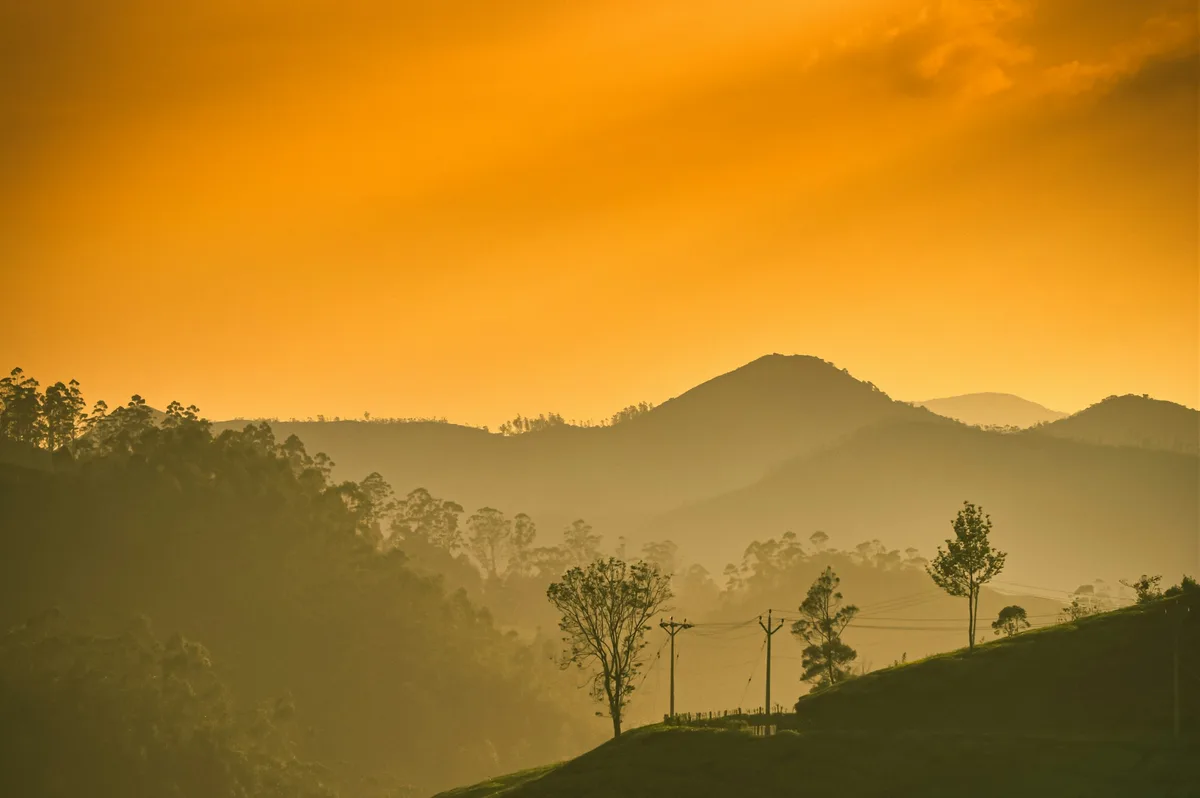
Rolling hillsides of tea plantations in Kerala's Western Ghats, one of South India's most scenic hill stations and a major tea-producing region.
Visitor guide
Munnar is a hill town in the Idukki district of Kerala, in the Western Ghats of southwestern India, surrounded by tea plantations that blanket the slopes. Sitting at around 1,600 metres above sea level, it began as a plantation settlement and is now a hill station known for rolling tea estates, cool air and nearby wildlife areas.
Wikipedia explains that the name Munnar combines the Malayalam and Tamil words for three rivers, referring to the meeting point of the Muthirapuzha, Nallathanni and Kundali rivers. The area had long been home to hunter-gatherer communities such as the Malayarayan and Muthuvan. The first survey of the terrain by Europeans was made in 1816 and 1817 by Benjamin Swayne Ward, who set up camp at the confluence of the three rivers.
Plantation farming followed later in the 19th century. John Daniel Munro and others obtained rights to the Cardamom Hills from the Raja of Travancore and began clearing forest around Devikulam in 1879, and other European planters set up tea estates through the 1880s. Workers, mainly Tamils, were brought in to labour on the estates. In 1897 a company called the Kannan Devan Hills Corporation was registered to run the estates, and by 1952 almost 11,000 hectares were under cultivation. In 1964 the corporation was acquired by Tata and Finlay, which, according to Wikipedia, started the first instant tea factory in the country. Tata kept the large majority of the land when the state government considered reforestation in 1971.
The area around Munnar ranges in elevation from about 1,450 to 2,695 metres. Temperatures range from roughly 5 to 25 degrees Celsius in winter and 15 to 25 degrees in summer, with a subtropical highland climate under the Koppen system, and frost has been recorded in the Sevenmallay area. The fertile slopes shaped by the plantation estates are laid out in neat bands of low tea bushes divided by paths, windbreak trees and the occasional factory or workers' settlement.
Wikipedia notes that most of Munnar's native flora and fauna was lost to habitat fragmentation as the plantations spread, but that many species survive in protected areas nearby. These include Eravikulam National Park, which holds the largest regional population of Nilgiri tahr, a rare mountain goat, and Anamudi, at 2,695 metres the highest peak in South India. Other nearby areas are Chinnar Wildlife Sanctuary and the Kurinjimala Sanctuary. Species named for the region include the grizzled giant squirrel, the Nilgiri langur, the gaur and the sambar.
The Neelakurinji, a shrub of the Western Ghats shola forests, blooms only once in about twelve years and carpets hillsides in purplish blue. Wikipedia lists documented blooming years including 2006 and 2018, and explains that different populations follow their own cycles, so local blooming times vary. The plant is the origin, through the words for blue mountains, of the name Nilgiri.
The tea country is best explored by road with a driver who knows the estate lanes, viewpoints and tea museum, and who can arrange the climb into the higher ground. A private tour allows time for photo stops among the tea rows and for learning how the leaf is plucked and processed. The mist and rain of the monsoon season shape the experience, so conditions are worth checking before travel.
See every tour and attraction we cover in India.