TorontoOntario · 36 tours
 Niagara FallsOntario · 25 tours
 New York CityNew York · 30 tours
 Las VegasNevada · 8 tours
 San FranciscoCalifornia · 16 tours
 VancouverBritish Columbia · 17 tours
 DubaiUAE · 54 tours
 Abu DhabiUAE · 5 tours
 Buenos AiresArgentina · 23 tours
 AthensGreece · 31 tours
 AucklandNew Zealand · 38 tours
 CancunMexico · 54 tours
No destinations match “”. Try searching all tours instead — that search understands full questions, not just place names.
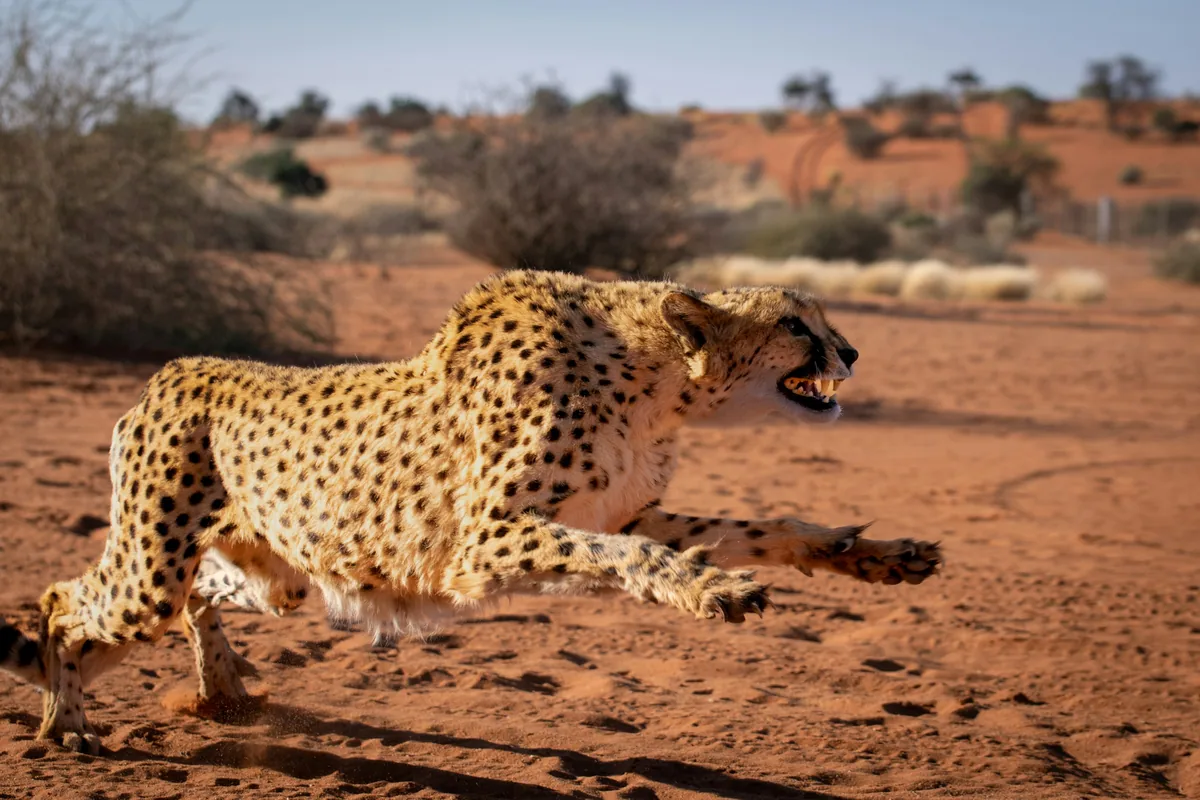
A vast semi-arid savanna spanning southeastern Namibia, known for its red dunes, camel-thorn trees, and wildlife including oryx, springbok, and cheetah.
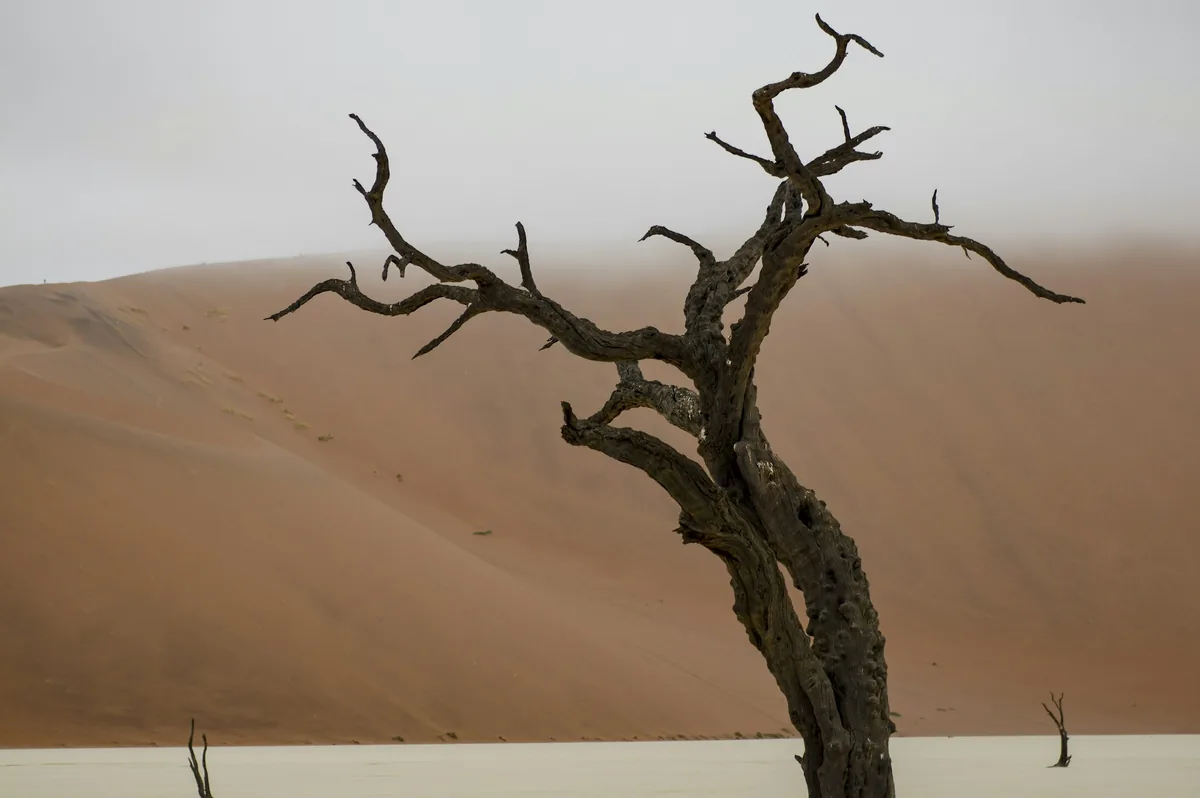 Multi-Day Tours
A 14-day private family circuit from Windhoek through the Kalahari and the red dunes of Sossusvlei to Swakopmund, the Himba villages of Kaokoland, and the game drives of Etosha National Park.
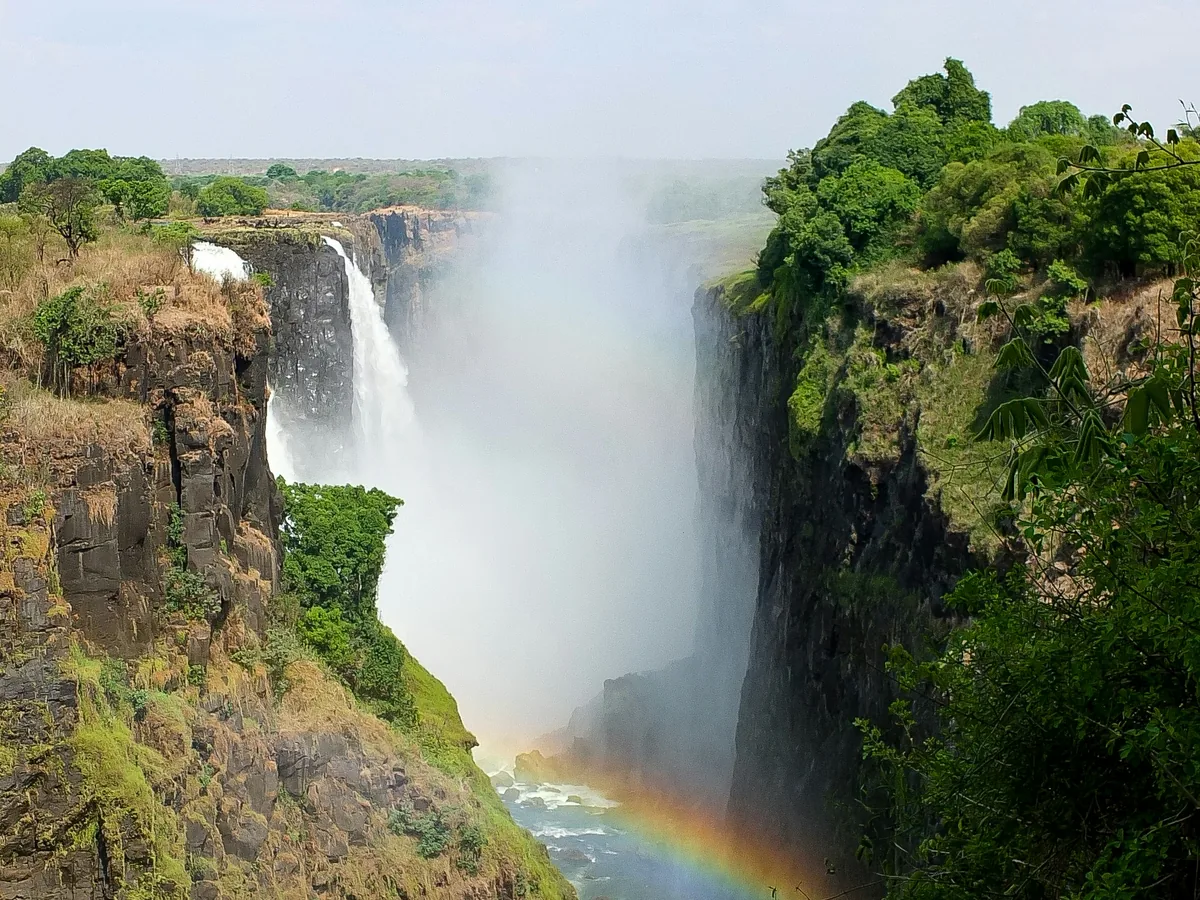 Multi-Day Tours
A 20-day private odyssey across Namibia — Sossusvlei, Swakopmund, the Erongo Mountains, and Etosha — continuing overland to Botswana's Chobe National Park with a day trip to Victoria Falls.
Visitor guide
The Kalahari is a vast semi-arid sandy savanna of Southern Africa that reaches into eastern Namibia, where it appears as red sand, open plains and camelthorn trees. Although it is often called a desert, it is not a true desert across most of its extent, because vegetation cover is substantial.
According to Wikipedia, the Kalahari covers about 900,000 square kilometres, mostly in Botswana with parts in Namibia and South Africa, while the wider Kalahari Basin exceeds 2,500,000 square kilometres and extends into Angola, Zambia and Zimbabwe. The name comes from the Tswana language, where Kgala is often rendered as the great thirst and Kgalagadi as a waterless place. Rainfall in the driest areas is about 110 to 200 millimetres a year and a little over 500 millimetres in the wettest, and one source calls the Kalahari a fossil desert because parts receive too much rain to be a true desert.
Sand covers much of the surface, and there is almost no permanent surface water. Drainage runs through dry valleys and seasonally flooded pans, and ancient dry riverbeds called omuramba cross the central north and hold pools after rain. The Okavango is the only permanent river and ends in a delta in the northwest. The Etosha Pan in Namibia and the Makgadikgadi Pan in Botswana are among the large salt pans linked to the basin.
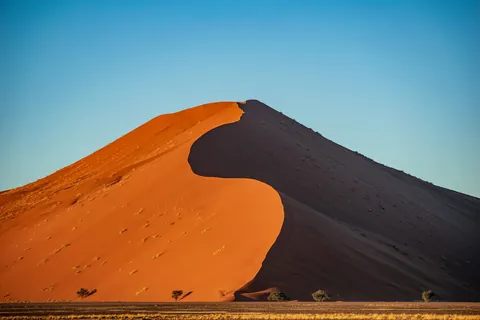
In Namibia the Kalahari lies in the east and southeast, in the area around towns such as Gobabis and Mariental. Near Mariental, the rocky Central Highland gives way to the dry, sandy western edge of the desert. The sand looks red because of a thin coating of iron oxide, a detail noted by NASA's Earth Observatory. One travel source describes the dunes as not very high but long, with sharp crests, and covered in trees, bushes and grasses, with carpets of flowers early in the year after rain.
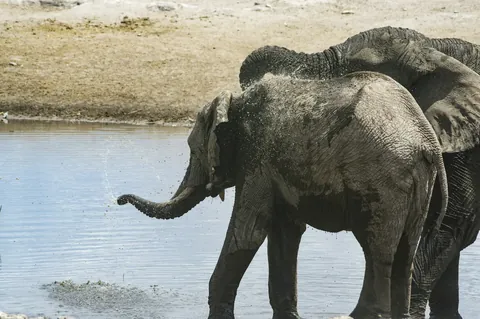
Typical grasses include Schmidtia, Stipagrostis, Aristida and Eragrostis, and typical trees include camelthorn, grey camelthorn, shepherd's tree and blackthorn. Along riverbeds, vegetation becomes denser, with taller camelthorn and buffalo-thorn trees. This cover supports springbok, gemsbok, wildebeest, other antelope, ostriches and Cape porcupines, as well as predators such as lions, cheetahs, leopards, spotted and brown hyenas and African wild dogs across the wider desert. Meerkats are a characteristic species, and birds of prey include the secretarybird, martial eagle and giant eagle owl. Wikipedia names the Kgalagadi Transfrontier Park and the Central Kalahari Game Reserve among the major protected areas in the region.
The San people have lived in the Kalahari for about 20,000 years as hunter-gatherers, hunting with bows and poisoned arrows and gathering berries, melons, nuts and insects. They obtain much of their water from plant roots and desert melons and store it in ostrich eggshells. Other communities include Bantu-speaking Tswana and Kgalagadi peoples and the Herero. The desert has not always been dry: fossils and sediment records show that between about 30,000 and 11,000 years ago the region was cooler and wetter, with large paleolakes, and drying began around 11,000 years ago.
Altitude, mostly 800 to 1,200 metres, keeps the Kalahari cooler than the Sahara. Winter frost is common from June to August, while daily summer highs can approach 45 degrees Celsius. The dry season lasts eight months or more, roughly April to September, and summer rain often arrives in heavy thunderstorms. A private guided visit suits the long distances and varied scenery of the Namibian side.
See every tour and attraction we cover in Namibia.