TorontoOntario · 36 tours
 Niagara FallsOntario · 25 tours
 New York CityNew York · 30 tours
 Las VegasNevada · 8 tours
 San FranciscoCalifornia · 16 tours
 VancouverBritish Columbia · 17 tours
 DubaiUAE · 54 tours
 Abu DhabiUAE · 5 tours
 Buenos AiresArgentina · 23 tours
 AthensGreece · 31 tours
 AucklandNew Zealand · 38 tours
 CancunMexico · 54 tours
No destinations match “”. Try searching all tours instead — that search understands full questions, not just place names.
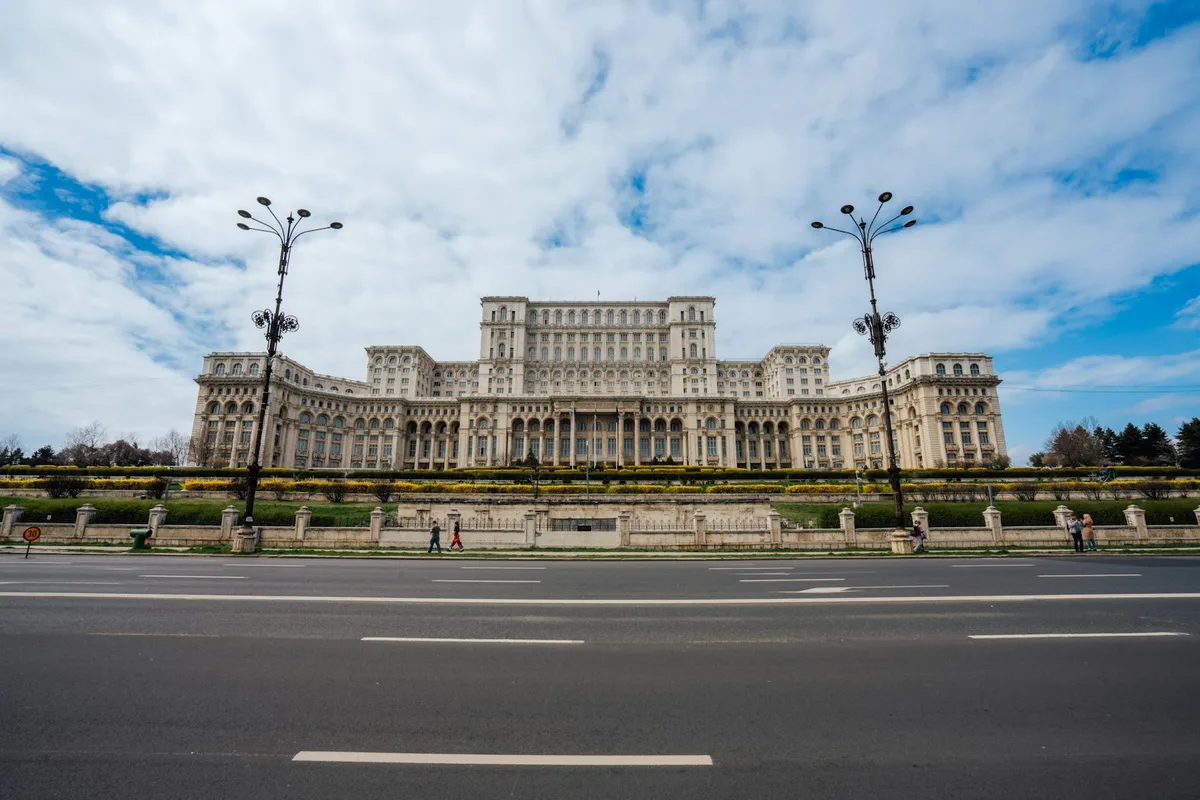
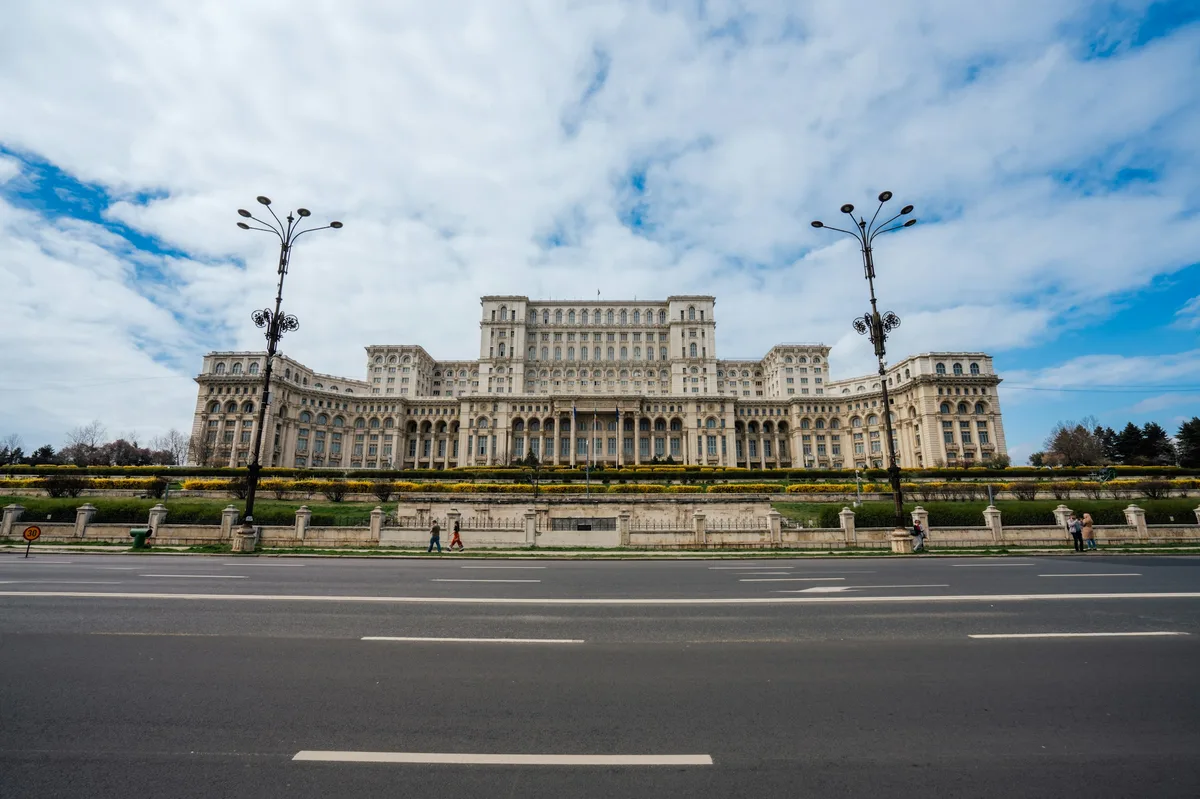
The world's heaviest building and second-largest administrative building after the Pentagon, built under Ceaușescu in the 1980s, now housing Romania's parliament and a contemporary art museum.
Visitor guide
The Palace of the Parliament is the seat of the Parliament of Romania, standing on Spirea's Hill in the center of Bucharest. Begun in 1984 on the orders of the communist leader Nicolae Ceausescu, it was originally called the House of the Republic and later widely known as the People's House. Wikipedia describes it as the heaviest building in the world and the largest civilian administrative building in the world.
Wikipedia explains that the palace was the centerpiece of Ceausescu's systematization program, an urban planning drive he launched after visiting East Asia in 1971. The Vrancea earthquake of 4 March 1977 gave him a pretext to demolish parts of old Bucharest and replace them with a new civic center in socialist realist style. The project, begun in 1978, was intended as a replica of the North Korean capital Pyongyang, and the palace was its heart. An architectural contest was won by Anca Petrescu, who was appointed chief architect at the age of 28, leading a team of around 700 architects. Construction began on 25 June 1984 and ran until 1997.
The cost to the city was heavy. Uranus Hill was leveled and the Uranus-Izvor neighborhood destroyed, together with monasteries, a hospital, the National Archives and dozens of workshops and factories. Roughly 7 square kilometres of the old center were demolished and about 40,000 people were relocated. Wikipedia notes that the number of people who died during construction is disputed, with the official figure given as 27 while workers have suggested far higher numbers. The project coincided with a severe austerity policy used to pay off Romania's foreign debt.
The building is 84 metres high and reaches 92 metres underground, with a floor area of 365,000 square metres and a volume of 2,550,000 cubic metres, according to Wikipedia. Wikipedia gives its weight as about 4.1 million tonnes, while Guinness World Records lists 700,000 tonnes, so treat the figure as approximate. The style is described as modernist Neoclassical, designed with socialist realism in mind. The ornate interior is composed of 23 sections. The palace stands at the western end of Bulevardul Unirii, a 3.5-kilometre boulevard built at the same time.
After the Romanian Revolution of December 1989 the building became widely known as the People's House. The Chamber of Deputies has been housed here since 1994, and the Senate since 2004. The palace also contains the Constitutional Court, an international conference center and three museums, including the National Museum of Contemporary Art, which opened in 2004 in the west wing, and the Museum of the Palace. It hosted the NATO summit in 2008. Despite its size, Wikipedia reports that about 70 percent of the building remains empty.
Visits are by organized tour because the building is an active seat of government, and security arrangements apply, so planning ahead is sensible. A private tour with a driver and guide can combine the palace with the surrounding city center and help explain the history behind the building.
See every tour and attraction we cover in Romania.