TorontoOntario · 36 tours
 Niagara FallsOntario · 25 tours
 New York CityNew York · 30 tours
 Las VegasNevada · 8 tours
 San FranciscoCalifornia · 16 tours
 VancouverBritish Columbia · 17 tours
 DubaiUAE · 54 tours
 Abu DhabiUAE · 5 tours
 Buenos AiresArgentina · 23 tours
 AthensGreece · 31 tours
 AucklandNew Zealand · 38 tours
 CancunMexico · 54 tours
No destinations match “”. Try searching all tours instead — that search understands full questions, not just place names.
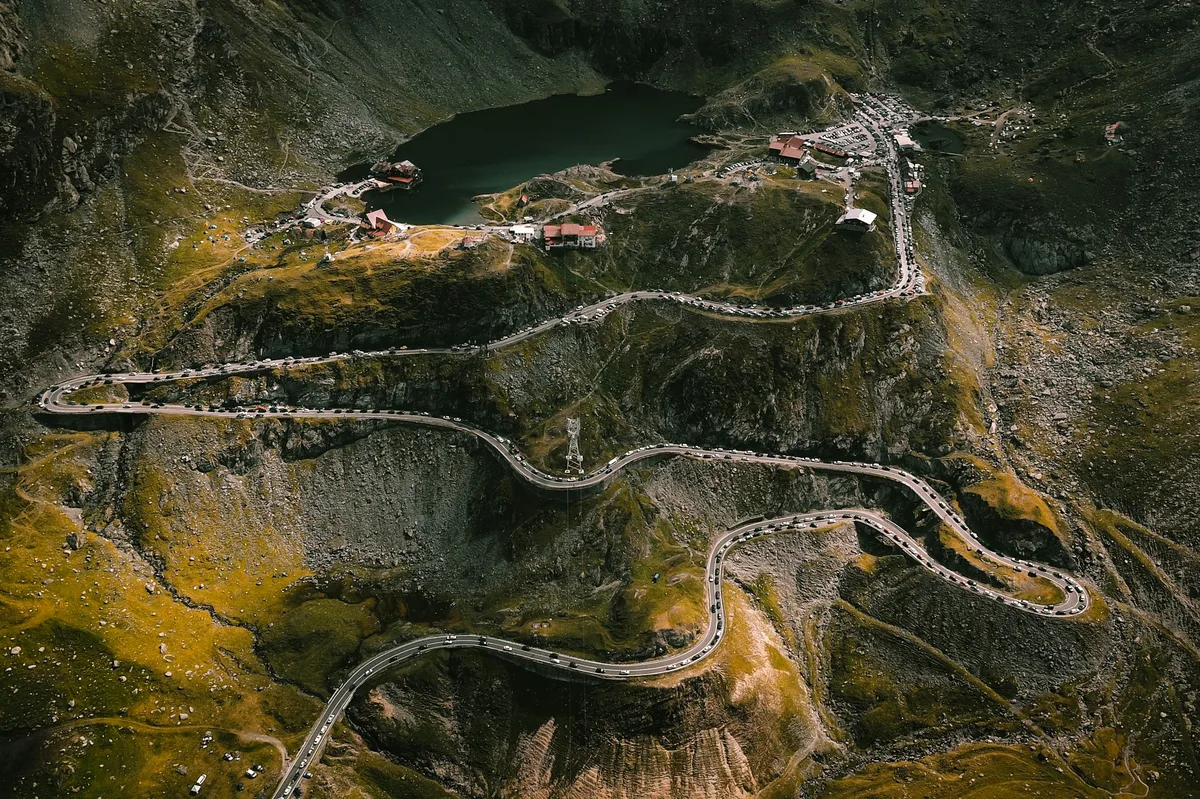
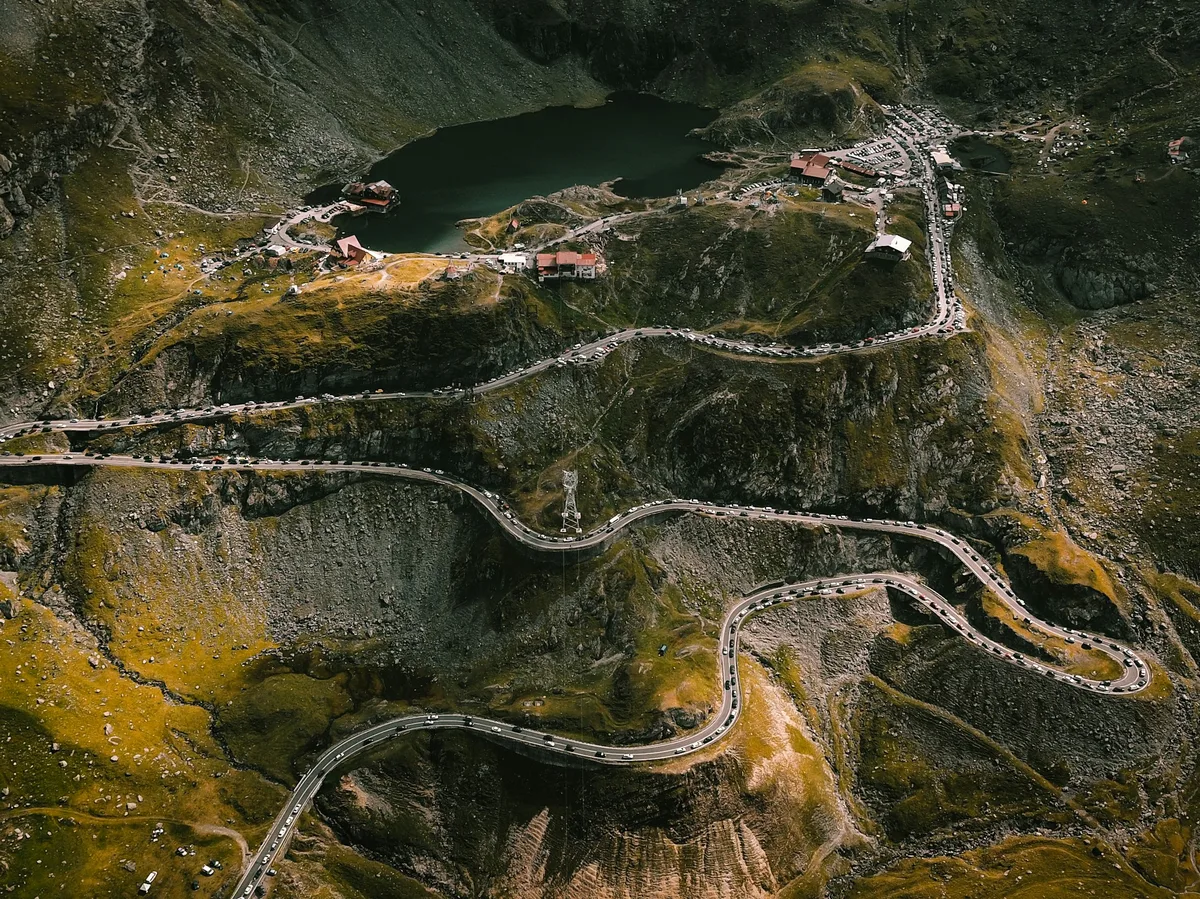
A high-altitude mountain road crossing the Carpathians via the Bâlea Lac pass, which Top Gear presenter Jeremy Clarkson called the best road in the world, with hairpin switchbacks and views of Poenari Fortress below.
Visitor guide
The Transfagarasan, officially DN7C, is a paved mountain road crossing the southern Carpathian Mountains of Romania. Running about 90 kilometres through the Fagaras Mountains and linking Transylvania with Wallachia, it climbs through hairpin bends to an altitude of 2,042 metres and is known as one of the country's most dramatic drives.
According to Wikipedia, the road was built between 1970 and 1974 during the rule of Nicolae Ceausescu, in response to the Soviet-led invasion of Czechoslovakia in 1968. Ceausescu wanted fast military access across the mountains in case of a Soviet invasion, because Romania's existing Southern Carpathian passes mostly ran through river valleys that could easily be blocked. The road was built mainly by military forces working in an alpine climate at around 2,000 metres, using roughly six million kilograms of dynamite. The human cost was high: official records state that 40 soldiers died, while unofficial estimates by workers put the number in the hundreds. The road was officially opened on 20 September 1974, though paving continued until 1980, and it has been nicknamed Ceausescu's Folly.
The Transfagarasan starts near the village of Bascov, near Pitesti, and stretches to the crossroads of the DN1 near Sibiu, passing between Romania's two highest peaks, Moldoveanu and Negoiu. It is the second-highest paved road in Romania after the Transalpina. The mountain stretch consists of steep hairpins, long S-curves and sharp descents, so average speeds are low, around 40 kilometres per hour according to Wikipedia. It has more tunnels and viaducts than any other road in Romania, including the Balea Tunnel at 884 metres, the longest road tunnel in the country.
The road provides access to Balea Lake and Balea Waterfall near the summit. Cyclists know the northern section well: a 22-kilometre stretch to Balea Lake has been used since 2011 for the Sibiu Cycling Tour, and Wikipedia compares the difficulty to hors categorie climbs in the Tour de France.
On the southern section near the village of Arefu lie the ruins of Poenari Castle, associated with Vlad the Impaler, the Wallachian ruler sometimes cited as an inspiration for Bram Stoker's Count Dracula. Wikipedia cautions that Stoker never stated Vlad was his inspiration and never visited Romania, so the Dracula link is legend and literary speculation rather than fact. Poenari is a ruined fortress rather than an intact castle.
The road featured in the first episode of Series 14 of the British program Top Gear in November 2009, in which presenter Jeremy Clarkson called it the best road in the world, a title the presenters had earlier given to the Stelvio Pass in Italy. That is the presenters' verdict rather than an official ranking. Because of snow, the high section is usually closed from late October until late June, though Wikipedia notes it may stay open into November or close even in summer depending on weather.
The route rewards unhurried travel, with viewpoints, the lake and the fortress ruins along the way. A private tour with a local driver lets your group choose where to stop, and also means nobody has to concentrate on the hairpins; check seasonal access when planning, since the high road is closed through much of the year.
See every tour and attraction we cover in Romania.