TorontoOntario · 36 tours
 Niagara FallsOntario · 25 tours
 New York CityNew York · 30 tours
 Las VegasNevada · 8 tours
 San FranciscoCalifornia · 16 tours
 VancouverBritish Columbia · 17 tours
 DubaiUAE · 54 tours
 Abu DhabiUAE · 5 tours
 Buenos AiresArgentina · 23 tours
 AthensGreece · 31 tours
 AucklandNew Zealand · 38 tours
 CancunMexico · 54 tours
No destinations match “”. Try searching all tours instead — that search understands full questions, not just place names.
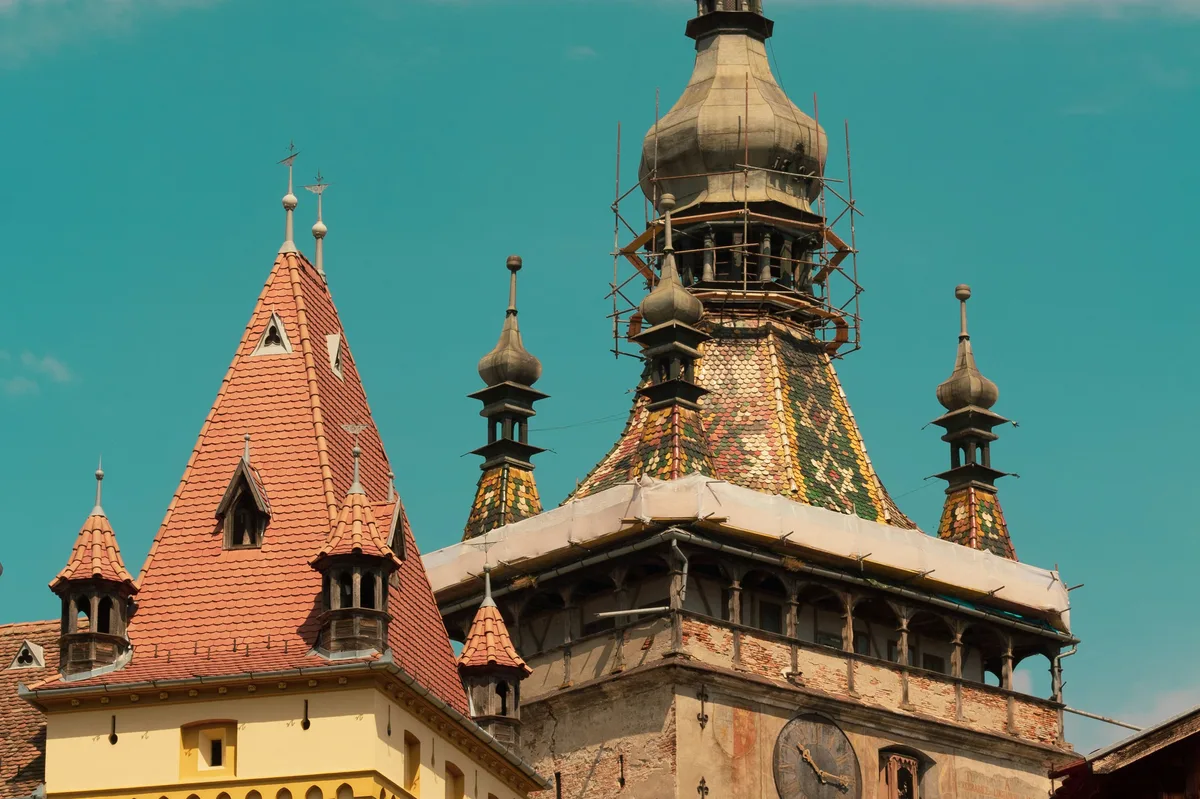
A UNESCO World Heritage medieval citadel in Transylvania — one of the few inhabited fortified towns of its kind in Europe — and linked by tradition to Vlad the Impaler.
Visitor guide
Sighisoara Citadel is the walled medieval old town of Sighisoara, a city on the Tarnava Mare River in Mures County, in the Transylvania region of central Romania. Built by Transylvanian Saxon craftsmen and merchants on a hilltop, it has been listed as a UNESCO World Heritage Site since 1999 and is one of the few fortified towns in Eastern and Southeastern Europe that are still inhabited.
Wikipedia explains that from the mid 12th century German craftsmen and merchants, the Transylvanian Saxons, were invited to Transylvania by King Geza II of Hungary to settle and defend the frontier and improve the economy. A Saxon settlement is listed in the area by 1191, and a document of 1280 records a town on the site of a Roman fort as Castrum Sex, meaning six-sided camp, after the fort's irregular hexagonal shape. By 1337 it had become a royal center, and it received urban status in 1367. German artisans dominated the urban economy and built the fortifications protecting it. During the 16th and 17th centuries the town is estimated to have had as many as 15 guilds and 20 handicraft branches.
The Wallachian voivode Vlad Dracul, father of Vlad the Impaler, lived in exile in the town. He had coins minted here, which was normally a monopoly of the Hungarian kings, and he issued the first document listing the city's Romanian name, Sighisoara, in 1435. The house on the Citadel square that bears his name is one of the sights, and Wikipedia lists Vlad III as a native of the town. This is the origin of the birthplace claim often repeated about the citadel.
The Citadel stands on a hill above the lower town in the Tarnava Mare valley. Wikipedia notes that its defence towers were each meant to be an independent fortress as well as part of a mutual system. The best-known is the Clock Tower, a 64-metre tower built in the 13th century that now houses a history museum. Other towers are named for the guilds that maintained them, including the Tinsmiths', Butchers', Tailors', Furriers', Ironsmiths', Ropemakers' and Tanners' Towers.
The Church on the Hill is considered one of the most valuable architectural monuments in the city and one of the best Gothic buildings in Romania. The Monastery Church, near the Clock Tower, is a Gothic building from the early 13th century that Wikipedia says is the only church in town without a bell, because the Saxons thought the one bell of the Church on the Hill was enough for the whole city. The Scholar's Stairs, an indoor wooden staircase, leads up to the School on the Hill.
Most of the town's 164 houses at least 300 years old are considered historical monuments. Notable examples include the Venetian House, also called the Green House, and the House with Antlers. The citadel is also on the Via Transilvanica long-distance trail. A medieval festival is held in the old citadel each July. UNESCO's World Heritage listing recognizes how well central Sighisoara has preserved the features of a small medieval fortified town.
Cobbled lanes and steps make the citadel best explored on foot, and the compact layout lets visitors see the towers and churches in one walk. A private tour with a driver and guide can combine Sighisoara with other Transylvanian towns such as Brasov and Sibiu.
See every tour and attraction we cover in Romania.