TorontoOntario · 36 tours
 Niagara FallsOntario · 25 tours
 New York CityNew York · 30 tours
 Las VegasNevada · 8 tours
 San FranciscoCalifornia · 16 tours
 VancouverBritish Columbia · 17 tours
 DubaiUAE · 54 tours
 Abu DhabiUAE · 5 tours
 Buenos AiresArgentina · 23 tours
 AthensGreece · 31 tours
 AucklandNew Zealand · 38 tours
 CancunMexico · 54 tours
No destinations match “”. Try searching all tours instead — that search understands full questions, not just place names.
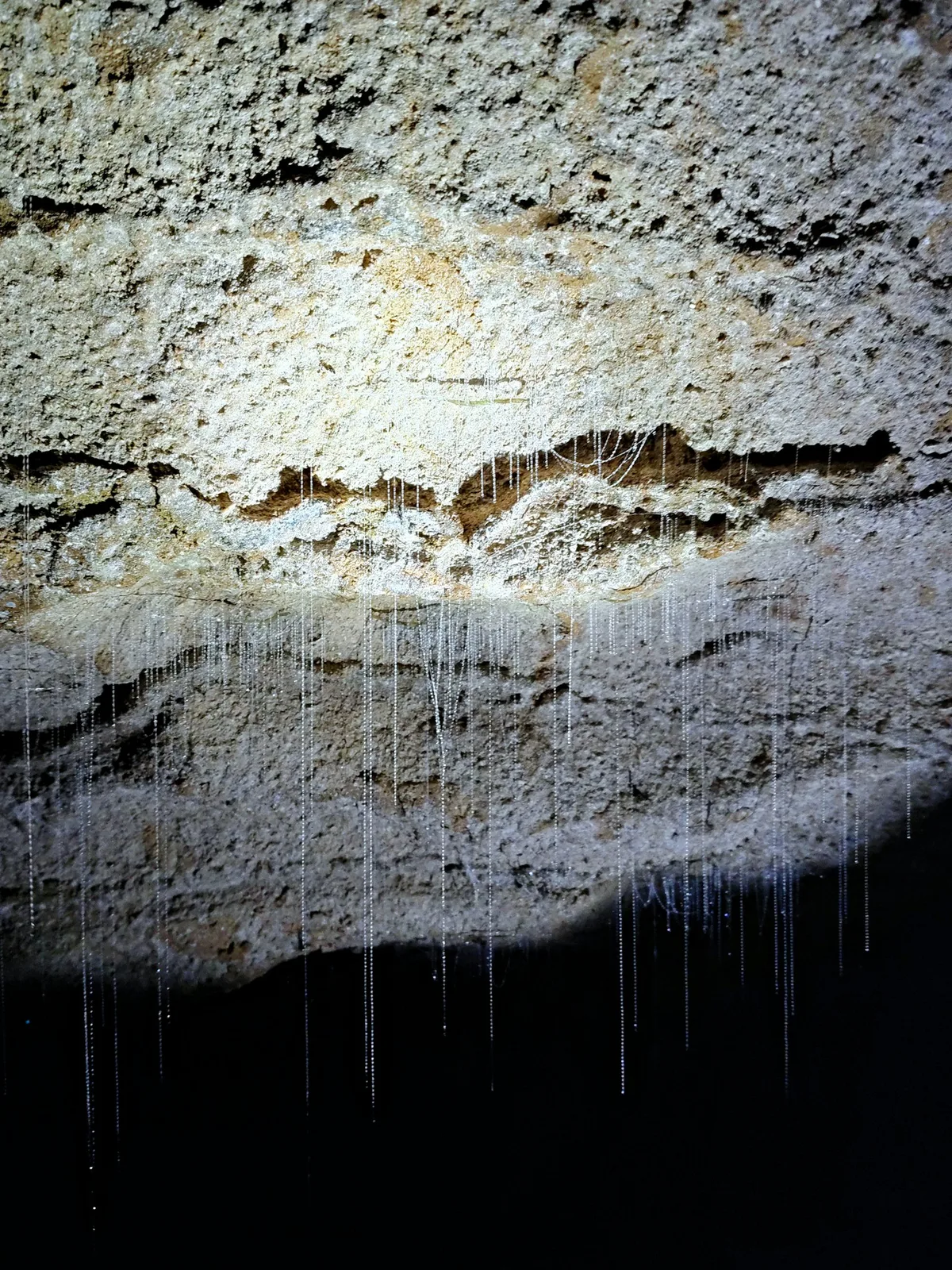
A North Island limestone cave system lit by thousands of Arachnocampa luminosa glowworms found only in New Zealand, typically seen by boat drifting silently beneath the glowing ceiling.
Visitor guide
The Waitomo Glowworm Caves are part of a limestone cave system in the Waitomo district of New Zealand's North Island, near Te Kuiti. The best known of them, Waitomo Glowworm Cave, is famous for its Glowworm Grotto, where visitors glide by boat beneath a canopy of glowworms.
According to Wikipedia, the name Waitomo combines wai, meaning water, and tomo, meaning sinkhole, roughly water passing through a hole. The caves formed in Oligocene limestone in a karst landscape that contains hundreds of caves. Besides the famous Glowworm Cave, the system includes Ruakuri Cave, Aranui Cave, Gardner's Gut, Spirit Cave and Mangawhitikau Cave, each with a different character.
The glowing creatures are Arachnocampa luminosa, a species of fungus gnat found only in New Zealand. In the Glowworm Grotto they hang above the water in large numbers, and visitors travel by boat through the cave, seeing their lights overhead. Ruakuri Cave also has glowworms, as does Mangawhitikau Cave. Aranui Cave, by contrast, has no stream or glowworms but is known for its colourful, delicate stalactites and stalagmites.
Waitomo Glowworm Cave was first explored in 1887, when the Maori chief Tane Tinorau was one of two early explorers. He lived nearby and knew the entrance as a good place to catch eels. Before 1900 Maori guides led informal trips into the caves, and tourists reached them by rail to Otorohanga or Hangatiki, then by coach. The Crown nationalised the cave in 1904, the first site taken under the Scenery Preservation Act 1903, and it was managed as a tourist attraction from 1905. Accommodation and a store appeared by 1904, and the government built a hotel in 1909.
Aranui Cave was found in 1910 by Ruruku Aranui while hunting wild pigs, though accounts differ on the details, including what happened to his dog. Ruakuri Cave was open to the public from 1904 until 1988, when a legal and financial dispute closed it, and it reopened in 2005 with a spiral ramp that makes it wheelchair-accessible.
Wikipedia notes that operators range from easy, high-volume routes to blackwater rafting and cave crawls that only a few people do each day. Gardner's Gut is described as the largest cave system in the North Island and is used by caving clubs for beginner training. Spirit Cave, known in Maori as Te Ana o te Atua, holds fossil moa bones. About 400,000 people visited the caves in 2004, and a 2007 automobile association poll ranked a visit to Waitomo 14th on a list of Kiwi must-dos.
The Te Araroa national walkway includes a 17.5 km section from Waitomo to Te Kuiti that crosses a suspension bridge and passes through kahikatea forest. Because the caves are in rural country between Hamilton and Rotorua, many travellers fit them into a longer North Island journey, and a private driver can combine Waitomo with the Waikato and Hobbiton.
See every tour and attraction we cover in New Zealand.