TorontoOntario · 36 tours
 Niagara FallsOntario · 25 tours
 New York CityNew York · 30 tours
 Las VegasNevada · 8 tours
 San FranciscoCalifornia · 16 tours
 VancouverBritish Columbia · 17 tours
 DubaiUAE · 54 tours
 Abu DhabiUAE · 5 tours
 Buenos AiresArgentina · 23 tours
 AthensGreece · 31 tours
 AucklandNew Zealand · 38 tours
 CancunMexico · 54 tours
No destinations match “”. Try searching all tours instead — that search understands full questions, not just place names.
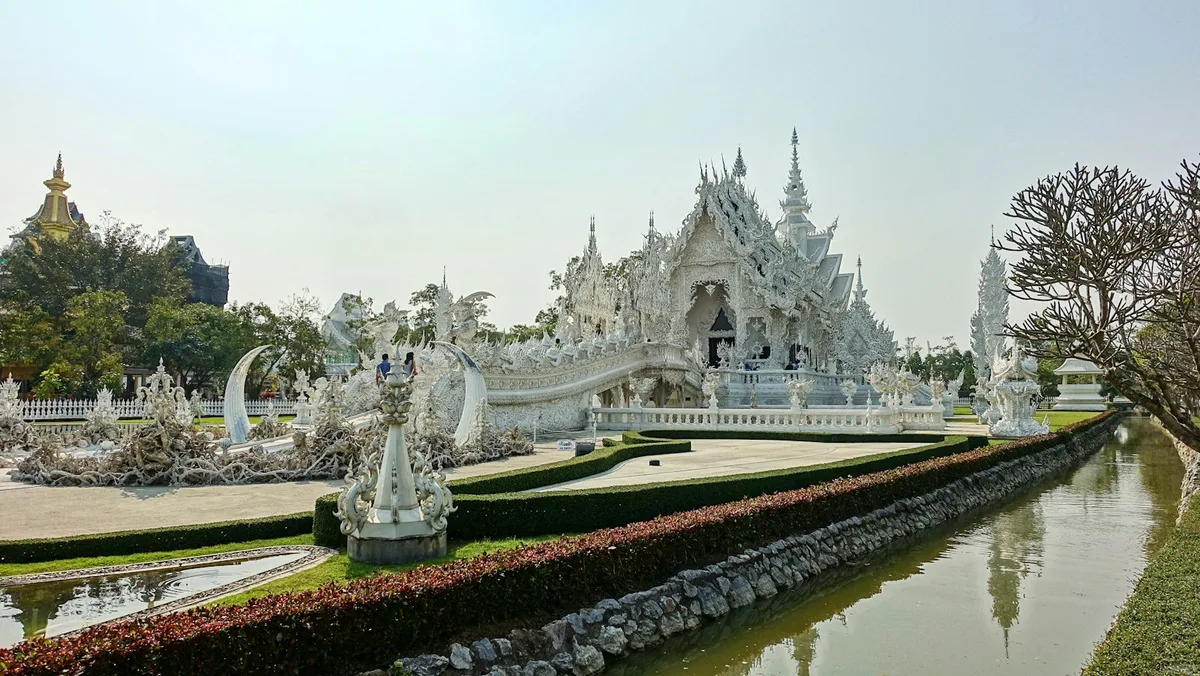
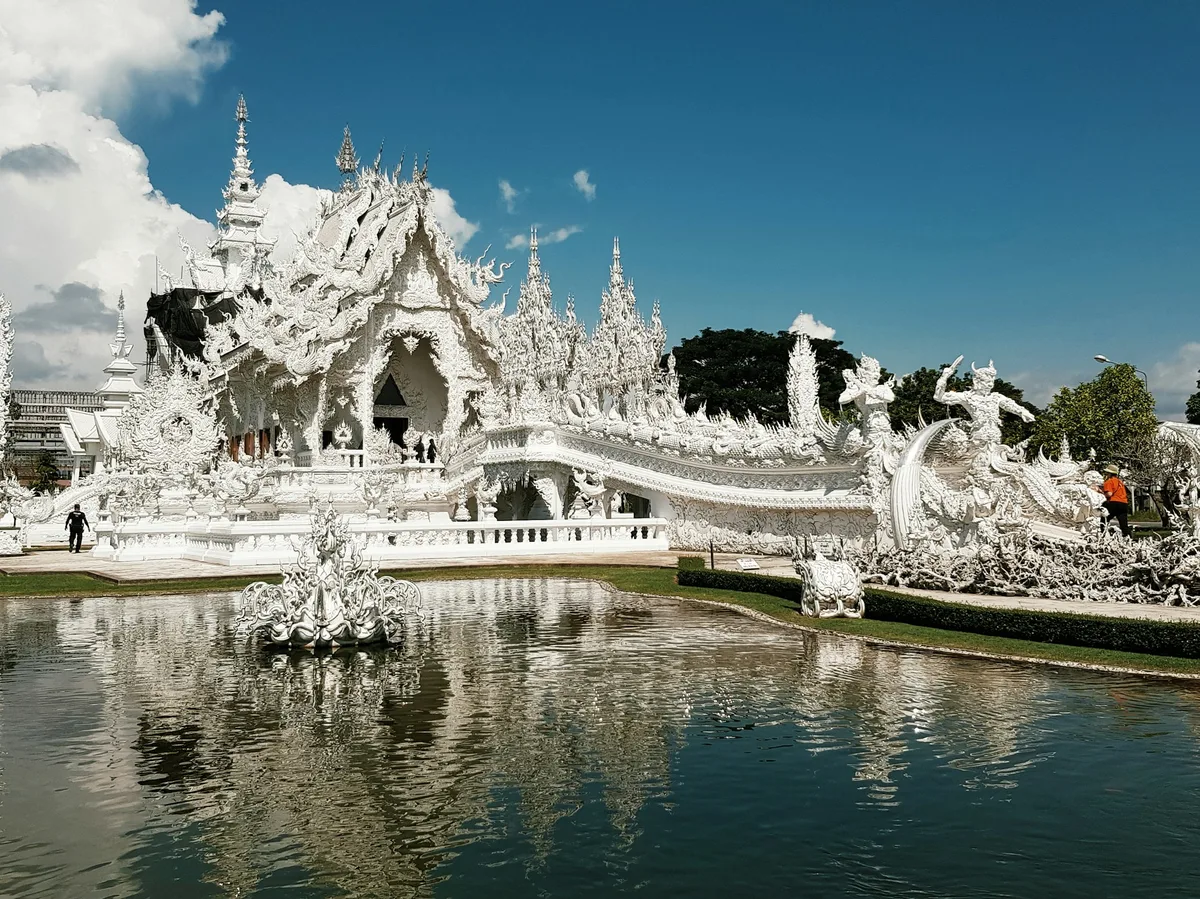
A contemporary Buddhist temple outside Chiang Rai, entirely white and embedded with mirrored glass, designed by Thai artist Chalermchai Kositpipat and still under construction.
Visitor guide
Wat Rong Khun, known as the White Temple, is a privately owned contemporary art project in the style of a Buddhist temple in Pa O Don Chai, Mueang District, outside the city of Chiang Rai in northern Thailand. Created by the Thai national artist Chalermchai Kositpipat, it is covered in white plaster set with mirrored glass and is one of the most visited attractions in Chiang Rai Province.
According to Wikipedia, Chalermchai Kositpipat designed and built the temple and opened it to visitors in 1997. The original temple on the site was in poor repair and no renovation funds were available, so he decided to rebuild it entirely at his own expense. He regards the work as an offering to the Buddha. It is affiliated with Theravada Buddhism, and construction is still continuing. The finished compound is planned to include around nine buildings, among them the ubosot, a hall of relics, a meditation hall, an art gallery and monks' living quarters.
The main structure has a concrete frame and a wooden roof. From a distance it appears to sparkle like porcelain; up close, the effect comes from white plaster combined with small mirrored chips. Chalermchai has said he avoids large donations so that major donors cannot influence the project, and Wikipedia notes that gifts are capped.
Visitors approach the ubosot over a bridge across a small lake. In front of the bridge, hundreds of outstretched hands represent unrestrained desire, and the bridge itself stands for the path to happiness, which requires giving up temptation, greed and desire. Past the bridge is a gateway of heaven guarded by figures representing Death and Rahu, who is said to decide the fate of the dead. Kinnaree, half-human and half-bird beings from Buddhist mythology, stand beside the lake.
The ubosot uses classic Thai elements such as a three-tiered roof and many naga serpents. Its interior is a sharp contrast: murals show swirling flames and demon faces alongside figures from Western popular culture, including characters from films and comic books, and images of war and environmental destruction. A commentary cited by Wikipedia reads the overall message as a harsh judgment of human nature. Photography is only allowed of the ubosot from outside.
A strikingly gold restroom building stands near the temple. It symbolises the body and worldly desire, while the white ubosot represents the mind and the focus on merit rather than possessions.
On 5 May 2014 the Mae Lao earthquake damaged the temple. Chalermchai first said he would demolish the structures for safety reasons, but an engineering inspection found that the buildings were structurally unharmed, and he announced instead that he would restore the temple. It reopened to visitors within days.
Many visitors reach the White Temple on a day trip from Chiang Rai or Chiang Mai. A private guided visit with a dedicated vehicle and driver makes it easy to combine with other sights in the region.
See every tour and attraction we cover in Thailand.